UNITED STATES
SECURITIES AND EXCHANGE COMMISSION
Washington, DC 20549
FORM
(Mark One)
| ANNUAL REPORT PURSUANT TO SECTION 13 OR 15(d) OF THE SECURITIES EXCHANGE ACT OF 1934 |
For
the Fiscal Year Ended
OR
| TRANSITION REPORT PURSUANT TO SECTION 13 OR 15(d) OF THE SECURITIES EXCHANGE ACT OF 1934 |
For the transition period from ________ to ________
Commission
File Number
(Exact name of registrant as specified in its charter)
|
(State or other jurisdiction of incorporation or organization) |
(I.R.S. Employer Identification No.) |
| (Address of principal executive offices, including zip code) |
Registrant’s
telephone number, including area code: (
Securities registered pursuant to Section 12(b) of the Act:
| Title of Each Class | Trading Symbol | Name of Each Exchange on Which Registered | ||
Securities registered pursuant to Section 12(g) of the Act: None
Indicate
by check mark if the registrant is a well-known seasoned issuer, as defined in Rule 405 of the Securities Act. Yes
Indicate
by check mark if the registrant is not required to file reports pursuant to Section 13 or Section 15(d) of the Exchange Act. Yes
Indicate by check mark whether the registrant (1) has filed all reports required to be filed by Section 13 or 15(d) of the Securities Exchange Act of 1934 during the preceding 12 months (or for such shorter period that the registrant was required to file such reports), and (2) has been subject to such filing requirements for the past 90 days.
Yes
Indicate
by check mark whether the registrant has submitted electronically on its corporate website, if any, every Interactive Data File
required to be submitted and pursuant to Rule 405 of Regulation S-T (§ 232.405 of this chapter) during the preceding 12 months
(or for such shorter period that the registrant was required to submit such files). Yes
Indicate by check mark whether the registrant is a large accelerated filer, an accelerated filer, a non-accelerated filer, or a smaller reporting company. See definition of “large accelerated filer,” “accelerated filer,” “smaller reporting company”, and “emerging growth company” in Rule 12b-2 of the Exchange Act.
| Large accelerated filer ☐ | Accelerated filer ☐ |
| Smaller reporting company
|
|
| Emerging growth company
|
If an emerging growth company, indicate by check mark if the registrant has elected not to use the extended transition period for complying with any new or revised financial accounting standards provided pursuant to Section 13(a) of the Exchange Act. ☐
Indicate by check mark whether the registrant has filed a report on and attestation to its management’s assessment of the effectiveness of its internal control over financial reporting under Section 404(b) of the Sarbanes-Oxley Act (15 U.S.C. 7262(b)) by the registered public accounting firm that prepared or issued its audit report. ☐
If
securities are registered pursuant to Section 12(b) of the Act, indicate by check mark whether the financial statements of the
registrant included in the filing reflect the correction of an error to previously issued financial statements.
Indicate by check mark whether any of those error corrections are restatements that required a recovery analysis of incentive-based compensation received by any of the registrant’s executive officers during the relevant recovery period pursuant to §240.10D-1(b). ☐
Indicate
by check mark whether the registrant is a shell company (as defined in Rule 12b-2 of the Act). Yes
The
aggregate market value of the shares of the registrant’s common stock held by non-affiliates of the registrant as of June 30, 2025, computed by reference to the closing sales price on the Nasdaq Capital Market on June 30, 2025, was approximately $
As of March 25, 2026, the registrant had shares of common stock, par value $0.0001 per share.
DOCUMENTS INCORPORATED BY REFERENCE
VIVANI MEDICAL, INC.
AND SUBSIDIARIES
FORM 10-K
TABLE OF CONTENTS
| 2 |
SUMMARY OF RISK FACTORS
Below is a summary of the principal risk factors related to the Annual Report on Form 10-K (“Form 10-K”) for the fiscal year ended December 31, 2025.
Our business is subject to a number of risks of which you should be aware before making an investment decision. These risks are discussed more fully in the “Risk Factors” section of this Form 10-K. These risks include, but are not limited to, the following:
| ● | The Company is a clinical-stage company with a limited operating history, and has no products approved for commercial sale. |
| ● | The Company is dependent on the successful design, development, regulatory approval and commercialization of one or more product candidates; there can be no assurance that the Company may achieve any of these objectives. |
| ● | Final marketing approval of NPM-139, NPM-133, NPM-115 or any of the Company's other product candidates by the U.S. Food and Drug Administration (“FDA”) or other regulatory authorities may be delayed, limited, or denied, any of which would adversely affect the Company's ability to generate operating revenues. |
| ● | The Company will require substantial additional financing to pursue its business objectives, which may not be available on acceptable terms, or at all. A failure to obtain this necessary capital when needed could force the Company to delay, limit, reduce or terminate its product development, commercialization efforts or other operations. |
| ● | Clinical development involves a lengthy and expensive process with uncertain outcomes. The Company may incur additional costs and experience delays in developing its product candidates, and its clinical development efforts may not yield favorable results. |
| ● | The commercial success of the Company's product candidates, if approved, depends upon their market acceptance among physicians, patients, healthcare payors, and the medical community. |
| ● | The Company is subject to a multitude of complex manufacturing challenges and risks, including reliance on third parties, any of which could substantially increase its costs and limit supply of its product candidates. |
| ● | The Company may not be able to adequately protect its proprietary or licensed technology. |
| ● | The Company may infringe the intellectual property rights of others, which may prevent or delay its development efforts and prevent the Company from commercializing or increase the costs of commercializing its product candidates, if approved. | |
| ● | The Company may be unable to adequately prevent disclosure of trade secrets and other proprietary information. |
CAUTIONARY NOTE REGARDING FORWARD-LOOKING STATEMENTS
AND FACTORS THAT MAY AFFECT FUTURE RESULTS
This Form 10-K, includes forward-looking statements within the meaning of Section 27A of the Securities Act of 1933, as amended (the “Securities Act”) and Section 21E of the Securities Exchange Act of 1934, as amended (the “Exchange Act”). All statements other than statements of historical fact contained in this Form 10-K are forward-looking statements. In some cases, you can identify forward-looking statements by terminology such as “may,” “could,” “will,” “would,” “should,” “expect,” “plan,” “anticipate,” “believe,” “estimate,” “intend,” “predict,” “seek,” “contemplate,” “project,” “continue,” “potential,” “ongoing” or the negative of these terms or other comparable terminology, although not all forward-looking statements contain these identifying words. These forward-looking statements include, but are not limited to, statements about:
| ● | our anticipated operating and financial performance, business plans, and prospects; |
| ● | expectations for our products, including anticipated regulatory submissions, study completion, approvals, clinical trial results and other developing data that become available, potential market size, and potential reimbursement pathways; |
| ● | the timing and likelihood of, and our ability to obtain and maintain, regulatory clearance of our Investigational New Drug (“IND”) applications for and regulatory approval of our product candidates; |
| ● | our ability to successfully scale manufacturing operations in a manner that enables us to complete our clinical trials and if our product candidates are approved, to meet commercial demand; | |
| ● | our ability to create and maintain a pipeline of product candidates; |
| ● | our ability to advance any product candidate into, and successfully complete clinical trials; |
| ● | our ability to initiate and successfully maintain operations of our subsidiary in Australia, including with respect to studies of our products and product candidates; |
| ● | the initiation, timing, design, progress and results of our clinical trials, and our research and development program; |
| ● | the success of the business, including future capital expenditures, expenses, synergies, economic performance, indebtedness, financial condition, losses, future prospects, and business strategies for the management, expansion and growth of the company’s operations, and other conditions to the successful synergies of the business combination; |
| ● | the effect of unfavorable macroeconomic factors resulting from global economic conditions or geopolitical developments, including fluctuating interest rates and inflation and capital market disruptions, changes in governmental agencies, government shutdowns, international tariffs, trade protection measures, public health crises, economic sanctions and potential economic slowdowns or recessions, or similar events that could impact our business; |
| ● |
the impact of laws and regulations in the United States and foreign countries on various aspects of our operations, including our regulatory and clinical strategy; and |
|
| ● | other risks and uncertainties, including those listed under the caption “Risk Factors.” |
Any forward-looking statements in this Form 10-K reflect our current views with respect to future events or to our future financial performance and involve known and unknown risks, uncertainties, assumptions and other factors described under the “Risk Factors” section and elsewhere in this Form 10-K, that may cause our actual results, performance or achievements to be materially different from any future results, performance or achievements expressed or implied by these forward-looking statements. Given these uncertainties, you should not place undue reliance on these forward-looking statements.
In addition, statements that “the Company believes” and similar statements reflect our beliefs and opinions on the relevant subject. These statements are based upon information available to us as of the date of this report, and while the Company believes such information forms a reasonable basis for such statements, such information may be limited or incomplete, and our statements should not be read to indicate that the Company has conducted an exhaustive inquiry into, or review of, all potentially available relevant information. These statements are inherently uncertain, and investors are cautioned not to unduly rely upon these statements as predictions of future events. Except as required by law, the Company assumes no obligation to update or revise these forward-looking statements for any reason, even if new information becomes available in the future.
This
Form 10-K also contains estimates, projections and other information concerning our industry, our business, and the markets for
certain diseases, including data regarding the estimated size of those markets, and the incidence and prevalence of certain medical
conditions. Information that is based on estimates, forecasts, projections, market research or similar methodologies is inherently
subject to uncertainties and actual events or circumstances may differ materially from events and circumstances reflected in this
information. Unless otherwise expressly stated, the Company obtained this industry, business, market and other data from reports, research
surveys, studies and similar data prepared by market research firms and other third parties, industry, medical and general publications,
government data and similar sources.
| 4 |
Our Company
Company Overview
Vivani Medical, Inc. (“Vivani,” the “Company,” “we,” “us,” “our” or similar terms) is a clinical stage biopharmaceutical company which develops miniature, ultra long-acting subdermal drug implant candidates utilizing its proprietary NanoPortal™ technology, which is designed to enable reversible, ultra long-acting, near constant-rate delivery of a broad range of medicines to treat chronic diseases. Vivani uses this platform technology to develop, and potentially commercialize, drug implant candidates, alone or in collaboration with pharmaceutical company partners, to address leading causes of poor clinical outcomes in the treatment of chronic diseases, including medication non-adherence, drug tolerability and administration challenges faced by certain patients.
According to the U.S. Centers for Disease Control and Prevention, adherence is defined as the extent to which an individual’s behavior, including taking medications, corresponds to recommendations from a health care provider. An alarmingly high proportion of patients, approximately 50%, do not, or cannot, take their medicine as prescribed in the real world, a statistic that applies to both daily oral as well as weekly injectable medicines. For example, a recent study has shown that 64% of patients taking Wegovy® (semaglutide injection) discontinue treatment within the first year, a number that increases to 76% by the second year. Unfortunately, GLP-1 discontinuation may result in failure to achieve target outcomes and a quick reversal of the health benefits in the majority of patients.
At Vivani, we are developing a portfolio of miniature, ultra long-acting subdermal drug implant candidates based on our NanoPortal technology that, unlike most oral and injectable medicines, are designed with the goal of guaranteeing medication adherence by delivering therapeutic drug levels for up to six months or longer. Our NanoPortal implant technology has the potential to enable patients to maintain continuous and therapeutic drug exposure levels with convenient once or twice yearly administration and the ability to stop receiving therapy at any time, if necessary, by removing the implant. In addition, we aim to minimize fluctuations in patients’ drug levels which may improve the tolerability of medicines, including GLP-1 receptor agonists which produce side effects that are associated with fluctuating drug levels in the blood.
Our emerging portfolio of miniature, ultra long-acting drug implant candidates have the potential to revolutionize the treatment of chronic diseases by directly addressing poor medication adherence and improving drug tolerability in patients, both of which may translate into better health outcomes for patients in the real-world setting. Vivani's lead program, NPM-139, is a miniature, six-month, GLP-1 (semaglutide) implant currently in development for chronic weight management in obese and overweight patients. NPM-139 achieved encouraging preclinical data in rats showing approximately 20% weight loss, as compared to a control group receiving sham implants, which was maintained for a full year after a single administration. We are also developing NPM-133, a miniature, six-month, GLP-1 (semaglutide) implant for the treatment of type-2 diabetes. Preliminary feasibility data support the additional potential benefit of once yearly dosing for both semaglutide implant programs, NPM-139 and NPM-133. In addition, we are also developing NPM-115 (exenatide implant) for the treatment of chronic weight management, and OKV-119, a GLP-1-based implant in development for chronic weight management and related conditions in companion cats and dogs. OKV-119 is being developed in collaboration with animal health partner Okava Pharmaceuticals, Inc. (“Okava”).
Vivani resulted from the business combination of Second Sight Medical Products, Inc. (“Second Sight”) and Nano Precision Medical, Inc. (“NPM”). On August 30, 2022, Second Sight and NPM completed their merger pursuant to which NPM became a wholly owned subsidiary of Second Sight and the combined company of NPM and Second Sight was renamed Vivani Medical, Inc. Vivani’s main priority is the further development of its miniature, ultra long-acting drug implant candidate programs. In parallel, Vivani’s management team remains committed to identifying and exploring strategic options that will enable further development of its pioneering neurostimulation systems from legacy company Second Sight which are aimed at helping patients recover critical body functions. As noted below, we subsequently contributed our Second Sight assets and certain liabilities to Cortigent, Inc. (“Cortigent”), our wholly owned subsidiary to advance our pioneering neurostimulation technology.
| 5 |
Preclinical and NanoPortal™ Platform Development
In February 2024, Vivani announced positive preclinical weight loss data with its exenatide implant, NPM-115, that was comparable to semaglutide, the active ingredient in Ozempic® and Wegovy®, and a strategic shift to prioritize the Company's obesity portfolio. In a study of high-fat diet-induced obese mice, the exenatide implant generated weight loss of approximately 20% compared to a sham implant control after a 28-day treatment duration, comparable to the extent of weight loss observed in mice treated with semaglutide injections in the same study.
In February 2024, the Company also disclosed that semaglutide, the active ingredient in Ozempic®, Wegovy® and Rybelsus®, is the active pharmaceutical ingredient in NPM-139, another miniature, ultra long-acting subdermal GLP-1 implant in development for chronic weight management, further prioritizing our obesity treatment portfolio. NPM-139 has the added potential benefit of once-yearly administration.
On May 28, 2024, Vivani announced the publication of positive weight loss data supporting the potential veterinary use of OKV-119, the Company's miniature, ultra long-acting GLP-1 implant under development with partner Okava for the treatment of pre-diabetes, diabetes and obesity in companion felines. The device is intended to be conveniently inserted under the skin during routine veterinary visits and is being designed to deliver six months of GLP-1 therapy with a single administration.
On September 4, 2024, Vivani announced positive preclinical liver fat results with its miniature, ultra long-acting GLP-1 (exenatide) implant, NPM-115, under development for chronic weight management in obese and overweight individuals. The implant produced sham-implant adjusted liver fat reduction of 82% at Week 12 in an obese mouse model from a single administration with expected twice-yearly dosing. These liver fat data are consistent with published results from similar investigations with semaglutide.
On August 5, 2025, Vivani announced positive weight loss data from an ongoing preclinical study of NPM-139, an ultra long-acting subdermal GLP-1 (semaglutide) implant in development for chronic weight management, in rats, which showed approximately 20% sham-controlled weight loss, maintained for longer than 6 months after administration of a single implant. The Company also announced the successful completion of LIBERATE-1, the first-in-human application of Vivani’s NanoPortalTM implant technology, which showed a positive safety and tolerability profile, along with encouraging performance data. Based on the promising preclinical feasibility of the semaglutide implant and the successful completion of LIBERATE-1, Vivani announced its intention to focus its resources and prioritize efforts to accelerate NPM-139 into clinical-stage development.
Clinical Development
On July 14, 2023, we filed an Investigational New Drug Application (“IND”) for NPM-119 (exenatide implant) with the U.S. Food and Drug Administration (the “FDA”) to support the initiation of a first-in-human study of our GLP-1 implant in patients with type 2 diabetes. On August 18, 2023, FDA provided written notification that the study was on full clinical hold, primarily due to insufficient Chemistry, Manufacturing, and Controls (“CMC”) information to assess the risk to human subjects.
On June 13, 2024, Vivani announced that the FDA cleared the IND and lifted the clinical hold for NPM-119, the Company's miniature, six-month GLP-1 implant proposed for development for the treatment of patients with type 2 diabetes.
On July 11, 2024, the Company provided an update of the clinical development plans for NPM-115, the clinical program associated with the miniature, ultra long-acting GLP-1 (high-dose exenatide) implant for chronic weight management in obese and overweight individuals. The Company redesigned the first-in-human study, LIBERATE-1™, initially intended to explore the safety, tolerability and pharmacokinetics of NPM-119, its low-dose exenatide implant in patients with type 2 diabetes, to instead evaluate NPM-115, its high dose exenatide implant in obese and overweight individuals.
On September 26, 2024, the Company reported receiving regulatory approval to initiate its first-in-human clinical trial with NPM-115, a miniature, ultra long-acting GLP-1 (exenatide) implant in obese and overweight individuals in Australia. This clinical trial, known as LIBERATE-1, investigated the safety, tolerability and full pharmacokinetic profile of our exenatide implant. The trial also represented the first clinical application of the Company’s proprietary NanoPortal drug implant technology. LIBERATE-1 was redesigned to enroll participants who were titrated on weekly semaglutide injections for 8 weeks (0.25 mg/week for 4 weeks followed by 0.5 mg/week for 4 weeks) before being randomized to receive a single administration of Vivani’s exenatide implant (n=8), weekly exenatide injections (n=8), or weekly 1 mg semaglutide injections (n=8) for a 9-week treatment duration. The trial was initiated at the end of 2024 and top-line data was released in August 2025.
On December 19, 2024, Vivani announced that screening and enrollment of LIBERATE-1, the first-in-human clinical trial with a GLP-1 implant in obese and overweight patients, was initiated at two study centers in Australia. The primary objective of the study was to investigate the safety, tolerability and full pharmacokinetic profile of an exenatide implant in obese or overweight individuals.
On March 13, 2025, the Company announced the successful administration of its first GLP-1 (exenatide) implant in the LIBERATE-1 clinical trial. This milestone marked a critical step toward potentially addressing one of healthcare’s most pressing challenges: medication adherence in metabolic diseases including chronic weight management and type 2 diabetes. The Company also announced full enrollment in the LIBERATE-1 study, which was achieved in just four weeks after enrollment of the first subject, signaling early potential interest for this six-month, subdermal GLP-1 implant.
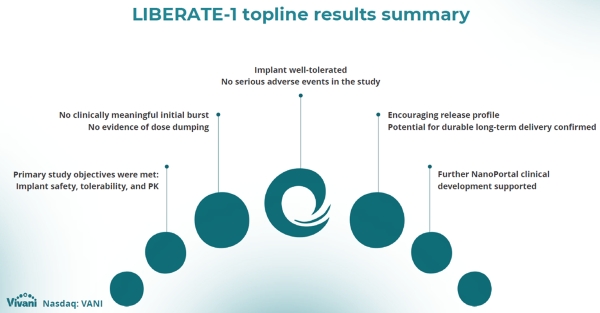
On August 5, 2025, Vivani announced plans to support the rapid advancement of NPM-139, a novel semaglutide implant, based on promising results from the LIBERATE-1 clinical study and additional positive data from a preclinical study with a semaglutide implant. LIBERATE-1, the first-in-human application of Vivani's proprietary NanoPortal implant technology, demonstrated a positive safety and tolerability profile and encouraging performance data, thus meeting the study's primary objectives. This study provided information on the GLP-1 exposure levels obtained with an exenatide configuration, thereby paving the road for future clinical development of the technology, not only for exenatide implants (NPM-115 and OKV-119), but also for semaglutide implants (NPM-139 and NPM-133) and other applications of NanoPortal technology that the Company may pursue in the future. Vivani also announced new NPM-139 (semaglutide implant) preclinical feasibility data that demonstrated approximately 20% sham-adjusted weight loss with a single implant, which had been maintained for more than six months at the time of the announcement. These semaglutide data also support the potential for a semaglutide implant with annual dosing. Based on the LIBERATE-1 data supporting the clinical application of the NanoPortal platform technology, and the preclinical weight loss data with a semaglutide implant configuration, Vivani announced plans to prioritize advancement of NPM-139, with clinical development expected to begin in 2026.
On September 4, 2025, Vivani announced plans to initiate a Phase 1 clinical study for the NPM-139 semaglutide implant program in the first half of 2026, pending regulatory clearance, along with high-level details of the anticipated study design. The Company also announced parallel preparations to initiate a Phase 2 clinical study of NPM-139 pending enabling results from the Phase 1 study and regulatory feedback. The Company currently expects the Phase 1 study to initiate in mid-2026.
Cortigent, Inc.
In December 2022, we contributed our neurostimulation assets and certain liabilities from legacy company Second Sight to Cortigent, our wholly owned subsidiary, to advance our pioneering neurostimulation technology. Cortigent had 5,000,000 shares of common stock outstanding, all owned by Vivani. On March 21, 2023, Vivani announced a proposed initial public offering ("IPO") to be registered on a Form S-1 registration statement for Cortigent to fund its operations separately from Vivani’s.
On August 25, 2023, the Company and Cortigent entered into an Amendment No. 1 (the “Amendment”) to the Transition Funding, Support and Services Agreement dated March 19, 2023 (the “TFSSA”). Pursuant to the TFSSA, Vivani agreed to advance funds and provide or cause to be provided to Cortigent the services and funding intended to cover salaries and related costs, rent and other overhead in order to permit Cortigent to operate in substantially the same manner as Second Sight prior to the formation of Cortigent. Efforts to support a successful IPO of Cortigent were paused in March 2025 and efforts were focused at that time on a potential spin-off transaction with the filing of a Form 10 registration statement. On March 12, 2025, the Company announced the proposed spin-off of Cortigent into a fully independent, publicly traded company, subject to the satisfaction of certain conditions, including, among others, final approval of Vivani’s board of directors, receipt of a favorable opinion that the transaction will qualify for non-recognition of gain or loss as a result of receipt of Cortigent shares for U.S. Federal Income Tax purposes, and SEC and Nasdaq approval. The TFSSA terminated effective December 31, 2024. Vivani continues to pursue a path forward to unlock stockholder value associated with this asset. If Cortigent is spun off through a Form 10 registration statement, the loan payable from Cortigent to Vivani will be forgiven. A Form 10 registration statement was filed with the U.S. Securities and Exchange Commission (“SEC”) on May 29, 2025.
On September 17, 2025, Vivani announced that its board of directors had set a record date for the approved spin-off of Cortigent. Vivani's stockholders holding common stock as of that record date would receive common stock in Cortigent. This record date was withdrawn on October 3, 2025, due to delays arising from the shutdown of the U.S. federal government. Thereafter, Cortigent filed amendments to its registration statement on Form S-1 on December 2, 2025 and January 9, 2026. If Cortigent successfully completes an IPO, it will repay to Vivani $1.5 million of transition funding from the proceeds of that offering and issue a five-year promissory note requiring repayment of $2 million at five percent per year upon maturity of the promissory note.
Currently, both a spin-off to be registered on a Form 10 and an IPO to be registered on a Form S-1 registration statement are approaches being considered to transition Cortigent to becoming a separate reporting company that may provide an opportunity for Vivani's stockholders to potentially realize value in Cortigent’s assets. In the IPO scenario, Vivani would retain an ownership stake in Cortigent. In the Form 10 spin-off scenario, shares of Cortigent’s common stock would be distributed to the holders of Vivani's common stock. The strategic goal of either transaction is to create two focused companies dedicated to driving current and future value in their respective therapeutic areas of expertise.
Okava Pharmaceuticals, Inc.
On April 12, 2025, Vivani entered into an amendment to its License and Supply Agreement with Okava which expanded Vivani's ongoing collaboration to include dogs in the development of OKV-119, a long-acting GLP-1 therapy for weight management, type 2 diabetes, and other cardiometabolic conditions. The amendment added $5M in regulatory milestone payments related to the development of products for the treatment of obesity in dogs.
Our Proprietary NanoPortal™ Implant Technology
Vivani’s implant technology, which we refer to as NanoPortal, utilizes a space-efficient design that allows a miniature implant to provide many months of therapeutic delivery of potent molecules, while retaining the ability to be removed at any time, thus stopping the delivery of these molecules. The technology has no moving parts, which is intended to minimize fluctuating drug delivery over the duration of the implant, and it can be customized for delivery of specific molecules or specific dosage levels. Vivani has primarily been developing implant candidates specifically for the delivery of peptide therapeutics to leverage a competitive advantage we believe we have related to these molecules when compared to other long-acting delivery technologies, but the NanoPortal technology has potential application across a wide range of molecular types. The key innovative component of the technology is a biocompatible titanium-oxide nano-porous membrane which consists of millions of precisely sized nanotubes which are the only path for drug molecules to exit the reservoir once the implant is fully assembled.
We believe the key to the technology’s ability to achieve near constant release of drug without moving parts is the ability to precisely tune the inner diameter of the nanotubes to the same size range as individual drug molecules. If the inner diameter of the nanotubes is smaller than the size of a given drug molecule, there would be no release at all. If the inner diameter of the nanotubes is much larger than the size of a given drug molecule, the rate at which the drug leaves the reservoir would follow traditional laws of diffusion and, thus, the rate of release would decrease over time as the drug concentration decreases. However, when the opening is close enough in size to an individual drug molecule, the drug release is constrained and can result in a variety of desirable delivery profiles, including near constant release. Vivani’s NanoPortal technology has demonstrated near constant release in an animal model for well over six months.
For drug molecules with adequate potency and stability, NanoPortal can allow minimization of the implant size while extending implant duration. A custom delivery profile can also be achieved by adjusting the number of accessible nanotubes, engineering changes to the implant, and/or changes in formulation parameters. With the design flexibility afforded by the NanoPortal technology, Vivani plans to develop a portfolio of drug implant candidates aimed at potentially addressing a number of chronic diseases with high unmet medical need.
Our current focus is the development of semaglutide implants for the treatment of chronic weight management (NPM-139) and type 2 diabetes (NPM-133). We made the strategic decision in August 2025, to rapidly advance NPM-139 based on promising results from the LIBERATE-1 clinical study with NPM-115 (high-dose exenatide implant) for the treatment of obese and overweight individuals, and additional positive in vivo data from a preclinical animal study with a semaglutide implant. LIBERATE-1, the first-in-human application of Vivani's proprietary NanoPortal implant technology, demonstrated a positive safety and tolerability profile and encouraging performance data. These data provided us confidence to continue future clinical development of the technology, not only for exenatide implants (NPM-115 and OKV-119), but also for semaglutide implants (NPM-139 and NPM-133).
In addition to the LIBERATE-1 clinical data and semaglutide in vivo data, a number of preclinical studies with NanoPortal-based exenatide implant candidates help establish platform proof of concept and support rapid advancement of our semaglutide programs. For example, Vivani’s NanoPortal technology has demonstrated a near constant in vitro release rate for 6 months, as depicted in the chart below.
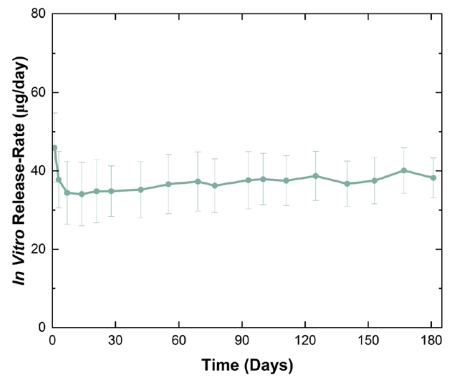
Vivani’s NanoPortal™ technology has demonstrated
near constant in vitro release rate for 6 months (n=6)
| 9 |
In addition, the observed near-constant in vitro release rate has been shown to translate into sustained exposure levels in vivo in an animal model, as depicted in the chart below.
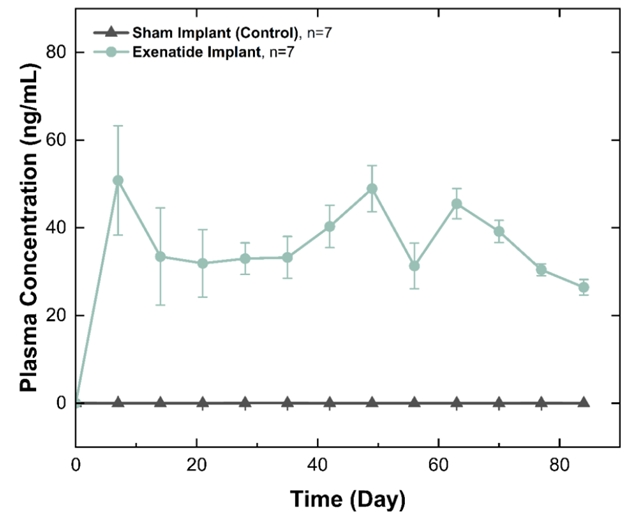
In vivo pharmacokinetics of 12-week GLP-1 implant and sham implant
in high fat diet-induced obese mice (n=7 per group)
Vivani believes its proprietary NanoPortal implant technology has potential to revolutionize the treatment of chronic diseases by addressing important limitations of oral and injectable therapies, namely, poor real-world medication adherence and persistence, and, in the case of GLP-1 therapy, the potential to improve gastrointestinal tolerability. We believe Vivani’s NanoPortal technology, which is being specifically designed to deliver regular and controlled release of exenatide, semaglutide, and other GLP-1 compounds, may overcome these challenges. Moreover, as the only GLP-1 implants in development, to our knowledge, we believe Vivani’s product candidates, if approved, could expand the market for GLP-1 drugs by reaching underserved and unaddressed populations of obese and diabetic patients through this differentiated route of administration.
To address medication adherence, the Company’s NanoPortal implants are designed to provide steady dosing from a single miniature, subdermal device for six months or longer. Current GLP-1 products are associated with only 50-60% real-world medication adherence. Non-adherent patients do not receive the full potential benefits of existing treatments. For example, medication non-adherence for patients with type 2 diabetes is associated with approximately $5,500 per non-adherent patient in avoidable healthcare costs associated with unnecessary acute care and hospitalization visits. The NanoPortal technology can enable ultra long-acting dosing, up to 6 months or longer, which can directly address the medication adherence challenge. Additionally, our NanoPortal implant technology has no moving parts that could otherwise contribute to variations in drug release rates, and it has demonstrated the ability to release semaglutide and exenatide with minimal fluctuations.
Poor gastrointestinal (“GI”) tolerability is a well-documented side effect of the GLP-1 class. GI intolerance issues can present as nausea, vomiting, and/or diarrhea, and they are the most commonly reported side effect for all drugs in the GLP-1 class. In public correspondence with applicants seeking marketing authorization for at least one novel GLP-1 product, the FDA has stated that they believe large fluctuations, such as marked increases, in the dose levels of a GLP-1 drug circulating in a patient's body can lead to increased risk of GI intolerance.
| 10 |
Preliminary market research regarding the potential adoption and market penetration of Vivani's emerging drug implant candidates has been encouraging. For example, during an Open Public Hearing hosted by the FDA on September 28, 2023, a third-party firm, dQ&A Market Research, reported results from a patient preference study testing a product profile similar to NPM-119 and NPM-139 (i.e., a miniature, six-month, subdermal, GLP-1 implant). Of the 324 patients on GLP-1 therapy in that patient preference study, 56% indicated they would be either “Definitely” or “Likely” to get and use a GLP-1 implant if it were approved by the FDA, recommended by their healthcare provider, and covered by insurance.
In an additional example, results from a small, third-party market research study funded by Vivani indicate that the majority of physicians would be highly likely to recommend a product with the NPM-119 target product profile to their type 2 diabetes patients. In this market research study, primary care physicians (n=10) provided an average rating of 8.3 out of 10 in terms of likelihood of recommending a product with NPM-119’s target product profile. Although additional market research will be conducted as Vivani's drug implant candidates progress in development, these early signals regarding product adoption -indicate significant market potential for a highly differentiated GLP-1 implant option. We believe this market research will be generally applicable to semaglutide implants as well.
Our Emerging Portfolio
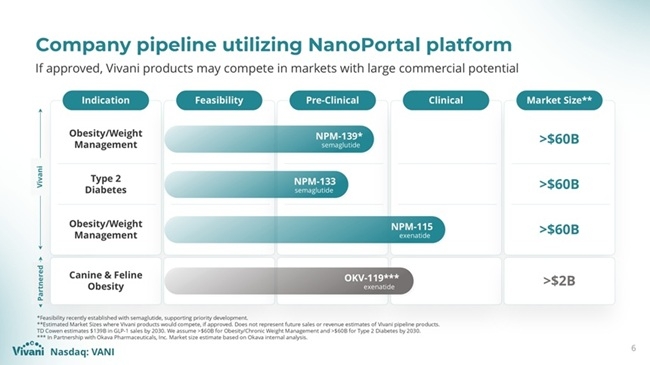
Although Vivani’s proprietary NanoPortal™ implant technology may potentially be applied to a range of therapeutic molecules and disease areas, our initial focus is on peptide therapeutics for the treatment of patients with metabolic disease. The pipeline table below depicts our current portfolio of four distinct programs targeting obesity and chronic weight management in humans and companion animals, and type 2 diabetes in humans.
| 11 |
Below is a summary description of each pipeline program:
NPM-139: This semaglutide implant candidate is anticipated to enter clinical stage development in mid-2026 for chronic weight management in patients who are obese or overweight. Obesity is a global epidemic affecting over 1 billion adults and children globally. The global prevalence of obesity has more than tripled since 1975. Today, less than 5% of these individuals are medically treated. Obesity affects both the individual and society at large, and the condition is associated with over 200 health complications as well as an increasing proportion of overall healthcare costs.
In both the treatment of obesity and type 2 diabetes, GLP-1 products have challenges associated with medication adherence and persistence which can lead to sub-optimal patient outcomes. As shown in the graph below, results from a large, retrospective cohort study published in the research journal Obesity show improved medication persistence with the newer GLP-1 weight loss products compared to previous products. Despite its massive commercial success, the one-year persistence of patients taking semaglutide was still only 40%. This highlights the potential for further improvement for the 60% of individuals who were no longer taking semaglutide after one year. The potential benefits for a long-term implant like NPM-139 are apparent, considering that body weight has been shown to rebound rapidly if GLP-1 therapy is discontinued.
Persistence and adherence are critical to securing desired long-term health outcomes.
Persistence data comparing obesity therapies suggest room for improvement across the board, including for semaglutide.
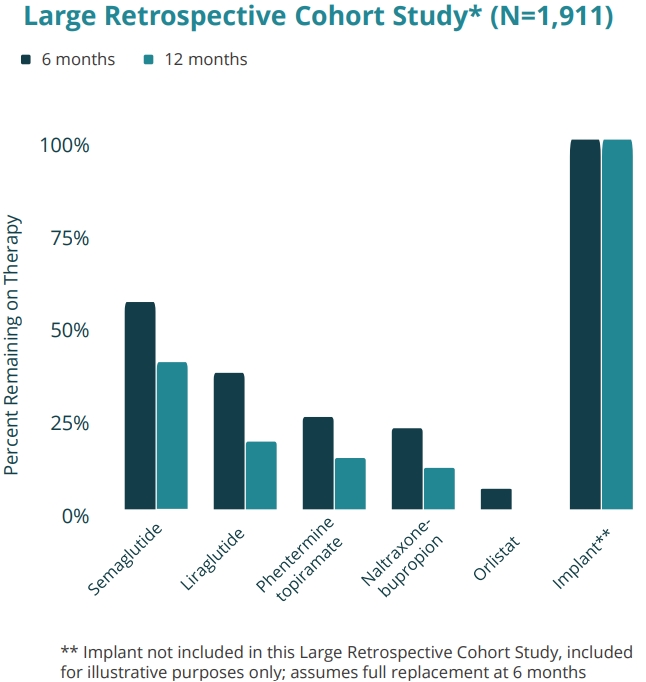
Gasoyan et al., Obesity, December 8, 2023
| 12 |
Leveraging the ultra long-acting six-month dosing regimen, we will also explore the potential for NPM-139 to provide maintenance therapy for patients who have previously lost weight on other injectable or oral GLP-1 therapies, including dual or triple agonist products. This potentially differentiated treatment approach, if approved, could provide patients, caregivers and healthcare professionals the convenience of a reversible, miniature, once- or twice-yearly, subdermal GLP-1 implant that is administered during a routine primary care office visit.
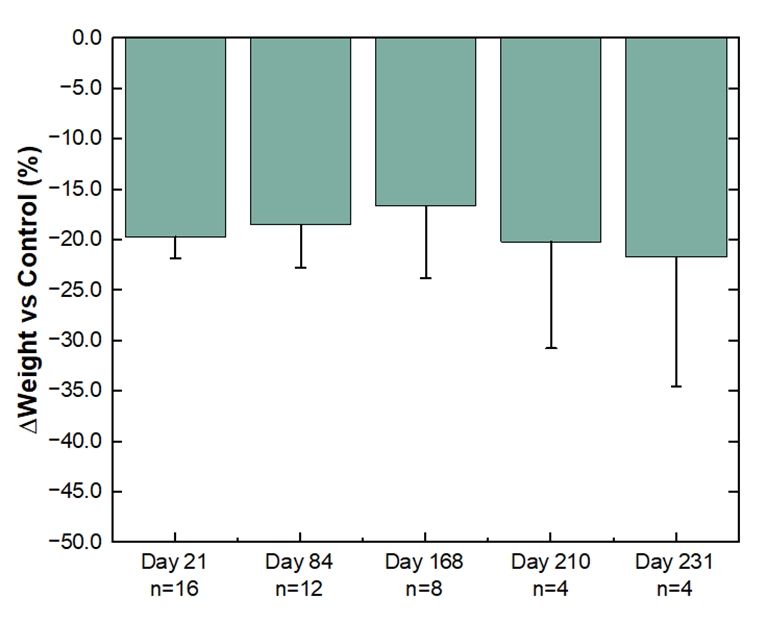
Semaglutide based products generated combined 2025 sales of over $34 billion. Total 2025 GLP-1 product sales in the obesity segment were approximately $26 billion. NPM-139 (semaglutide implant) is a highly differentiated, GLP-1 product candidate specifically designed to improve medication tolerability and patient adherence. NPM-139 has recently generated encouraging preclinical weight loss data, and it is anticipated to enter clinical testing in mid-2026. Body weight measurements in semaglutide implant-treated rats were approximately 20% lower than sham implant-treated rats on Day 21, on Day 231, and at time points in between (see figure below). These results are consistent with weight loss associated with semaglutide injections in similar preclinical models.
Semaglutide implant delivered durable weight loss in preclinical model for >7 months
Weight difference versus control group in healthy Sprague-Dawley rats. Percent weight change from baseline
for NPM-139 (semaglutide implant) corrected to control (sham implant). 16 animals were treated in the study,
and implants from four animals were removed on each of Day 21, Day 84, and Day 168 for
characterization. Values are mean ± SE.
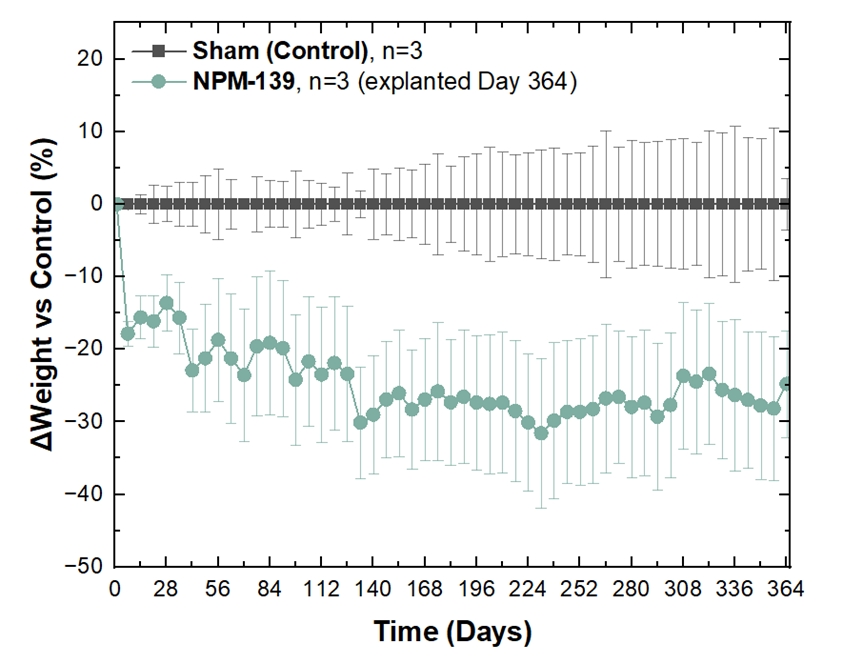
Data for animals in which implants were not removed, and which therefore remained on treatment for the full duration of the study, demonstrated sustained sham-controlled average weight loss of up to 30% for a full year after a single administration of NPM-139, as shown in the graph below.
Weight loss vs. control in Sprague-Dawley Rats.
Percent weight loss from baseline normalized to sham-implant control
for a single administration of NPM-139. Values are mean ± SE.
| 14 |
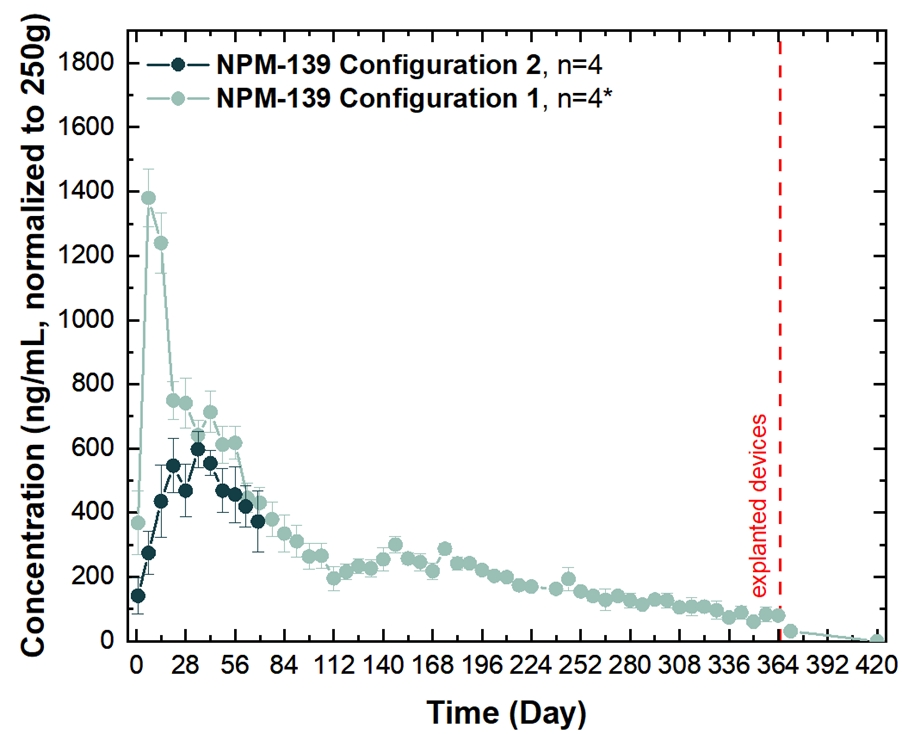
We observed that NPM-139 pharmacokinetic data from this study showed non-fluctuating in vivo semaglutide release which dropped, as expected, after implants were removed. We believe that the PK data combined with in vitro chemical and physical stability measurements for durations exceeding one year indicate the potential for once-yearly administration of NPM-139. The data from these initial studies demonstrated the feasibility of pairing semaglutide with NanoPortal implant technology.
We have significantly optimized the pharmacokinetic profile since these initial studies were conducted. Below is a chart with two PK profiles illustrating the progress we have made towards establishing an attractive semaglutide PK profile. NPM-139 Configuration 1 shows a rapid early decline followed by steady levels which decline very gradually thereafter until the implants were removed on day 364 after which, as expected, semaglutide plasma levels precipitously decline. NPM-139 Configuration 2 shows the first 70 days of a configuration incorporating a patent pending modification that eliminated the rapid early decline while, thus far, maintaining a profile that we believe would be associated with positive clinical outcomes if translated to humans.
In vivo pharmacokinetics of semaglutide implants in healthy Sprague-Dawley rats.
*NPM-139 Formulation 1 reflects n=4 for the first 224 days and n=3 thereafter. Values are mean ± SE
Together, these data demonstrate the versatility of the NanoPortal™ technology beyond NPM-115 (exenatide implant) and provide significant encouragement to Vivani management for continued development of each program.
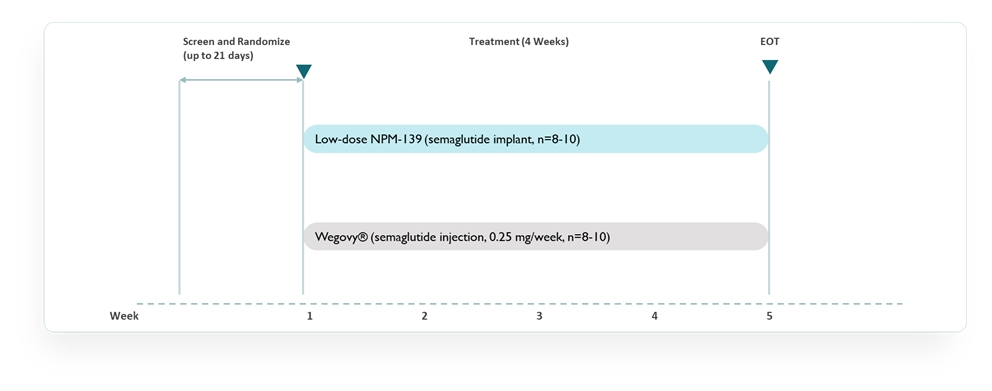
Leveraging these data, Vivani anticipates initiating a Phase 1 clinical study of NPM-139, pending regulatory clearance, in overweight or obese patients (BMI 27-40) who are 18-55 years old and otherwise healthy. The primary objective of this study is to assess the safety and tolerability of NPM-139 and to characterize the product candidate’s pharmacokinetic profile in humans. The study is expected to run for 4 weeks and to include an active comparator arm of patients who will receive weekly semaglutide injections. A schematic for the proposed study is depicted below.
Proposed NPM-139 Phase 1 study design
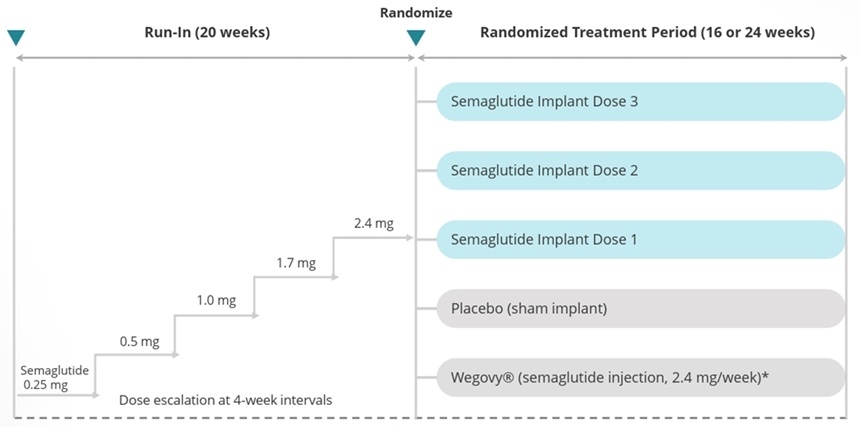
The Company has also disclosed preliminary details on a proposed Phase 2 study of NPM-139, pending enabling results from the Phase 1 study and regulatory feedback, which could involve a 20-week dose escalation run-in followed by randomization of patients into a 16 or 24 week treatment period that will compare implants designed to deliver several candidate maintenance doses, a sham implant, and an active comparator of 2.4 mg/week Wegovy® injections.
Proposed NPM-139 Phase 2 study design
| 16 |
Based on preliminary discussions with the FDA, Vivani intends to explore the potential use of the 505(b)(2) pathway and believes that a single pivotal trial evaluating a 6-month NPM-139 configuration that is representative of the proposed commercial configuration may be sufficient to support registration in the United States. That said, as NPM-139 development proceeds, we intend to further engage with regulatory authorities on the timing, duration, endpoints, number of enrolled patients and other aspects of trial design for future clinical trials of NPM-139.
NPM-133: This semaglutide implant, currently under development for the treatment of patients with type 2 diabetes, is a differentiated GLP-1 product candidate specifically designed to improve medication adherence and patient tolerability to their medicine. According to the CDC, more than 37 million Americans have diabetes, and 90-95% of those individuals have type 2 diabetes. The total number of people living worldwide with diabetes today is 537 million. This number is projected to rise to 643 million by 2030 and 783 million by 2045. Of the 537 million people with diabetes today, only 15% have good glycemic control. According to the American Diabetes Association (“ADA”), the total cost of diabetes in the U.S. was $413 billion in 2022, including $307 billion for direct medical costs and $106 billion for reduced productivity in premature mortality. Semaglutide-based products generated combined 2025 sales of over $36 billion. Total 2025 GLP-1 product sales in the type 2 diabetes segment were approximately $46 billion. Because the current drug adherence rate for type 2 diabetes is only 40-60% for oral and injectable GLP-1 products, Vivani believes there is significant unmet need for a GLP-1 implant that could address non-adherence.
The Phase 1 study of NPM-139 (semaglutide implant) noted above may also support the NPM-133 program since the study's primary endpoints are related to safety and tolerability rather than efficacy in a specific disease indication.
NPM-115: This exenatide implant candidate is in clinical stage development for chronic weight management in patients who are obese or overweight. Obesity is a global epidemic with over 1 billion adults and children currently living with obesity globally. The global prevalence of obesity has more than tripled since 1975. Today, less than 5% of these people are medically treated. Obesity affects both the individual and society at large. Obesity is associated with over 200 health complications and is associated with an increasing proportion of healthcare costs.
Leveraging the ultra long-acting six-month dosing regimen, the Company will also be exploring the potential for NPM-115 to provide maintenance therapy for patients who have previously lost weight on other injectable or oral GLP-1 therapies, including dual or triple incretin products. This differentiated potential treatment approach could provide patients, caregivers and healthcare professionals the convenience of a miniature, twice-yearly, subdermal GLP-1 implant that could be administered during a routine office visit.
Vivani completed LIBERATE-1, its first-in-human clinical trial for NPM-115, a NanoPortal™-based product candidate designed to deliver an FDA-approved GLP-1 agonist (exenatide), in 2025 and announced top-line data on August 5, 2025. NPM-115 was administered to obese and overweight individuals in this study, which was conducted in Australia. NPM-115 exhibited a positive safety and tolerability profile, and it generated encouraging performance data that met the study’s primary objectives. Participants were titrated on weekly semaglutide injections for 8 weeks (0.25 mg/week for 4 weeks followed by 0.5 mg/week for 4 weeks) before being randomized to receive a single administration of NPM-115 (n=8), weekly exenatide injections (n=8), or weekly semaglutide injections (n=8) for a 9-week treatment duration.
While the Company prioritized its semaglutide implant program, NPM-139, in August, 2025, Vivani continues to believe that higher doses of exenatide, compared to those exenatide doses currently approved to treat type 2 diabetes, can achieve similar weight loss effects as other GLP-1 products. This belief is based on the fact that semaglutide injections to treat type 2 diabetes (Ozempic®) were originally approved at doses up to 1.0 mg/week, while semaglutide injections for chronic weight management (Wegovy®) required higher doses up to 2.4 mg/week to maximize weight loss effects of the same drug substance, semaglutide. In addition, Phase 3 clinical studies of semaglutide for injection have demonstrated greater weight loss with 7.2 mg/week doses compared to the 2.4 mg/week doses and have been submitted for commercial approval to various regulatory agencies, including the FDA, and are currently under review.
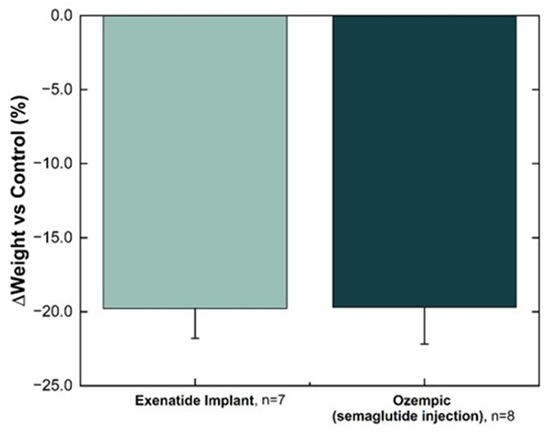
Preliminary weight loss data for NPM-115 in preclinical models is encouraging. In a study in high fat diet-induced obese mice, NPM-115 generated weight loss of approximately 20% compared to a sham implant control after a 28-day treatment duration. These results were comparable to weight loss observed in mice treated with semaglutide in the same study. The supratherapeutic doses provided for both NPM-115 (single administration delivering exenatide at ~530 nmol/kg/day), and semaglutide (weekly injections of ~2,700 nmol/kg/week) were selected to maximize the weight-loss potential of both exenatide and semaglutide.
NPM-115 generated weight loss of approximately 20% compared
to a sham implant control after a 28-day treatment duration.
These results were comparable to weight loss observed in
mice treated with semaglutide in the same study.
Three animals in the study had their implants removed at day 14. These animals experienced rapid weight regain, an effect of GLP-1 therapy cessation that has also been observed in humans. These data also demonstrate that the weight loss experienced by the animals in the study which did not have their implants removed was caused by the implant, while also demonstrating the reversibility of NanoPortal™ implants. We believe the reversibility of our ultra long-acting implants may emerge as a key market differentiator since GLP-1 use is not recommended before certain surgeries due to the potential for aspiration risk and for pregnant women as it may harm the fetus. While other infrequent dosage forms are under development, including monthly or quarterly injections as well as gene therapy approaches, NanoPortal implants represent the only immediately reversible option in development.
| 18 |
Sudden GLP-1 withdrawal produces immediate
rebound hunger, leading to rapid weight regain.
Treatment re-initiation after withdrawal or missed
doses can lead to unnecessary GI effects.
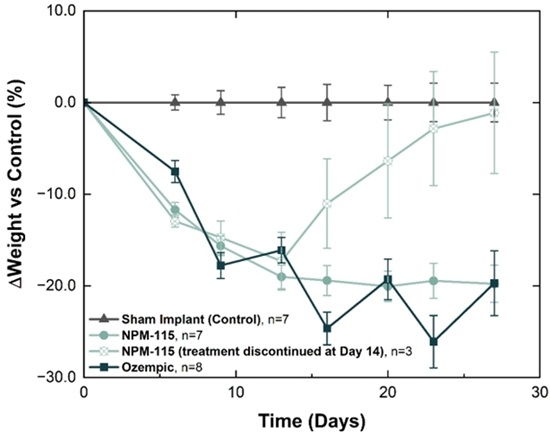
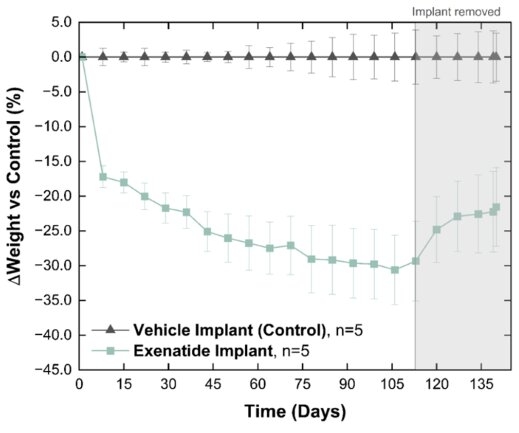
Data from another study of NPM-115, shown in the graph below, demonstrated sustained sham-controlled average weight loss of up to 30% for the full duration of the study (~4 months) after a single administration. Weight rebound was observed after implants were removed, as expected, which indicate that the devices delivered active drug for the full duration of the study.
OKV-119: This exenatide implant is under development for the treatment of obesity and diabetes in companion animals, including cats and dogs. In 2017, there were over 90 million pet cats in the U.S. It is estimated that up to 40% of these cats are clinically obese, and 1-4 million cats have diabetes. Americans spent $136.8 billion on their pets in 2022, an increase of 10.68% from 2021. Spending on pets is expected to triple over the next 10 years, with pet health representing the fastest-growing sub-segment of this market. Since cats and dogs can be difficult to medicate, we believe that a small subdermal implant administered by a veterinarian at a routine clinic visit can be a welcome option for many pet owners, particularly those administrating daily insulin injections.
The program is partnered with Okava who is responsible for all clinical development and regulatory activities of OKV-119 and, if approved, ultimate commercialization of this product. In 2022, OKV-119 advanced out of the feasibility stage after having produced data demonstrating adequate exenatide exposure and sustained weight loss in cats over a 12-week study.
| 20 |
Beyond our current pipeline, Vivani intends to apply its extensive experience and proprietary implant technology to develop a pipeline of drug implant candidates that have the potential to address chronic diseases with high unmet medical needs across multiple therapeutic categories and disease areas. For example, GLP-1 agonist semaglutide was approved for the treatment of metabolic dysfunction-associated steatohepatitis (“MASH”) in August, 2025. Vivani believes that a miniature long-term drug implant could have the potential to be an attractive treatment option in MASH because we expect medication adherence will be an even bigger problem in an asymptomatic and slowly progressing indication like MASH than it is other, more symptomatic, indications such as obesity and type 2 diabetes.
Our Strategy
Vivani’s mission is to improve patient health span and enable patients to live longer, healthier lives, by revolutionizing the way chronic disease is treated. Vivani develops miniaturized, ultra long-acting drug implant candidates using its proprietary NanoPortal implant technology with the goal of enabling delivery of a broad range of medicines to treat chronic diseases. These products, designed to address poor medication adherence, are anticipated to significantly improve the health of otherwise non-adherent patients and to provide assurance to their family members and health care providers that the medications prescribed to them are taken as intended.
Vivani plans to initially test its implant technology and business model through the clinical and regulatory development of its lead programs, NPM-139 (semaglutide), NPM-133 (semaglutide) and NPM-115 (exenatide). The active drugs, exenatide and semaglutide, are members of the GLP-1 receptor agonist class of drugs. Drug products, including drug substances within this relatively new drug class, have already been successfully developed and marketed for the treatment of both type 2 diabetes and obesity, and GLP-1 products are the category leader in revenue for both the type 2 diabetes and the obesity/chronic weight management drug treatment categories. In addition, semaglutide has received marketing authorization for the treatment of fatty liver disease or MASH. Further studies are exploring these drugs' ability to address various addiction disorders, and other disease areas including osteoarthritis associated with obesity. In 2025, Vivani continued to execute its business strategy as evidenced by:
| ● | Achieving clinical proof-of-concept of NanoPortal™ technology by successfully completing a Phase 1 clinical study of NPM-115 (exenatide implant) in patients with obesity; |
| ● | Completing the feasibility assessment of NPM-139 (semaglutide implant) for the treatment of obesity and chronic weight management; |
| ● | Rapidly advancing the development of NPM-139 (semaglutide implant) and preparing to initiate a Phase 1 clinical study in mid-2026; |
| ● | Advancing the capabilities and systems at our Alameda, CA, and San Diego, CA, manufacturing facilities to improve manufacturing quality and yields, and to enable the production of clinical trial drug product supplies. |
| ● | Leveraging the Company's proprietary NanoPortal platform technology to expand our emerging portfolio of innovative drug implant candidates to improve the treatment of chronic diseases |
| ● | Maintaining, expanding, and protecting our intellectual property portfolio; and |
| ● | Refining and improving operational, financial, and management information systems and personnel, including personnel to support our planned product development efforts, as well as to support its regulatory responsibilities as a public reporting company. |
Competition
Our industry is characterized by rapidly advancing technologies, intense competition and a strong emphasis on proprietary products. We face competition and potential competition from a number of sources, including pharmaceutical and biotechnology companies, generic drug companies, drug delivery companies and academic and research institutions. Some of these companies are developing therapies that are directly competitive to our approach. We believe the key competitive factors that will affect the development and commercial success of our product candidates include ease of administration and convenience of dosing, therapeutic efficacy, safety and tolerability profiles and cost. Many of our potential competitors have substantially greater financial, technical, and human resources than we do, as well as more experience in the development of product candidates, obtaining FDA and other foreign regulatory approvals of products, and the commercialization of those products. Consequently, our competitors may develop similar products to address the indications targeted by our current product candidates or for other indications we may pursue in the future, and such competitors’ products may be more effective, better tolerated and less costly than our product candidates. Our competitors may also be more successful in manufacturing and marketing their products than we are. We will also face competition in recruiting and retaining qualified personnel and establishing clinical trial sites and patient enrollment in clinical trials.
| 21 |
The competition for Vivani will be dependent upon the individual product candidate in development. For Vivani’s lead programs, NPM-139, NPM-133 and NPM-115, the competition could be defined as any drug product/manufacturer approved for use in the treatment of patients with obesity or type 2 diabetes. However, we believe that our more direct competitors are restricted to other GLP-1 receptor agonist and combination products with a GLP-1 receptor agonist component approved or in development for those respective indications. In May 2022, Lilly’s Mounjaro® (tirzepatide) was approved as the first and only combination GIP and GLP-1 receptor agonist for the treatment of adults with type 2 diabetes and in November 2023, Lilly secured approval of a higher dose formulation of tirzepatide injection with the brand name Zepbound® for chronic weight management in adults who are obese or overweight with at least one weight-related condition. The Wegovy® pill was approved in December 2025 and is indicated with a reduced calorie diet and increased physical activity to reduce the risk of major adverse cardiovascular events and to reduce excess body weight and maintain weight reduction long-term. Manufacturers with approved GLP-1 receptor agonists or dual receptor agonists include Lilly, Novo Nordisk, AstraZeneca, and Sanofi.
The clinical adoption and commercial success of the GLP-1 class has been remarkable and already represents category leadership for obesity, weight management, sleep apnea in individuals with obesity, and type 2 diabetes medications from a revenue perspective. Vivani's product candidates, if approved, would compete in these large established markets. Obesity and overweight is a global epidemic. For example, over 1 billion adults and children currently live with obesity globally. The global prevalence of obesity has more than tripled since 1975. Today, less than 5% of these people are medically treated. Obesity affects both the individual and society at large. Obesity is associated with over 200 health complications and is associated with an increasing proportion of healthcare costs. According to the CDC, more than 37 million Americans have diabetes and 90-95% of those have type 2 diabetes. The total number of people living worldwide with diabetes today is 537 million and is projected to rise to 643 million by 2030 and 783 million by 2045. Of the 537 million people with diabetes today, only 15% have good glycemic control. According to the American Diabetes Association (“ADA”), the total cost of diagnosed diabetes in the U.S. was $327 billion in 2017, including $237 billion for direct medical costs and $90 billion for reduced productivity. In 2025, global sales of GLP-1 receptor agonists products (all indications) were over $72 billion and are projected to reach over $160 billion per year by 2034.
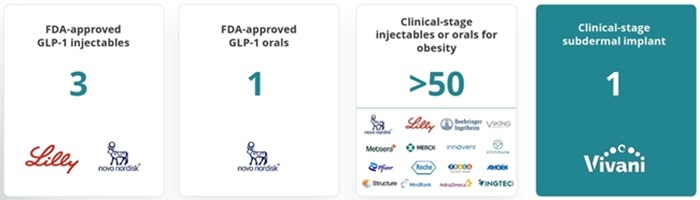
There are over 50 GLP-1 and dual and triple agonists currently in clinical stage development for a wide variety of disorders including, but not limited to, obesity, chronic weight management, chronic sleep apnea associated with obesity, kidney disease, certain neurological disorders, and various addiction disorders. To our knowledge, all of the competing development programs at the clinical stage are oral or injectable options, leaving Vivani's product candidates to compete alone for the segment of these markets that will be best suited for treatment with an ultra long-acting reversible incretin implant. This differentiated route of administration presents opportunities to access untapped segments of the market, transition experienced patients to a longer-acting option, and help patients struggling with adherence to have access to a guaranteed-adherence option. Implants uniquely offer both longer duration and reversibility.
| 22 |
The listing below, while not comprehensive, provides a representative sampling of GLP-1 compounds in clinical-stage development for obesity, chronic weight management, and/or type 2 diabetes, and are considered future potential competitors to Vivani's emerging portfolio of miniature, ultra long-acting GLP-1 drug implant candidates.
| ● | Altimmune's pemvidutide (ALT 801) |
| ● |
Alveus's ALV-100, ALV-200 |
| ● | Amgen's MariTide (maridebart cafraglutide, formerly AMG 133) |
| ● | Ascletis Pharma's ASC30 |
| ● |
AstraZeneca's AZD6234, AZD9550, AZD5004 (formerly ECC5004), SYH2082 |
| ● | Biomea’s BMF-650 |
| ● | D&D Pharmatech's DD01 |
| ● | Fractyl Health's Rejuva (GLP-1 based pancreatic gene therapy) |
| ● | Gan & Lee's bofanglutide (GZR18) |
| ● | Innovent's mazdutide, IBI-3032 |
| ● |
Lilly's retatrutide, orforglipron |
| ● | Lilly and Chugai's OWL833 (LY 3502970) |
| ● |
Lilly and Innovent's mazdutide (LY3305677) |
| ● | Mardigal and CSPC's MGL-2086/SHY2086 |
| ● | Merck's efinopeglutide |
| ● | Mindrank's MRANK-001, MRANK-101 |
| ● |
Novo Nordisk CagriSema |
| ● | OPKO Health's OPK88003 |
| ● | Pfizer's MET-097i, MET-224o |
| ● | Roche's CT-388, CT-995; CT-868 |
| ● | Structure Therapeutic's GSBR 1290 |
| ● | Tern Pharmaceutical's TERN-601 |
| ● | Viking Therapuetics' VK 2735 |
| ● | Zealand Pharma's dapiglutide |
| ● | Zealand Pharma and Boehringer Ingelheim's survodutide (BI 456906) |
NPM-139 and NPM-115
NPM-139 is a miniature, six-month, semaglutide implant candidate in development for the treatment of chronic weight management in individuals with obesity or overweight with one or more co-morbid conditions. NPM-139 has the same GLP-1 active pharmaceutical ingredient as Ozempic® and Wegovy®, and also has the added potential benefit of once-yearly dosing. NPM-115 is an exenatide-based implant candidate also in development for the treatment of chronic weight management in obese and/or overweight patients.
| 23 |
A listing of products currently approved in the US for the treatment of obesity and/or chronic weight management are provided below:
| ● | Teva’s Adipex® (phentermine) and generics | |
| ● | Roche’s Xenical® (orlistat) and generics | |
| ● | Vivus’s Qsymia® (phentermine/topiramate extended release) | |
| ● | Orexigen’s Contrave® (bupropion/naltrexone) | |
| ● | Lilly (Zepbound®/tirzepatide) | |
| ● | Novo Nordisk (Saxenda®/liraglutide); and (Wegovy®/semaglutide) |
A partial listing of GLP-1 monotherapy agonists, dual agonists and triple agonists in various stages of clinical development is provided in the preceding section. We believe NPM-139, our lead drug implant candidate for chronic weight management, has the potential to address at least two important aspects of the GLP-1 category which are associated with the above-mentioned products, namely, poor real-world medication adherence and undesirable gastrointestinal tolerability.
NPM-133
NPM-133, semaglutide implant candidate, is a GLP-1 receptor agonist in development for the treatment of type 2 diabetes. Competition in the GLP-1 class for this indication includes the following:
| ● | Lilly (Trulicity®/dulaglutide) and (Mounjaro®/ tirzepatide) |
| ● | Novo Nordisk (Victoza®/liraglutide); (Ozempic/semaglutide); and (Rybelsus®/semaglutide) |
| ● | Sanofi (Adlyxin®/lixisenatide) |
A partial listing of GLP-1 monotherapy agonists, dual agonists and triple agonists in various stages of clinical development is provided in the preceding section. We believe NPM-133, our lead drug implant candidate for type 2 diabetes, has the potential to address at least two important aspects of the GLP-1 category which are associated with the above-mentioned products, namely, poor real-world medication adherence and potential undesirable gastrointestinal tolerability.
Sales and Marketing
Vivani currently does not have a commercial infrastructure in any geography. As we progress our programs through development, we intend to either partner with a large pharmaceutical company that has already established a commercial infrastructure in the relevant disease areas, or to build a sales and marketing infrastructure that can support the commercialization of each of our product candidates, when we believe a regulatory approval in a particular territory is likely. We intend to conduct market research in connection with designing our commercialization strategy for each of our product candidates. Whichever approach we eventually choose to execute, we will consider a range of options including building a commercial capability internally, leveraging third-party biopharmaceutical commercialization organizations, strategic partnerships, distributors and/or contract sales forces to expand the commercial availability of our product candidates when appropriate.
Our Corporate Information
Vivani (as Nano Precision Medical) was incorporated on December 17, 2009 under the laws of the State of California. Its operations began in 2010. After the successful merger of Second Sight Medical Products and Nano Precision Medical on August 30, 2022, the combined company was renamed Vivani Medical, Inc. Prior to the merger, Nano Precision Medical was a private company.
On July 6, 2023, Vivani changed its state of incorporation from the State of California to the State of Delaware by means of a plan of conversion, effective July 5, 2023.
Vivani’s corporate office is located at 1350 South Loop Road, Alameda, CA 94502; its telephone number is (415) 506-8462; and its website is located at www.vivani.com.
Chemistry, Manufacturing, and Controls
Vivani has developed production processes and quality systems to support the manufacture of clinical materials for its emerging portfolio of miniature, ultra long-acting GLP-1 drug implant candidates. For example, Vivani recently completed LIBERATE-1, a Phase 1 study of an exenatide implant in individuals who have obesity or overweight at two clinical study sites in Australia to support the NPM-115 program.
| 24 |
Vivani has established in-house research, development, and manufacturing capabilities in its corporate headquarters in Alameda, California, U.S. Vivani also leases and operates a small manufacturing facility in San Diego, California, U.S. to support filling operations when needed. Vivani engages with contract manufacturers and analytical laboratories for selected processes when appropriate. In general, Vivani purchases the drug substance from a third-party manufacturer or obtains the drug substance from a potential partner. Vivani intends to conduct all assembly processes in which the drug substance is present, including the associated in-process testing, when producing materials for Phase 1 and Phase 2 clinical trials. Vivani anticipates that all assembly processes in which the drug substance is present, including the associated in-process testing, will be performed either in-house or by contract manufacturers when producing materials for any registration trial or commercial use. Several device components and all raw materials are purchased from outside vendors according to established specifications. The device assembly processes, including the associated in-process testing, and final product testing are anticipated to be performed by Vivani in Alameda, California. The custom applicator, which is intended to facilitate subdermal placement of the implant in patients, has been designed and will be manufactured by a contract manufacturer. Several device components are also purchased from outside vendors according to established specifications.
As our portfolio of drug implant candidates advances, Vivani may also engage additional contract analytical and manufacturing organizations as needed.
Intellectual Property
As of December 31, 2025, Vivani held or controlled 15 issued U.S. patents, 1 allowed but not yet issued patent, 9 pending U.S. patent applications, and 11 patents in various jurisdictions outside the United States. Additionally, Vivani is pursuing 31 corresponding patent applications that are pending in various foreign jurisdictions, and 2 international patent applications. Further advancement of Vivani’s intellectual property portfolio will require the filing of patent applications related to its proprietary manufacturing process and product candidates. Vivani has patents extending into China, Europe, Hong Kong, India, Japan, Republic of Korea, Russian Federation, and the United States of America, as well as trade secrets protecting Vivani’s intellectual property. Vivani’s patent prosecution strategy includes exploration of opportunities to expand its patent life and use cases in order to broaden its existing patent portfolio.
Below is a further description of certain of Vivani’s key issued patents, including the category of protection, expiration date, number of related patents issued in foreign jurisdictions and the product candidates to which each patent relates. Vivani currently holds or controls:
| ● | Fifteen patents issued in the United States (U.S. Patent Nos. 9,511,212, 9,770,412, 9,814,867, 10,045,943, 10,105,523, 10,479,868, 10,525,248, 10,688,056, 10,792,481, 11,021,576, 11,129,791, 11,191,935, 11,478,430, 11,931,453, and 12,071,516) and 11 patents issued in foreign jurisdictions. The patents are directed to the manufacture and use of a drug delivery system and more specifically, to a titania nanotube membrane and capsule utilizing the proprietary NanoPortal technology platform. The methods include methods of drug delivery and treatment with a composition such as exenatide, methods to implant a drug delivery system, and methods of manufacturing a nanoporous membrane, as well as an implantable drug delivery system, a titania nanotube membrane, and titania nanotubes. These U.S. patents relate to an apparatus to implant a drug delivery system, an implantable drug delivery system comprising exenatide, a titania nanotube membrane, a method of making a titania nanotube membrane, and a method of making titania nanotubes, which are expected to expire in 2034-2038, while patents issued in foreign jurisdictions are expected to expire in 2032-2041; | |
| ● | Four of the patents issued in the United States (U.S. Patent Nos. 9,511,212, 10,792,481, 11,129,791 and 11,478,430) are also directed to implantable drug delivery devices. The U.S. patents relate to exenatide and are expected to expire in 2035 and 2037; | |
| ● | One of the patents issued in the United States (U.S. Patent Nos. 11,931,453) and 2 of the patents issued in foreign jurisdictions are also directed to the release of exenatide from an implantable device. This U.S. patent is expected to expire in 2037, while the patents issued in foreign jurisdictions are expected to expire in 2041; | |
| ● | Five of the patents issued in the United States (U.S. Patent Nos. 9,511,212, 10,105,523, 10,525,248, 10,792,481 and 11,191,935) are also directed to apparatuses and methods for promoting fluid uptake. These U.S. patents relate to an apparatus to implant a drug delivery system and are expected to expire in 2035-2038; | |
| ● | Six of the patents issued in the United States (U.S. Patent Nos. 10,479,868, 11,021,576, 10,045,943, 10,688,056, 11,478,430, and 12,071,516) and 5 of the patents issued in a foreign jurisdiction are also directed to formulations. These U.S. and foreign patents relate to an exenatide composition and an implantable drug delivery system comprising exenatide and are expected to expire in 2035-2041; | |
| ● | One of the patents issued in the United States (U.S. Patent No. 9,770,412) is also directed to coated nanoporous membranes. This U.S. patent relates to a method of manufacturing a nanoporous membrane and a nanopore membrane, which is expected to expire in 2035; | |
| ● | One of the patents issued in the United States (U.S. Patent No. 9,814,867) and 4 of the patents issued in foreign jurisdictions, are also directed to titania nanotube membranes. This U.S. patent relates to a method of making a titania nanotube membrane and is expected to expire in 2034; and | |
| ● | Ten pending U.S. applications, 2 international applications, and 31 applications pending in foreign jurisdictions, which are directed to implantable drug delivery devices, methods to control release, drug products, and formulations. |
| 25 |
Wherever possible, Vivani seeks to protect its inventions by filing U.S. patents as well as foreign counterpart applications in select other countries. Because patent applications in the U.S. are maintained in secrecy for at least eighteen months after the applications are filed, and since publication of discoveries in the scientific or patent literature often lags behind actual discoveries, Vivani cannot be certain that it was the first to make the inventions covered by each of its issued or pending patent applications, or that Vivani was the first to file for protection of inventions set forth in such patent applications. Vivani’s planned, or potential products may be covered by third-party patents or other intellectual property rights, in which case continued development and marketing of its products would require a license. Required licenses may not be available to Vivani on commercially acceptable terms, if at all. If Vivani does not obtain these licenses, it could encounter delays in product introductions while it attempts to design around the patents, or Vivani could find that the development, manufacture, or sale of products requiring such licenses are not possible.
In addition to patent protection, Vivani also relies on know-how, trade secrets, and the careful monitoring of proprietary information, all of which can be difficult to protect. Vivani seeks to protect some of its proprietary technology and processes by entering into confidentiality agreements with its employees, consultants, and contractors. These agreements may be breached, Vivani may not have adequate remedies for any breach and its trade secrets may otherwise become known or be independently discovered by competitors. To the extent that Vivani’s employees or its consultants or contractors use intellectual property owned by others in their work for Vivani, disputes may also arise as to the rights in related or resulting know-how and inventions.
Government Regulation
Regulatory authorities in the U.S. at the federal, state, and local level and in other countries extensively regulate, among other things, the research and clinical development, testing, manufacture, quality control, approval, labeling, packaging, storage, record-keeping, promotion, advertising, distribution, post-approval monitoring and reporting, marketing, pricing, and export and import of drugs, medical devices and combinations of drugs and devices (combination products) such as those we are developing. Generally, before a new drug or drug-device combination product can be marketed, considerable data demonstrating its quality, safety, and efficacy must be obtained, organized into a format specific to each regulatory authority, submitted for review, and approved by the relevant regulatory authority.
In the U.S., the FDA regulates drugs, devices and combination products under the Federal Food, Drug, and Cosmetic Act (“FDCA”), and its implementing regulations. These products are also subject to other federal, state and local statutes and regulations. The process of obtaining regulatory approvals and the subsequent compliance with appropriate federal, state, local and foreign statutes and regulations require the expenditure of substantial time and financial resources. Failure to comply with the applicable U.S. requirements at any time during the product development process, approval process or after approval, may subject an applicant to administrative or judicial sanctions. These sanctions could include, among other actions, the FDA’s, or another regulatory authority’s, refusal to approve pending applications, withdrawal of an approval, a clinical hold, FDA Form 483s, untitled or warning letters, product recalls or withdrawals from the market, product seizures, total or partial suspension of production or distribution, injunctions, fines, debarment, refusals of government contracts, restitution, disgorgement, or civil or criminal penalties. Any agency or judicial enforcement action could have a material adverse effect on us.
U.S. Drug Development
Our product candidates are subject to regulation as combination products, which means that they are composed of both a drug product and device product. If marketed individually, each component would be subject to different regulatory pathways and reviewed by different centers within the FDA. A combination product, however, is assigned to a center that will have primary jurisdiction over its regulation based on a determination of the combination product’s primary mode of action, which is the single mode of action that provides the most important therapeutic action. In the case of our product candidates, the primary mode of action is attributable to the drug component of the product, which means that the FDA’s Center for Drug Evaluation and Research has primary jurisdiction over the premarket development, review and approval of our product candidates. Accordingly, we plan to investigate our products through the IND framework and seek approval through the NDA pathway. The process required by the FDA before a drug may be marketed in the U.S. generally involves the following:
| ● | completion of extensive preclinical laboratory tests, animal studies and formulation studies in accordance with applicable regulations, including the FDA’s Good Laboratory Practice regulations; |
| ● | submission to the FDA of an IND, which must become effective before human clinical trials may begin; |
| ● | approval by an independent IRB representing each clinical site before each clinical trial may be initiated; |
| 26 |
| ● | performance of adequate and well-controlled human clinical trials in accordance with an applicable IND and other clinical study related regulations, sometimes referred to as good clinical practices (“GCP”) regulations, to establish the safety and efficacy of the proposed drug for its proposed indication; |
| ● | submission to the FDA of an NDA which, for a combination product like our product candidates, is expected to include information and data regarding the drug delivery device technology; |
| ● | satisfactory completion of an FDA pre-approval inspection of the manufacturing facility or facilities at which the product, or components thereof, are produced to assess compliance with the FDA’s current good manufacturing practice requirements (“cGMP”), and, as applicable, the Quality Management System Regulation (“QMSR”); |
| ● | potential FDA inspection of Vivani, the clinical trial sites or other vendors that generated the data in support of the NDA; |
| ● | payment of associated user fees; |
| ● | review by an FDA advisory committee, where appropriate or if applicable; |
| ● | FDA review and approval of the NDA prior to any commercial marketing or sale; and |
| ● | compliance with any post-approval requirements, including the potential requirement to implement a Risk Evaluation and Mitigation Strategy (“REMS”), and the potential requirements to conduct post-approval studies. |
Once a pharmaceutical product candidate is identified for development, it enters the preclinical testing stage. Preclinical tests include laboratory evaluations of product chemistry, toxicity, formulation and stability, as well as animal studies. A sponsor must submit the results of the preclinical tests, together with manufacturing information, analytical data and any available clinical data or literature, to the FDA as part of the IND. An IND is an exemption from the FDCA that allows an unapproved product to be shipped in interstate commerce for use in an investigational clinical trial and a request for FDA authorization to administer such investigational product to humans. The sponsor must also include a protocol detailing, among other things, the objectives of the initial clinical trial, the parameters to be used in monitoring safety and the effectiveness criteria to be evaluated if the initial clinical trial lends itself to an efficacy evaluation. Some preclinical testing may continue after the IND is submitted. The IND automatically becomes effective 30 days after receipt by the FDA, unless the FDA raises concerns or questions related to a proposed clinical trial and places the trial on a clinical hold within that 30-day period. In such a case, the IND sponsor and the FDA must resolve any outstanding concerns before the clinical trial can begin. Clinical holds also may be imposed by the FDA at any time before or during clinical trials due to safety concerns or non-compliance and may be imposed on all drug products within a certain class of drugs. The FDA also can impose partial clinical holds, for example, prohibiting the initiation of clinical trials of a certain duration or for a certain dose.
All clinical trials must be conducted under the supervision of one or more qualified investigators in accordance with GCP regulations. These regulations include the requirement that all research subjects provide informed consent in writing before their participation in any clinical trial. Further, an IRB must review and approve the plan for any clinical trial before it commences at any institution, and the IRB must conduct continuing review and reapprove the study at least annually. An IRB considers, among other things, whether the risks to individuals participating in the clinical trial are minimized and are reasonable in relation to anticipated benefits. The IRB also approves the information regarding the clinical trial and the consent form that must be provided to each clinical trial subject or his or her legal representative and must monitor the clinical trial until completed.
Each new clinical protocol and any amendments to the protocol must be submitted for FDA review, and to the IRBs for approval. Protocols detail, among other things, the objectives of the clinical trial, dosing procedures, subject selection and exclusion criteria, and the parameters to be used to monitor subject safety.
Human clinical trials are typically conducted in three sequential phases that may overlap or be combined:
| ● | Phase 1. The product is initially introduced into a small number of healthy human subjects and tested for safety, dosage tolerance, absorption, metabolism, distribution and excretion and, if possible, to gain early evidence on effectiveness. In the case of some products for severe or life-threatening diseases, especially when the product is suspected or known to be unavoidably toxic, the initial human testing may be conducted in patients. |
| ● | Phase 2. Clinical trials are conducted in a limited patient population to identify possible adverse effects and safety risks, to preliminarily evaluate the efficacy of the product for specific targeted diseases and to determine dosage tolerance and optimal dosage and schedule. |
| ● | Phase 3. Clinical trials are undertaken to further evaluate dosage, clinical efficacy and safety in an expanded patient population at geographically dispersed clinical trial sites. These clinical trials are intended to establish the overall risk/benefit relationship of the product and provide an adequate basis for product labeling. |
| 27 |
Post-approval trials, sometimes referred to as Phase 4 clinical trials, may be conducted after initial marketing approval. These studies are used to gain additional experience from the treatment of patients in the intended therapeutic indication. In certain instances, the FDA may mandate the performance of Phase 4 trials. Companies also are required to register certain clinical trials and post the results of those clinical trials on a government-sponsored database, such as ClinicalTrials.gov in the United States, within certain timeframes. Failure to do so can result in fines, adverse publicity and civil and criminal sanctions.
Progress reports detailing the results of the clinical trials, among other information, must be submitted at least annually to the FDA, and written IND safety reports must be submitted on an expedited basis to the FDA and the investigators for serious and unexpected adverse events, findings from other studies that suggest a significant risk to humans exposed to the product, findings from animal or in vitro testing that suggest a significant risk to human subjects, and any clinically important increase in the rate of a serious suspected adverse reaction over that listed in the protocol or investigator brochure. The FDA or the clinical trial sponsor may suspend or terminate a clinical trial at any time on various grounds, including a finding that the research subjects or patients are being exposed to an unacceptable health risk. Similarly, an IRB can suspend or terminate approval of a clinical trial at its institution if the clinical trial is not being conducted in accordance with the IRB’s requirements or if the product has been associated with unexpected serious harm to patients. Additionally, some clinical trials are overseen by an independent group of qualified experts organized by the clinical trial sponsor, known as a data safety monitoring board or committee. This group provides authorization for whether a trial may move forward at designated check points based on access to certain data from the study. The clinical trial sponsor may also suspend or terminate a clinical trial based on evolving business objectives and/or competitive climate.
Concurrent with clinical trials, companies usually complete additional animal studies and must also develop additional information about the chemistry and physical characteristics of the product and finalize a process for manufacturing the product in commercial quantities in accordance with cGMP and QMSR requirements. The manufacturing process must be capable of consistently producing quality batches of the product candidate and, among other things, the manufacturer must develop methods for testing the identity, strength, quality and purity of the final product. Additionally, appropriate packaging must be selected and tested and stability studies must be conducted to demonstrate that the product candidate does not undergo unacceptable deterioration over its shelf life. In addition, for certain combination products it may be necessary to conduct human factors studies prior to NDA submission to ascertain the usability of the product by patients in real-world settings.
NDA and FDA Review Process
The results of product development, preclinical studies and clinical trials, along with descriptions of the manufacturing process, analytical tests conducted on the product candidate, proposed labeling and other relevant information, are submitted to the FDA as part of an NDA for a new drug, requesting approval to market the product. An NDA for a new drug must contain proof of the drug’s safety and efficacy. The submission of an NDA is subject to the payment of a substantial application user fee, and the sponsor of an approved NDA is also subject to an annual program user fee, although waivers of some fees may be obtained under certain limited circumstances. For example, the agency will waive the application fee for the first human drug application that a small business or its affiliate submits for review.
The FDA reviews all NDAs submitted before it accepts them for filing and may request additional information rather than accepting an NDA for filing. The FDA typically makes a decision on accepting an NDA for filing within 60 days of receipt. The decision to accept the NDA for filing means that the FDA has made a threshold determination that the application is sufficiently complete to permit a substantive review. Under the goals and policies agreed to by the FDA under the Prescription Drug User Fee Act (PDUFA), the FDA’s goal to complete its substantive review of a standard NDA and respond to the applicant is ten months from the filing of the NDA. The FDA does not always meet its PDUFA goal dates, and the review process is often significantly extended by FDA requests for additional information or clarification and may go through multiple review cycles.
After the NDA submission is accepted for filing, the FDA reviews the NDA to determine, among other things, whether the proposed product is safe and effective for its intended use, and whether the product is being manufactured in accordance with QSMRs and cGMPs to assure and preserve the product’s identity, strength, quality and purity. During its review, the FDA will likely re-analyze the clinical trial data, which could result in extensive discussions between the FDA and us during the review process. The review and evaluation of an NDA by the FDA is extensive and time consuming and may take longer than originally planned to complete, and we may not receive a timely approval, if at all. The FDA may refer applications for novel drug products or drug products which present difficult questions of safety or efficacy to an advisory committee, typically a panel that includes clinicians and other experts, for review, evaluation and a recommendation as to whether the application should be approved and under what conditions. The FDA is not bound by the recommendations of an advisory committee, but it considers such recommendations carefully when making decisions.
| 28 |
Before approving an NDA, the FDA will conduct a pre-approval inspection of the manufacturing facilities for the new product to determine whether they comply with cGMPs, and as applicable for drug-device combination products, with QMSR. The FDA will not approve the product unless it determines that the manufacturing processes and facilities are in compliance with cGMP requirements and adequate to assure consistent production of the product within required specifications. In reviewing the NDA for a drug-device combination product, FDA reviewers in the drug center will consult with their counterparts in the device center to ensure that the device component of the combination product meets applicable requirements regarding safety, effectiveness, durability and performance. Under FDA regulations, combination products are subject to cGMP requirements applicable to both drugs and devices, including the Quality Management System Regulations (“QMSRs”) applicable to medical devices. In addition, before approving an NDA, the FDA may inspect certain clinical trial sites and audit data from clinical trials to ensure compliance with GCP requirements. After the FDA evaluates the application, manufacturing process and manufacturing facilities, it may issue an approval letter or a complete response letter (“CRL”). An approval letter authorizes commercial marketing of the drug with specific prescribing information for specific indications. A CRL indicates that the review cycle of the application is complete, and the application will not be approved in its present form. A CRL usually describes all the specific deficiencies in the NDA identified by the FDA. The CRL may require additional clinical data and/or an additional pivotal Phase 3 clinical trial(s), and/or other significant and time-consuming requirements related to nonclinical studies or manufacturing. If a CRL is issued, the applicant may either resubmit the NDA, addressing all the deficiencies identified in the letter, or withdraw the application. Even if such data and information are submitted, the FDA may ultimately decide that the NDA does not satisfy the criteria for approval. Data obtained from clinical trials are not always conclusive, and the FDA may interpret data differently than we interpret the same data.
There is no assurance that the FDA will ultimately approve a product for marketing in the United States, and we may encounter significant difficulties or costs during the review process. If a product receives marketing approval, the approval may be significantly limited to specific diseases and dosages or the indications for use may otherwise be limited, which could restrict the commercial value of the product. Further, the FDA may require that certain contraindications, warnings, or precautions be included in the product labeling or may condition the approval of the NDA on other changes to the proposed labeling, development of adequate controls and specifications, or a commitment to conduct post-market testing or clinical trials and surveillance to monitor the effects of approved products. For example, the FDA may require Phase 4 clinical trials to further assess drug safety and effectiveness and may require testing and surveillance programs to monitor the safety of approved products that have been commercialized. The FDA may also place other conditions on approvals including the requirement for a REMS to assure the safe use of the drug. If the FDA concludes a REMS is needed, the sponsor of the NDA must submit a proposed REMS; the FDA will not approve the NDA without an approved REMS, if required. A REMS could include medication guides, physician communication plans, or elements to assure safe use, such as restricted distribution methods, patient registries, and other risk minimization tools. Any of these limitations on approval or marketing could restrict the commercial promotion, distribution, prescription or dispensing of products. Product approvals may be withdrawn for non-compliance with regulatory requirements or if problems occur following initial marketing.
505(b)(2) Approval Process
NDAs for most new drug products are based on at least two adequate and well-controlled clinical studies and must contain substantial evidence of the safety and effectiveness of the proposed new product for the proposed use. These applications are submitted under Section 505(b)(1) of the FDCA. The FDA is authorized, however, to approve an alternative type of NDA under Section 505(b)(2) of the FDCA. An application under 505(b)(2) provides an alternate regulatory pathway for the FDA to approve a new product and permits reliance for such approval on published literature or an FDA finding of safety and effectiveness for a previously approved similar drug product, or published literature. Specifically, Section 505(b)(2) permits the filing of an NDA where one or more of the investigations relied upon by the applicant for approval were not conducted by or for the applicant and for which the applicant has not obtained a right of reference.
Thus, Section 505(b)(2) authorizes the FDA to approve an NDA based on safety and effectiveness data that were not developed by the applicant. NDAs filed under Section 505(b)(2) may provide an alternative and potentially more expeditious pathway to FDA approval for new or improved formulations or new uses of previously approved products. If the 505(b)(2) applicant can establish that reliance on the FDA’s previous approval is scientifically appropriate, the applicant may mitigate the need to conduct certain preclinical or clinical studies of the new product. Typically, 505(b)(2) applicants must perform additional trials to support the change from the previously approved drug and to further demonstrate the new product’s safety and effectiveness. The FDA may then approve the new product candidate for all or some of the labeled indications for which the referenced product has been approved, as well as for any new indication sought by the 505(b)(2) applicant.
Pediatric Trials
Under the Pediatric Research Equity Act (“PREA”), an NDA or supplement to an NDA must contain data to assess the safety and efficacy of the product for the claimed indications in all relevant pediatric subpopulations and to support dosing and administration for each pediatric subpopulation for which the product is safe and effective. The FDCA requires that a sponsor who is planning to submit a marketing application for a drug that includes a new active ingredient, new indication, new dosage form, new dosing regimen or new route of administration submit an initial Pediatric Study Plan (“PSP”) within sixty days of an end-of-Phase 2 meeting or as may be agreed between the sponsor and FDA. The initial PSP must include an outline of the pediatric study or studies that the sponsor plans to conduct, including study objectives and design, age groups, relevant endpoints and statistical approach, or a justification for not including such detailed information, and any request for a deferral of pediatric assessments or a full or partial waiver of the requirement to provide data from pediatric studies along with supporting information. The FDA and the sponsor must reach agreement on the PSP. A sponsor can submit amendments to an agreed-upon initial PSP at any time if changes to the pediatric plan need to be considered based on data collected from nonclinical studies, early phase clinical trials, and/or other clinical development programs. The FDA may, on its own initiative or at the request of the applicant, grant deferrals for submission of data or full or partial waivers.
Post-Marketing Requirements
Any products for which we receive FDA approval are subject to continuing regulation by the FDA, including, among other things, monitoring and recordkeeping activities, reporting to the applicable regulatory authorities of adverse events, and providing updated safety and efficacy information. Moreover, each component of a combination product retains its regulatory status (as a drug or device, for example) and is subject to the requirements established by the FDA for that type of component. The FDA strictly regulates labeling, advertising, promotion and other types of information on products that are placed on the market.
Prescription drug advertising is subject to federal, state and foreign regulations. In the United States, the FDA regulates prescription drug promotion and advertising, including direct-to-consumer advertising. Prescription drug promotional materials must be submitted to the FDA in conjunction with their first use. In addition, a pharmaceutical company must comply with restrictions on promoting drugs for uses or in patient populations that are not described in the drug’s approved labeling (known as “off-label use”), limitations on industry-sponsored scientific and educational activities, and requirements for promotional activities involving the internet. Although physicians may prescribe legally available drugs for off-label uses, manufacturers and their agents may not market or promote such off-label uses or provide off-label information in the promotion of drug products that is not consistent with the approved labeling for those products. The FDA and other regulatory and enforcement authorities actively enforce laws and regulations prohibiting promotion of off-label uses and the promotion of products for which marketing approval has not been obtained. A company that is found to have improperly promoted off-label uses may be subject to corrective advertising in addition to significant liability, which may include civil and administrative remedies as well as criminal sanctions.
In the U.S., once a product is approved, its manufacture is subject to comprehensive and continuing regulation by the FDA. The FDA regulations require that combination products be manufactured in specific approved facilities and in accordance with cGMPs applicable to drugs and devices, including certain QMSR requirements. We rely, and expect to continue to rely, on third parties for the production of clinical and commercial quantities of our products in accordance with cGMP regulations. cGMP regulations require, among other things, quality control and quality assurance as well organizational and procedural infrastructure, maintenance of records and documentation and the obligation to investigate and correct any deviations from cGMP. Drug manufacturers and other entities involved in the manufacture and distribution of approved drugs are required to register their establishments with the FDA and certain state agencies and are subject to periodic unannounced inspections by the FDA and certain state agencies for compliance with cGMPs and other laws. Accordingly, manufacturers must continue to expend time, money, and effort in the area of production and quality control to maintain cGMP compliance. NDA holders using contract manufacturers, laboratories or packagers are responsible for the selection and monitoring of qualified firms, and, in certain circumstances, qualified suppliers to these firms. Beginning February 2, 2026, the FDA is enforcing the QMSR through periodic announced or unannounced inspections of medical device manufacturing facilities, which could include the facilities of our subcontractors. These firms and, where applicable, their suppliers are subject to inspections by the FDA at any time, and the discovery of violative conditions, including failure to conform to cGMPs or QMSR requirements, could result in enforcement actions that interrupt the operation of any such facilities or the ability to distribute products manufactured, processed or tested by them. Discovery of problems with a product after approval may result in recalls or other restrictions on a product, manufacturer, or holder of an approved NDA, including withdrawal of the product from the market. Additionally, manufacturers and other parties involved in the drug supply chain for prescription drug products must comply with product tracking and tracing requirements and notify the FDA of counterfeit, diverted, stolen and intentionally adulterated products or products that are otherwise unfit for distribution in the U.S.
The FDA also may require post-marketing testing, known as Phase 4 testing, a REMS to assure the safe use of the drug, or surveillance to monitor the effects of an approved product or place conditions on an approval that could restrict the distribution or use of the product. Discovery of previously unknown problems with a product or the failure to comply with applicable FDA requirements can have negative consequences, including adverse publicity, judicial or administrative enforcement, FDA Form 483s, untitled or warning letters from the FDA, mandated corrective advertising or communications with doctors, and civil or criminal penalties, among others. Newly discovered or developed safety or effectiveness data may require changes to a product’s approved labeling, including the addition of new warnings and contraindications, and may require the implementation of other risk management measures. Also, new government requirements, including those resulting from new legislation, may be established, or the FDA’s policies may change, which could delay or prevent regulatory approval of our products under development and impact approved products already on the market.
U.S. Marketing Exclusivity
Market exclusivity provisions under the FDCA can delay the submission or the approval of certain marketing applications that rely on a previously approved NDA. The FDCA provides a five-year period of non-patent data exclusivity within the U.S. to the first applicant to obtain approval of an NDA for a new chemical entity. A drug is a new chemical entity if the FDA has not previously approved any other new drug containing the same active moiety, which is the molecule or ion responsible for the action of the drug substance. During the exclusivity period, the FDA may not accept for review an abbreviated new drug application (“ANDA”) or 505(b)(2) NDA submitted by another company for another drug based on the same active moiety, regardless of whether the drug is intended for the same indication as the original innovative drug or for another indication, where the applicant does not own or have a legal right of reference to all the data required for approval. However, an application may be submitted after four years if it contains a certification of patent invalidity or non-infringement to one of the patents listed with the FDA by the innovator NDA holder.
The FDCA also provides three years of marketing exclusivity for an NDA, or supplement to an existing NDA if new clinical investigations, other than bioavailability studies, that were conducted or sponsored by the applicant are deemed by the FDA to be essential to the approval of the application, such as for new indications, dosages or strengths of an existing drug. This three-year exclusivity covers only the modification for which the drug received approval on the basis of the new clinical investigations and does not prohibit the FDA from approving ANDAs or 505(b)(2) NDAs for drugs containing the active ingredient for an unprotected indication or condition of use. Five-year and three-year exclusivity will not delay the submission or approval of a full NDA; however, an applicant submitting a full NDA would be required to conduct, or obtain a right of reference to, all of the preclinical studies and adequate and well-controlled clinical trials necessary to demonstrate safety and effectiveness.
Pediatric exclusivity is another type of regulatory exclusivity available in the U.S. Pediatric exclusivity provides for an additional six months of exclusivity, attached to another period of regulatory exclusivity for drugs, or a patent, if a sponsor conducts clinical trials in children that fairly respond to a written request issued by the FDA. The issuance of a written request does not require the sponsor to undertake the described clinical trials.
Healthcare Laws & Regulations
In the U.S., the research, manufacturing, distribution, sale and promotion of drug products and medical devices are potentially subject to regulation by various federal, state and local authorities in addition to the FDA, including the Centers for Medicare & Medicaid Services (“CMS”), other divisions of the U.S. Department of Health and Human Services (e.g., the Office of Inspector General), the Drug Enforcement Administration, the Consumer Product Safety Commission, the Federal Trade Commission, the Occupational Safety & Health Administration, the Environmental Protection Agency, state Attorneys General and other state and local government agencies. For example, sales, marketing, and scientific/educational grant programs must comply with the federal Anti-Kickback Statute, the federal False Claims Act, the privacy regulations promulgated under the Health Insurance Portability and Accountability Act of 1996 (“HIPAA”), and similar state laws. Pricing and rebate programs must also comply with the Medicaid Drug Rebate Program requirements of the Omnibus Budget Reconciliation Act of 1990, as amended, provisions of the Inflation Reduction Act of 2022, and the Veterans Health Care Act of 1992, as amended. The handling of any controlled substances must comply with the U.S. Controlled Substances Act and Controlled Substances Import and Export Act. Products must meet applicable child-resistant packaging requirements under the U.S. Poison Prevention Packaging Act. All of these activities are also potentially subject to federal and state consumer protection and unfair competition laws.
The Medicare Modernization Act (“MMA”) established the Medicare Part D program to provide a voluntary prescription drug benefit to Medicare beneficiaries. Under Part D, Medicare beneficiaries may enroll in prescription drug plans offered by private entities which will provide coverage of outpatient prescription drugs. Unlike Medicare Part A and B, Part D coverage is not standardized. Part D prescription drug plan sponsors are not required to pay for all covered Part D drugs, and each drug plan can develop its own drug formulary that identifies which drugs it will cover and at what tier or level. However, Part D prescription drug formularies must include drugs within each therapeutic category and class of covered Part D drugs, though not necessarily all the drugs in each category or class. Any formulary used by a Part D prescription drug plan must be developed and reviewed by a pharmacy and therapeutic committee. Government payment for some of the costs of prescription drugs may increase demand for products for which Vivani may receive regulatory approval. However, any negotiated prices for Vivani’s products (if covered by a Part D prescription drug plan) will likely be lower than the prices Vivani might otherwise obtain. Moreover, while the MMA applies only to drug benefits for Medicare beneficiaries, private payors often follow Medicare coverage policy and payment limitations in setting their own payment rates. Any reduction in payment under Medicare may result in a similar reduction in payments from non-government payors.
The distribution of pharmaceutical products is subject to additional requirements and regulations, including extensive record-keeping, licensing, storage, and security requirements intended to prevent the unauthorized sale of pharmaceutical products.
In addition, in some foreign countries, the proposed pricing for a drug must be approved before it may be lawfully marketed. The requirements governing drug pricing vary widely from country to country. For example, the European Union provides options for its member states to restrict the range of medicinal products for which their national health insurance systems provide reimbursement and to control the prices of medicinal products for human use. A member state may approve a specific price for the medicinal product, or it may instead adopt a system of direct or indirect controls on the profitability of the company placing the medicinal product on the market. There can be no assurance that any country that has price controls or reimbursement limitations for pharmaceutical products will allow favorable reimbursement and pricing arrangements for any of Vivani’s products. Historically, products launched in the European Union do not follow price structures of the U.S. and generally tend to be priced significantly lower than in the U.S.
In the U.S., once Vivani has products on the market, the company will be subject to complex laws and regulations pertaining to healthcare “fraud and abuse,” including, but not limited to, the federal Anti-Kickback Statute, the federal False Claims Act, and other state and federal laws and regulations. The federal Anti-Kickback Statute makes it illegal for any person, including a prescription drug manufacturer, or a party acting on its behalf, to knowingly and willfully solicit, receive, offer or pay any remuneration that is intended to induce the referral of business, including the purchase, order or prescription of a particular drug, or other good or service for which payment in whole or in part may be made under a federal healthcare program, such as Medicare or Medicaid. Violations of this law are punishable by up to five years in prison, criminal fines, administrative civil money penalties and exclusion from participation in federal healthcare programs. In addition, many states have adopted laws similar to the federal Anti-Kickback Statute. Some of these state prohibitions apply to the referral of patients for healthcare services reimbursed by any insurer, not just federal healthcare programs such as Medicare and Medicaid. Due to the breadth of these federal and state anti-kickback laws, the absence of guidance in the form of regulations or court decisions and the potential for additional legal or regulatory change in this area, it is possible that Vivani’s future sales and marketing practices or Vivani’s future relationships with medical professionals might be challenged under anti-kickback laws, which could harm Vivani.
The federal False Claims Act prohibits anyone from knowingly presenting, or causing to be presented, for payment to federal programs (including Medicare and Medicaid) claims for items or services, including drugs, that are false or fraudulent, claims for items or services not provided as claimed or claims for medically unnecessary items or services. Although Vivani would not submit claims directly to payors, manufacturers can be held liable under these laws if they are deemed to “cause” the submission of false or fraudulent claims by, for example, providing inaccurate billing or coding information to customers or promoting a product off-label. In addition, Vivani’s future activities relating to the reporting of wholesaler or estimated retail prices for Vivani’s products, the reporting of prices used to calculate Medicaid rebate information and other information affecting federal, state, and third-party reimbursement for Vivani’s products, and the sale and marketing of Vivani’s products, are subject to scrutiny under this law. For example, pharmaceutical companies have been found liable under the federal False Claims Act in connection with their off-label promotion of drugs. Penalties for a federal False Claims Act violation include three times the actual damages sustained by the government, plus mandatory civil penalties of between $14,308 and $28,619 for each separate false claim, the potential for exclusion from participation in federal healthcare programs and, although the federal False Claims Act is a civil statute, conduct that results in a federal False Claims Act violation may also implicate various federal criminal statutes. If the government were to allege violations of the federal False Claims Act, Vivani could be subject to substantial penalties, damages, and other sanctions. Notably, certain states have corollaries modeled after the federal False Claims Act.
The federal Health Insurance Portability and Accountability Act of 1996, or HIPAA, imposes criminal and civil liability for, among other things, executing a scheme to defraud any healthcare benefit program, or knowingly and willfully falsifying, concealing or covering up a material fact or making any materially false statement in connection with the delivery of or payment for healthcare benefits, items or services. Similar to the federal Anti-Kickback Statute, a person or entity does not need to have actual knowledge of the statute or specific intent to violate it in order to have committed a violation.
The federal physician payment transparency requirements, sometimes referred to as the “Sunshine Act” under the ACA require certain manufacturers of drugs, devices, biologics and medical supplies that are reimbursable under Medicare, Medicaid or the Children’s Health Insurance Program to report to HHS information related to payments and other transfers of value made to physicians (defined to include doctors, dentists, optometrists, podiatrists and chiropractors), certain other licensed health care practitioners and teaching hospitals; as well as the ownership and investment interests of such physicians and their immediate family members.
Federal price reporting laws require manufacturers to calculate and report complex pricing metrics to government programs, where such reported prices may be used in the calculation of reimbursement and/or discounts on approved products.
HIPAA, as amended by the Health Information Technology for Economic and Clinical Health Act of 2009 and its implementing regulations, also imposes obligations on certain covered entity healthcare providers, health plans, and healthcare clearinghouses as well as their business associates that perform certain services involving the use or disclosure of individually identifiable health information, as well as their covered subcontractors, including mandatory contractual terms, with respect to safeguarding the privacy, security and transmission of individually identifiable health information. HITECH also created new tiers of civil monetary penalties, amended HIPAA to make civil and criminal penalties directly applicable to business associates, and gave state attorneys general new authority to file civil actions for damages or injunctions in federal courts to enforce the federal HIPAA laws and seek attorneys’ fees and costs associated with pursuing federal civil actions. In addition, there may be additional federal, state and non-U.S. laws which govern the privacy and security of health and other personal information in certain circumstances, many of which differ from each other in significant ways and may not have the same effect, thus complicating compliance efforts.
Analogous state laws and regulations, such as state anti-kickback and false claims laws, may apply to sales or marketing arrangements and claims involving healthcare items or services reimbursed by non-governmental third-party payors, including private insurers, and may be broader in scope than their federal equivalents; some state laws require pharmaceutical companies to comply with the pharmaceutical industry’s voluntary compliance guidelines and the relevant compliance guidance promulgated by the federal government in addition to requiring drug manufacturers to report information related to payments to physicians and other health care providers or marketing expenditures.
State laws governing the privacy and security of health information in certain circumstances may also apply, many of which differ from each other in significant ways and often are not pre-empted by HIPAA, thus complicating compliance efforts, and analogous foreign laws and regulations.
In addition, federal consumer protection and unfair competition laws broadly regulate marketplace activities and activities that potentially harm consumers.
| 33 |
Similar healthcare laws and regulations in the European Union and other non-U.S. jurisdictions, including reporting requirements detailing interactions with and payments to healthcare providers and laws governing the privacy and security of certain protected information, such as the General Data Protection Regulation, (“GDPR”), which imposes obligations and restrictions on the collection and use of personal data relating to individuals located in the EU (including health data). There are also an increasing number of state laws that require manufacturers to make reports to states on pricing and marketing information. Many of these laws contain ambiguities as to what is required to comply with the laws. In addition, as discussed below, a similar federal requirement requires manufacturers to track and report to the federal government certain payments made to physicians and teaching hospitals in the previous calendar year. These laws may affect Vivani’s sales, marketing and other promotional activities by imposing administrative and compliance burdens on Vivani. In addition, given the lack of clarity with respect to these laws and their implementation, Vivani’s reporting actions could be subject to the penalty provisions of the pertinent state, and soon federal, authorities.
The failure to comply with regulatory requirements subjects companies to possible legal or regulatory action. Depending on the circumstances, failure to meet applicable regulatory requirements can result in criminal prosecution, fines or other penalties, injunctions, recall or seizure of products, total or partial suspension of production, denial or withdrawal of product approvals or refusal to allow a company to enter into supply contracts, including government contracts.
Changes in regulations, statutes or the interpretation of existing regulations could impact Vivani’s business in the future by requiring, for example: (1) changes to Vivani’s manufacturing facility; (2) additions or modifications to product labeling; (3) the recall or discontinuation of Vivani’s products; or (4) additional record-keeping requirements. If any such changes were to be imposed, they could adversely affect the operation of Vivani’s business.
Rest of the World Regulation
Outside of the United States, the requirements governing the conduct of clinical trials, product licensing, pricing and reimbursement vary from country to country. Additionally, the clinical trials must be conducted in accordance with GCP requirements and the applicable regulatory requirements and the ethical principles that have their origin in the Declaration of Helsinki.
If we fail to comply with applicable foreign regulatory requirements, we may be subject to, among other things, fines, suspension or withdrawal of regulatory approvals, product recalls, seizure of products, operating restrictions and criminal prosecution.
Healthcare Reform & the Patient Protection and Affordable Care Act
Payors, whether domestic or foreign, or governmental or private, are developing increasingly sophisticated methods of controlling healthcare costs, and those methods are not always specifically adapted for new technologies such as gene therapy and therapies addressing rare diseases such as those we are developing. In both the United States and certain foreign jurisdictions, there have been a number of legislative and regulatory changes to the health care system that could impact our ability to sell our products profitably.
In March 2010, the Patient Protection and Affordable Care Act, as amended by the Health Care and Education Reconciliation Act of 2010, collectively the PPACA, was enacted, which includes measures that significantly change the way healthcare is financed by both governmental and private insurers. Among the provisions of the PPACA of greatest importance to the pharmaceutical industry are the following:
| ● | The Medicaid Drug Rebate Program requires pharmaceutical manufacturers to enter into and have in effect a national rebate agreement with the Secretary of the Department of Health and Human Services as a condition for states to receive federal matching funds for the manufacturer’s covered outpatient drugs furnished to Medicaid patients. Effective in 2010, the PPACA made several changes to the Medicaid Drug Rebate Program, including increasing pharmaceutical manufacturers’ rebate liability by raising the minimum basic Medicaid rebate on most branded prescription drugs and biologic agents to 23.1% of the AMP and adding a new rebate calculation for “line extensions” (i.e., new formulations, such as extended release formulations) of solid oral dosage forms of branded products, as well as potentially impacting their rebate liability by modifying the statutory definition of AMP. The PPACA also expanded the universe of Medicaid utilization subject to drug rebates by requiring pharmaceutical manufacturers to pay rebates on Medicaid managed care utilization and by expanding the population potentially eligible for Medicaid drug benefits; |
| ● | In order for a pharmaceutical product to receive federal reimbursement under the Medicare Part B and Medicaid programs or to be sold directly to U.S. government agencies, the manufacturer must extend discounts to entities eligible to participate in the 340B drug pricing program. The required 340B discount on a given product is calculated based on the AMP and Medicaid rebate amounts reported by the manufacturer. The PPACA expanded the types of entities eligible to receive discounted 340B pricing, although, under the current state of the law, with the exception of children’s hospitals, these newly eligible entities will not be eligible to receive discounted 340B pricing on orphan drugs when used for the orphan indication. In addition, as 340B drug pricing is determined based on AMP and Medicaid rebate data, the revisions to the Medicaid rebate formula and AMP definition described above could cause the required 340B discount to increase; |
| ● | The PPACA imposes a requirement on manufacturers of branded drugs and biologic agents to provide a 50% discount off the negotiated price of branded drugs dispensed to Medicare Part D patients in the coverage gap (i.e., “donut hole”). This requirement was later increased to a 70% discount; and |
| ● | The PPACA imposes an annual, non-deductible fee on any entity that manufactures or imports certain branded prescription drugs and biologic agents, apportioned among these entities according to their market share in certain government healthcare programs, although this fee would not apply to sales of certain products approved exclusively for orphan indications. |
Since its enactment, there have also been executive, judicial, and Congressional challenges to certain aspects of the PPACA. In June 2021, the United States Supreme Court held that Texas and other challengers had no legal standing to challenge the PPACA, dismissing the case without specifically ruling on the constitutionality of the PPACA. Accordingly, the PPACA remains in effect in its current form. It is unclear how this Supreme Court decision, future litigation, or healthcare measures promulgated by the executive branch will impact our business, financial condition, and results of operations. Complying with any new legislation or changes in healthcare regulation could be time-intensive and expensive, resulting in material adverse effect on our business.
Other legislative changes have been proposed and adopted in the United States since the ACA was enacted. The Budget Control Act of 2011, among other things, created measures for spending reductions by Congress. This includes aggregate reductions of Medicare payments to providers up to 2% per fiscal year. Subsequent legislation extended the 2% payment reduction which remains in effect through 2031. Under current legislation the actual reduction in Medicare payments will vary from 1% in 2022 to up to 4% in the final fiscal year of this sequester. Due to the Statutory Pay-As-You-Go Act of 2010, estimated budget deficit increases resulting from the American Rescue Plan Act of 2021, and subsequent legislation, Medicare payments to providers will be further reduced starting in 2025 absent further legislation. The U.S. American Taxpayer Relief Act of 2012 further reduced Medicare payments to several types of providers and increased the statute of limitations period for the government to recover overpayments to providers from three to five years. The American Rescue Plan Act of 2021 eliminated the statutory Medicaid drug rebate cap, previously set at 100% of a drug’s average manufacturer price, for single source and innovator multiple source drugs, effective January 1, 2024.
Additionally, there has been increasing legislative and enforcement interest in the United States with respect to drug pricing practices. Specifically, there has been heightened governmental scrutiny over the manner in which manufacturers set prices for their marketed products, which has resulted in several U.S. Congressional inquiries and proposed and enacted federal and state legislation designed to, among other things, bring more transparency to drug pricing, reduce the cost of prescription drugs under Medicare, and review the relationship between pricing and manufacturer patient programs.
The Inflation Reduction Act of 2022, or IRA includes several provisions that may impact our business to varying degrees, including provisions that reduce the out-of-pocket cap for Medicare Part D beneficiaries to $2,000 starting in 2025 (thereby effectively eliminating the so-called “donut hole”); impose new manufacturer financial liability on certain drugs under Medicare Part D; allow the U.S. government to negotiate Medicare Part B and Part D price caps for certain high-cost drugs and biologics without generic or biosimilar competition (described below); require companies to pay rebates to Medicare for certain drug prices that increase faster than inflation, and delay the rebate rule that would limit the fees that pharmacy benefit managers can charge. The effects of the IRA on our business and the healthcare industry in general is not yet known.
The Medicare Drug Price Negotiation Program, administered by CMS as part of the IRA, may apply to our products if they are selected for negotiation, which could materially reduce the amount of revenue we can generate from our products if they are approved. Prior to the enactment of the One Big Beautiful Bill Act of 2025 (“OBBBA”), orphan drugs were exempt from Medicare price negotiation under the IRA only if they had received a single orphan designation and were approved solely for the corresponding rare disease or condition. The OBBBA amended this exemption to apply more broadly: now, any orphan-designated drug is exempt from price negotiation, regardless of the number of orphan designations it has received, provided the drug’s approved indications are exclusively for those rare diseases. The OBBBA also included significant reforms to Medicaid, including an estimated $1 trillion in reduced federal Medicaid spending from 2025 through 2034, the imposition of work requirements for certain adult enrollees, more frequent eligibility redeterminations, and increased cost-sharing for beneficiaries. These changes are expected to reduce overall Medicaid enrollment and access to care. Although the effect on our future product candidates or business is unknown, any decrease in the number of insured patients or reimbursement levels for our products could adversely affect our potential for revenue and our commercial prospects.
In addition, multiple executive actions in 2025 signal the federal government’s increasing focus on lowering prescription drug prices, adding to the uncertainty surrounding future drug pricing and reimbursement frameworks. For example:
| ● | On May 12, 2025, President Trump signed the executive order titled “Delivering Most-Favored-Nation Prescription Drug Pricing,” which directs the Secretary of Health and Human Services (“HHS”) to identify and communicate most-favored-nation price targets for prescription drugs and to propose a rulemaking plan to impose such pricing if “significant progress” is not made. The order also directs the federal government to explore regulatory pathways that would facilitate direct-to-patient sales for manufacturers that meet these price targets. Additionally, it signals potential further action against manufacturers that fail to offer most-favored-nation pricing, including evaluating whether to modify or rescind marketing approvals or allow individual drug importation waivers. In July 2025, President Trump sent letters to pharmaceutical companies demanding further reduced prices more in line with most-favored-nation pricing. On September 30, 2025, the White House announced the first MFN agreement (Pfizer), and reports indicate additional negotiations are ongoing. The scope, timing, and ultimate impact of any further actions or agreements remain uncertain. Further, in September and October 2025, multiple drug manufacturers announced plans to, for certain of their drugs, lower prices to reflect similar pricing around the world, and to sell these reduced-price drugs on a direct-to-consumer purchasing platform that is yet to be developed by the federal government. | |
| ● | Previously, on April 15, 2025, President Trump issued the executive order “Lowering Drug Prices by Once Again Putting Americans First,” which contains a broad set of directives aimed at reducing drug costs. Among other actions, the order directs HHS to revise guidance under the Inflation Reduction Act (“IRA”) to eliminate the so-called “pill penalty,” which currently subjects small molecule drugs to Medicare price negotiation four years earlier than biologics. The order also calls for a comprehensive evaluation of the role played by pharmacy benefit managers (“PBMs”) in drug pricing and market access. | |
| ● |
On November 6, 2025, CMS introduced the GENErating cost Reductions fOr U.S. Medicaid (“GENEROUS”) Model, a voluntary MFN-based framework for manufacturers participating in the Medicaid Drug Rebate Program. While participation is optional, the GENEROUS Model could nonetheless influence manufacturer pricing strategies and the broader drug pricing landscape. |
|
| ● |
On December 19, 2025, CMS released two proposed rules that would introduce most-favored-nation (“MFN”) pricing principles into Medicare drug reimbursement. The first proposal, the Global Benchmark for Efficient Drug Pricing Model (“GLOBE”) for Medicare Part B, would require manufacturers of specified single source drugs and sole source biologics to pay incremental rebates based on international benchmark prices, with participation triggered for products meeting certain spending and eligibility criteria established by CMS. The second proposal, the Guarding U.S. Medicare Against Rising Drug Costs (“GUARD”) model for Medicare Part D, would similarly mandate manufacturer rebates for qualifying sole source drugs where the Medicare net price exceeds an MFN benchmark derived from international reference pricing methodologies. As proposed, GLOBE would begin a five-year performance period on October 1, 2026 and GUARD would begin its performance period in 2027. These proposals are likely to face legal challenges that could delay or modify their implementation. |
At the state level, legislatures have increasingly passed legislation and implemented regulations designed to control pharmaceutical product pricing, including price or patient reimbursement constraints, discounts, restrictions on certain product access and marketing cost disclosure and transparency measures, and, in some cases, designed to encourage importation from other countries and bulk purchasing. In addition, regional health care authorities and individual hospitals are increasingly using bidding procedures to determine what pharmaceutical products and which suppliers will be included in their prescription drug and other health care programs. We expect that additional state and federal healthcare reform measures will be adopted in the future, particularly in light of the new presidential administration, any of which could limit the amounts that federal and state governments will pay for healthcare products and services.
The continuing efforts of the government, insurance companies, managed care organizations and other payors of healthcare services to contain or reduce costs of healthcare and/or impose price controls may adversely affect:
| ● | the demand for our product candidates, if we obtain regulatory approval; | |
| ● |
our ability to set a price that we believe is fair for our products; | |
| ● | our ability to obtain coverage and reimbursement approval for a product; | |
| ● | our ability to generate revenue and achieve or maintain profitability; | |
| ● | the level of taxes that we are required to pay; and | |
| ● | the availability of capital. |
Any reduction in reimbursement from Medicare or other government programs may result in a similar reduction in payments from private payors, which may adversely affect our future profitability.
Corporate Social Responsibility
Environmental Responsibility
Vivani aims to reduce medical waste through development and commercialization of its NanoPortal implant technology
Today, GLP-1 receptor agonist medications are predominantly administered via single-use injectable pens, which, in the aggregate, present substantial environmental challenges. The component parts of these injectable pens include their plastic, metal, and residual medication. Classified as "sharps" waste due to their built-in needles, improper disposal of these pens can lead to special environmental and health risks.
| 37 |
The sheer scale of GLP-1 injector pen disposal in the U.S. and globally compounds those risks. By 2030, the number of patients treated with GLP-1 drugs in the United States could reach 30 million, potentially resulting in approximately 1 billion single-use autoinjectors being discarded annually. This volume of waste is estimated to equate to 35,000 tons or 50,000 cubic meters of material—enough disposed injector pens to circle the globe 3.5 times.
Vivani Medical’s development of the NanoPortal implant technology offers a potential sustainable alternative to traditional injectable therapies. Our miniature biopharmaceutical implants are designed to deliver steady doses of medication over extended periods, potentially up to six months or longer. This approach has the potential to reduce the frequency of injector pen-dependent medical interventions while reducing the volume of medical waste generated. By eliminating or minimizing the need for single and multiple-use injection devices, our implant technology addresses the environmental and health challenges associated with disposable pens, contributing to a reduction in the overall environmental footprint of treatments for type 2 diabetes, obesity, chronic weight management, and potentially other treatments for chronic conditions.
Adherence to California Sustainability Standards
Vivani Medical maintains its headquarters and operations in California, a state recognized for its leadership in environmental stewardship. Our Alameda, California facility complies with the California Green Building Standards Code (CALGreen) and incorporates energy-efficient designs. Vivani also supports state-level climate change goals by implementing energy-saving practices and encouraging sustainable commuting options for employees.
Employee Commuting Pollution Mitigation
To further minimize environmental impact, Vivani provides flexible work arrangements, including hybrid work schedules, which reduce vehicle emissions and Bay Area traffic congestion. The company also offers public transit benefits and on-site charging stations for employees with electric vehicles.
Social Responsibility
Human Capital Management
Compensation and Benefits
Vivani deeply values its employees and their contributions. Our total compensation and benefits package is regularly evaluated to remain competitive. Employees receive:
- Exceptional healthcare coverage with low employee contributions.
- Flexible paid time off for work-life balance.
- Annual equity grants, providing ownership in the company based on performance.
- Competitive salaries and 401(k) including a company match that are regularly benchmarked.
Vivani also promotes employee engagement through regular town halls, and internal communications to align team members with the Company’s vision and goals.
Recruitment and Retention
Vivani believes that we have been successful in attracting and retaining qualified personnel with the appropriate background and experience to support our business and its growth. We monitor recruiting efforts on hiring new employees and information on the retention of business-critical hires. We also track voluntary and involuntary turnover rates which have been historically low.
Diversity and Inclusion
Vivani embraces diversity as a critical asset for innovation and growth. Today, women comprise between approximately 40% and 50% of our workforce and management roles. Vivani actively fosters an inclusive culture where diverse perspectives drive creativity and excellence.
Governance
Ethics and Compliance
Vivani maintains a robust compliance framework, adhering to the California Transparency in Supply Chains Act and ensuring ethical business practices. Vivani also maintains a Code of Conduct for its employees and all those associated with the Company.
Cybersecurity and Privacy
Vivani actively monitors cybersecurity threats, implements advanced email and network security technologies, and mandates annual employee training to ensure best practices.
Supplier Oversight and Quality Assurance
Vivani enforces high standards for supplier qualification and quality management. By requiring rigorous compliance with Good Manufacturing Practices (“GMP”), the Quality Management System Regulation (“QMSR”), and related quality measures, the Company ensures product safety and reliability throughout the development lifecycle.
A Business Strategy Anchored to Environmental Sustainability, Social Responsibility, and Transparent and Ethical Governance
Vivani integrates sustainability and governance practices into its overarching business strategy. The Company’s mission to provide innovative and accessible healthcare solutions aligns closely with its commitment to environmental stewardship, social responsibility, and ethical governance. By prioritizing these principles, Vivani aims to deliver long-term value to patients, stakeholders, and society.
Vivani Medical is proud to integrate environmental, social, and governance considerations into its operations. By prioritizing sustainability, fostering a healthy work environment, and adhering to the highest ethical standards, we aim to deliver long-term value to our stakeholders while advancing healthcare innovation.
Properties
Our principal offices and facilities are located at 1350 South Loop Road, Alameda, CA 94502 and 27200 Tourney Road, Suite 315, Valencia, CA 91355 and are both leased.
In November 2022, Vivani signed a long-term lease at 1350 South Loop Road, Alameda, CA 94502 to accommodate office space, R&D, analytical labs and a GMP manufacturing suite to support our research and development activities for our Biopharm Division. Vivani moved into the new facility in September 2023.
On February 1, 2023, Cortigent, our Neurostimulation Division entered into a lease agreement, effective March 1, 2023, to sublease office space at 27200 Tourney Road, Suite 315, Valencia, CA 91355 to be utilized as its headquarters. The sublease expired on April 30, 2025. We also entered into a lease for storage space in the same facility that expired on March 31, 2025. We did not renew the current office lease. However we entered into another lease in the same building for a smaller space. We renewed the lease of the storage unit. These new and renewal leases are short-term leases with immaterial monthly costs.
On October 1, 2025, the Company entered into a long-term sublease agreement for access to a manufacturing facility located at 11404 Sorrento Valley Road, San Diego, CA 92121 that will support, among other activities, GMP with the Company's clinical study test article. The stated term of the sublease commenced on October 1, 2025 and terminates on April 30, 2028. The Company's rental payment is ~$35,000 per month plus operating expenses.
Employees
As of December 31, 2025, we had 36 employees in our Biopharm Division and 6 employees in Cortigent. Of these persons, all are employed in the United States. We believe that the continued success of our business will depend, in part, on our ability to attract and retain qualified personnel, and we are committed to developing our people and providing them with opportunities to contribute to our growth and success. None of these employees is covered by a collective bargaining agreement, and we believe our relationship with our employees is good to excellent.
Available Information
Our website address is www.vivani.com. We make available free of charge through a link provided at our website our Forms 10-K, 10-Q and 8-K as well as any amendments thereto. These reports are available as soon as reasonably practicable after they are filed with the Securities and Exchange Commission.
This Form 10-K contains forward-looking information based on our current expectations. Because our business is subject to many risks and our actual results may differ materially from any forward-looking statements made by or on behalf of us, this section includes a discussion of important factors that could affect our business, operating results, financial condition and the trading price of our common stock. You should carefully consider these risk factors, together with all of the other information included in this Form 10-K as well as our other publicly available filings with the SEC.
Risks Related to Our Financial Position and Need for Additional Capital
We are a clinical-stage company with a limited operating history, and have no products approved for commercial sale.
We are a clinical-stage biopharmaceutical company. In August 2022, we completed a business combination of Second Sight and NPM, to form our current company. Following the business combination, we are focusing primarily on the development of our proprietary NanoPortal technology and the development of miniaturized, subdermal drug implant candidates capable of the long-term delivery of medicine in patients with chronic diseases with high unmet medical need. Our pipeline includes our current product candidates NPM-139, NPM-133, NPM-115 and OKV-119. We have partnered with Okava for the development of product candidate OKV-119. We have completed a Phase 1 study of NPM-115, and we plan to initiate Phase 1 clinical trials for NPM-139 and NPM-133 in mid-2026. OKV-119 is in development for use in treating cardiometabolic disorders in dogs and cats. No Vivani drug candidates have been approved for marketing, or are being marketed or commercialized.
As a result, we have no meaningful historical operations upon which to evaluate our business and prospects and we have not yet demonstrated an ability to successfully complete clinical trials or obtain marketing approval for any of our product candidates or otherwise successfully overcome the risks and uncertainties frequently encountered by companies in the biopharmaceutical industry. We have not generated any revenues to date, and we continue to incur significant research and development and other expenses. As a result, we have not been profitable and have incurred operating losses in every reporting period since our inception. During the years ended December 31, 2025 and 2024, we reported net losses of $26.6 million and $23.5 million, respectively, and had an accumulated deficit of $148.5 million as of December 31, 2025.
For the foreseeable future, we expect to continue to incur significant and increasing losses as we expand our research and development activities, seek regulatory approvals for our product candidates and begin to commercialize them if they are approved by the FDA or comparable foreign regulatory authorities. Even if one or more of our product candidates complete their clinical development, achieve marketing approval and are commercialized, we may never become profitable.
In addition, we may encounter unforeseen expenses, difficulties, complications, delays and other known and unknown factors and risks frequently experienced by biopharmaceutical companies in rapidly evolving fields. If one or more of our product candidates receive marketing approval, we also may need to transition from a company with a research and development focus to a company capable of supporting commercial activities. We have not yet demonstrated an ability to successfully overcome such risks and difficulties, or to make such a transition.
| 40 |
We do not anticipate generating revenue from product sales for the foreseeable future and may never be profitable.
The viability of our business depends on our ability to generate revenue from product sales. Vivani’s current pipeline is focused on the development of our proprietary NanoPortal technology and the development of miniaturized, subdermal drug implant candidates capable of the long-term delivery of medicine in patients with chronic diseases with high unmet medical need. However, we may never be able to develop or commercialize marketable products from our current pipeline or achieve profitability. Revenue from the sale of any product candidate for which regulatory approval is obtained will be dependent, in part, upon the size of the markets in the territories for which regulatory approval is obtained, the accepted price for the product, the acceptance of the product by physicians and patients, the ability to obtain reimbursement at any price and whether we own the commercial rights for that territory. In addition, if the market size for our product candidates is smaller than estimated, the indication or intended use approved by regulatory authorities is narrower than expected, or the target patient population for treatment is narrowed by competition, physician choice or treatment guidelines, we may not generate significant revenue from sales of such products, even if approved. Even if we are able to generate revenue from the sale of any approved products, we may not become profitable. Even if we achieve profitability in the future, such profitability may not be sustained in subsequent periods.
Our ability to generate revenue and achieve profitability depends significantly on our ability, either independently or in collaboration with third parties, to achieve several objectives, including:
| ● | successful completion of preclinical studies resulting in data that is supportive of advancing to an IND submission; |
| ● | successful submission and acceptance of INDs or comparable applications; |
| ● | successful initiation of clinical trials; |
| ● | successful and timely completion of nonclinical and clinical development of our product candidates; |
| ● | establishing and maintaining relationships with contract research organizations (CROs) and clinical sites for the clinical development of our product candidates; |
| ● | timely receipt of marketing approvals from applicable regulatory authorities for any product candidates for which we successfully complete clinical development; |
| ● | developing an efficient and scalable manufacturing process for our candidates, including obtaining finished products that are appropriately packaged for sale; |
| ● | establishing and maintaining commercially viable supply and manufacturing relationships with third parties that can provide adequate, in both amount and quality, products and services to support clinical development and meet the market demand for our product candidates, if approved; |
| ● | successful commercial launch following any marketing approval, including the development of a commercial infrastructure, whether in-house or with one or more collaborators; |
| ● | a continued acceptable safety profile following any marketing approval of our product candidates; |
| ● | commercial acceptance of our product candidates by patients, the medical community and third-party payors; |
| ● | satisfying any required post-marketing approval commitments to applicable regulatory authorities; |
| ● | identifying, assessing, and developing new product candidates; |
| ● | obtaining, maintaining, and expanding patent protection, trade secret protection and regulatory exclusivity in the United States and target international markets; |
| ● | protecting our rights in our intellectual property portfolio; |
| ● | defending against third-party interference or infringement claims, if any; |
| ● | entering into, on favorable terms, any collaboration, licensing, or other arrangements that may be necessary or desirable to develop, manufacture or commercialize our product candidates; |
| ● | obtaining coverage and adequate reimbursement by third-party payors for our product candidates; |
| ● | addressing any competing therapies and technological and market developments; and |
| ● | attracting, hiring, and retaining qualified personnel. |
| 41 |
We may never be successful in achieving our objectives and, even if we do, may never generate revenue that is significant or large enough to achieve or maintain profitability. Any failure to become and remain profitable would decrease the value of our company and could impair our ability to maintain or further our research and development efforts, raise additional necessary capital, grow our business, and continue our operations.
We will require substantial additional financing to pursue our business objectives, which may not be available on acceptable terms, or at all. A failure to obtain this necessary capital when needed could force us to delay, limit, reduce or terminate our product development, commercialization efforts or other operations.
Developing pharmaceutical products, including conducting preclinical studies and clinical trials, is a very time-consuming, expensive, and uncertain process that takes years to complete. Our operations have consumed substantial amounts of cash, and we expect our expenses to increase in connection with our ongoing activities, particularly as we continue to conduct clinical trials of our product candidates. Even if one or more of our product candidates is approved for commercial sale, we will incur significant costs associated with sales, marketing, manufacturing, and distribution activities. Our expenses could increase beyond expectations if required by the FDA or other foreign regulatory agencies to perform clinical trials or preclinical studies in addition to those that we currently anticipate. Other unanticipated costs may also arise. Because the design and outcome of our planned and anticipated clinical trials are highly uncertain, we cannot reasonably estimate the actual amount of resources and funding that will be necessary to successfully complete the development and commercialization of any product candidate. We are not permitted to market or promote any product candidate before it receives marketing approval from the regulatory authorities. Accordingly, we will need to obtain substantial additional funding in order to continue our operations and pursue our business objectives.
There can be no assurance that we will be able to raise sufficient additional capital on acceptable terms or at all. If such additional financing is not available on satisfactory terms, or is not available in sufficient amounts, we may be required to delay, limit, or eliminate one or more of our business objectives, and our competitiveness, and business, financial condition and results of operations may be materially adversely affected. If we are unable to continue our business, including due to inadequate funding, you could lose your investment.
Vivani’s future capital requirements will depend on many factors, including, but not limited to:
| ● | the scope, rate of progress, results and cost of its clinical trials, preclinical studies, and other related activities; |
| ● | its ability to establish and maintain strategic collaborations, licensing or other arrangements and the financial terms of such arrangements; |
| ● | the timing of, and the costs involved in, obtaining regulatory approvals for any of its current or future product candidates; |
| ● | the number and characteristics of the product candidates it seeks to develop or commercialize; |
| ● | the cost of manufacturing clinical supplies, and establishing commercial supplies, of its product candidates; |
| ● | the cost of commercialization activities if any of its current or future product candidates are approved for sale, including marketing, sales, and distribution costs; |
| ● | the expenses needed to attract and retain skilled personnel; |
| ● | the costs associated with being a public company; |
| ● | the amount of revenue, if any, received from commercial sales of its product candidates, should any of its product candidates receive marketing approval; and |
| ● | the costs involved in preparing, filing, prosecuting, maintaining, defending, and enforcing possible patent claims, including litigation costs and the outcome of any such litigation. |
We may raise capital in the form of equity or debt financing, partnerships, collaborations, licensing, spin-offs or other strategic transactions. If we raise additional capital by issuing equity securities, the ownership of our existing stockholders may be reduced, and accordingly these stockholders may experience substantial dilution. We may also issue equity securities that provide for rights, preferences, and privileges senior to those of its common stock. If we raise funding through debt instruments or facilities, lenders may require us to pledge some or all of our assets as collateral. We may also be required to observe financial, operational and other covenants that constrain our business and operations. If we enter into partnerships, collaborations, licensing or other strategic transactions, we may be required to grant rights to third parties, including rights to develop and market product candidates, that we would otherwise have retained.
| 42 |
Our ability to utilize its net operating loss (“NOL”) carry-forwards and certain other tax attributes may be limited.
Under Section 382 of the Internal Revenue Code of 1986, as amended (the "Code") if a corporation undergoes an “ownership change” (generally defined as a greater than 50% change (by value) in its equity ownership over a three-year period), the corporation’s ability to use its pre-change NOL carry-forwards and other pre-change tax attributes to offset its post-change income may be limited. Past, current and future ownership changes may limit our ability to utilize remaining tax attributes.
As of December 31, 2025, we had federal and apportioned state NOLs and federal and state R&D credit carry-forwards available to offset future taxable income and income taxes as follows (in thousands):
|
As of December 31, 2025 |
||||
| Pre TCJA (Tax Cuts and Jobs Acts of 2017) period federal NOL carry-forward, begin expiring 2030 | $ | 47,353 | ||
| Post TCJA period federal NOL carry-forward, with no carry-forward limitation | 206,727 | |||
| Total federal NOL carry-forward | $ | 254,080 | ||
| State NOL carry-forward, begin expiring 2030 | $ | 167,590 | ||
| Federal R&D tax credit carry-forward, begin expiring in 2036 | $ | 4,428 | ||
| State R&D carry-forward, no expiration date | $ | 9,048 | ||
| Reserve for uncertain income tax positions | Nil | |||
Furthermore, tax losses generated in taxable years ending on or before December 31, 2017 are generally deductible to the extent of the lesser of the Company’s NOL carryover for taxable years ending before January 1, 2018 or 100% of the Company’s taxable income and are available for twenty years from the period the loss was generated. Tax losses generated in taxable years beginning after December 31, 2017 do not expire but may only be utilized to offset 80% of taxable income annually. This change may require us to pay federal income taxes in future years despite generating a loss for federal income tax purposes in prior years.
Changes in tax law may adversely affect our business and financial condition
The laws and rules dealing with U.S. federal, state and local income taxation are routinely being reviewed and modified by governmental bodies, officials and regulatory agencies, including the Internal Revenue Service and the U.S. Treasury Department. Changes to tax laws (which changes may have retroactive application), including with respect to NOLs and research and development tax credits, could adversely affect us or holders of our common stock. In recent years, many changes to tax laws have been made and changes are likely to occur in the future. For example, the One Big Beautiful Bill Act (the “OBBBA”) was signed into law on July 4, 2025 and made significant changes to U.S. federal tax law. We cannot predict whether, when, in what form, or with what effective dates, tax laws, regulations and rulings may be enacted, promulgated or issued, that could result in an increase in our or our stockholders’ tax liability. Future changes in tax law could have a material adverse effect on our business, cash flow, financial condition or results of operations.
Risks Related to Product Development, Clinical Testing and Commercialization
We are dependent on the successful design, development, regulatory approval and commercialization of one or more of our product candidates, there can be no assurance that we may achieve any of these objectives.
We have spent significant time, money and effort on our proprietary NanoPortal implant technology which will require additional design and development to support our emerging portfolio of drug/device combination product candidates, including NPM-115 (high-dose exenatide implant), NPM-139 (semaglutide implant), NPM-133 (semaglutide implant), and OKV-119 (exenatide implant for companion animals). All of our product candidates will require additional design and development, including further enhancements to our NanoPortal technology, clinical trials as well as further preclinical studies to evaluate their safety, tolerability and pharmacokinetics, and to optimize their formulation. Our product candidates may require significant additional design and testing before advancing to pivotal clinical trials that are designed to generate sufficient safety and efficacy data to support a marketing application. Even if we conduct and complete such testing of our product candidates, there can be no assurance that we will obtain marketing approval for one or more of these candidates. Positive results obtained during early development do not necessarily mean later development will succeed or that regulatory approvals will be obtained. Our drug development efforts may not lead to commercially viable products for any number of reasons, including because our product candidates fail to demonstrate safety and efficacy to the satisfaction of applicable regulatory authorities to support marketing approval, or because we have inadequate financial or other resources to advance our product candidates through development and approval processes. If any of our product candidates fail to demonstrate sufficient safety or efficacy data at any time to support their continued development, or we encounter other challenges in the development of our product candidates, we would experience potentially significant delays in, or be required to abandon, development of the product candidate.
We do not anticipate that any of our product candidates will be eligible to receive regulatory approval from the FDA or comparable foreign authorities and begin commercialization for a number of years, if ever. Even if we ultimately receive regulatory approval for any of these product candidates, we may be unable to commercialize them successfully for a variety of reasons, either independently or in collaboration with third parties. These include, for example, the availability of alternative treatments, lack of cost-effectiveness, the cost of manufacturing the product on a commercial scale and competition with other drugs. The success of our product candidates may also be limited by the prevalence and severity of any adverse side effects or the willingness of patients and healthcare providers to use or administer our drug implants. If we fail to develop, obtain approval for and commercialize one or more of our product candidates, our business would be materially and adversely impacted.
Clinical development involves a lengthy and expensive process with uncertain outcomes. We may incur additional costs and experience delays in developing our product candidates, and our clinical development efforts may not yield favorable results.
To receive regulatory approval for our product candidates, adequate and well-controlled clinical trials must be conducted to demonstrate safety and efficacy in humans to the satisfaction of the FDA and comparable foreign regulatory authorities. We are in early stage clinical development for some of our current product candidates and clinical testing of such product candidates may not yield results to support continued development or seeking regulatory approval. The development process is expensive, can take many years and has an uncertain outcome. Failure can occur at any stage of the process. We may experience numerous unforeseen events during, or as a result of, the development process that could delay or prevent development and approval of our product candidates, including the following:
| ● | we may be unable to initiate or conduct planned clinical trials on our anticipated timelines, including as a result of failing to obtain any clearances necessary to conduct clinical trials or being subject to clinical holds that prevent continuation of such trials; |
| ● | clinical trials may produce negative or inconclusive results; |
| ● | preclinical studies conducted with product candidates during clinical development to, among other things, evaluate their safety, tolerability and pharmacokinetics and optimize their formulation may produce unfavorable results; |
| ● | patient recruitment and enrollment in clinical trials may be slower or more difficult than anticipated; |
| ● | costs of development may be greater than anticipated; |
| ● | our product candidates may cause undesirable side effects that delay or preclude regulatory approval or limit their commercial use or market acceptance, if approved; |
| ● | if one or more product candidates are developed in collaboration with third parties, such parties may not devote sufficient resources to these clinical trials or other preclinical studies of these candidates or conduct them in a timely manner; |
| ● | we may face delays or other challenges associated with the availability and sourcing key raw materials and/or key components; and |
| ● | we may encounter difficulties in developing product candidates related to our proprietary NanoPortal implant technology or difficulties associated with the long-term purity, potency, safety, or stability of our product candidates. |
Even if we experience success in early development for any product candidate, that experience may not be replicated in later development or with respect to any other product candidates. For example, in our industry, product candidates in later-stage clinical trials routinely fail to demonstrate adequate safety and efficacy despite having progressed through initial clinical trials or preclinical testing.
Even if our clinical trials generate data that we believe are promising, such data may not be sufficient to support seeking marketing approval by the FDA or comparable foreign authorities. Further, data generated during development can be interpreted in different ways, and the FDA or comparable foreign regulatory authorities may interpret such data in different ways than we do. If we fail to generate data that adequately demonstrate the safety and efficacy of our product candidates to support marketing approval from regulatory authorities, we will not be able to market and commercialize these product candidates.
From time to time, in addition to or as an alternative to raising capital through equity or debt offerings, we may seek to selectively and opportunistically enter into collaborations with third parties to assist in the development and potential future commercialization of some or all of our product candidates. However, there can be no assurance that we will be able to establish such collaborations on acceptable terms, if at all, or it may take longer than expected to establish new collaborations. Even if we enter into one or more of such collaborations, the risks associated with the development of product candidates still remain, and there can be no assurance that our potential collaborators will successfully develop, seek approval for and commercialize any of our product candidates.
Our product candidates may have serious adverse, undesirable or unacceptable side effects that could delay, pause or terminate our clinical trials, or prevent us from obtaining regulatory approval for or commercialize such product candidates. If such side effects are identified during the development of our product candidates or following approval, if any, we may need to abandon our development of such product candidates, the commercial profile of any approved label may be limited, or we may be subject to other significant negative consequences following marketing approval, if any.
Undesirable side effects observed in preclinical studies or clinical trials of our product candidates could interrupt, delay, or halt their development and could result in the denial of regulatory approval by the FDA or comparable foreign regulatory authorities for any or all targeted indications or adversely affect the marketability of any such product candidates that receive regulatory approval.
Our product candidates may exhibit adverse effects in preclinical toxicology studies and adverse interactions with other drugs. Our product candidates may require a risk management program that could include patient and healthcare provider education, usage guidelines, appropriate promotional activities, a post-marketing observational study, and ongoing safety and reporting mechanisms, among other requirements. Prescribing could be limited to physician specialists or physicians trained in the use of the drug or could be limited to a more restricted patient population. Any risk management program required for approval of our product candidates could potentially have an adverse effect on our business, financial condition, and results of operations.
Undesirable side effects involving our product candidates may have other significant adverse implications on our business, financial condition, and results of operations. For example:
| ● | our collaborators may terminate any development agreements covering these product candidates; |
| ● | if any development agreements are terminated, we may determine not to further develop the affected product candidates due to resource constraints and may not be able to establish additional collaborations for their further development on acceptable terms, if at all; |
| ● | if we were to later continue the development of these product candidates and receive regulatory approval, earlier findings may significantly limit their marketability and thus significantly lower our potential future revenues from their commercialization; and |
| ● | we may be subject to product liability or stockholder litigation. |
In addition, even if any of our product candidates receive marketing approval and we or others later identify undesirable side effects caused by such products (or any other similar products) after such approval, a number of potentially significant negative consequences could result, including:
| ● | regulatory authorities may withdraw or limit their approval of the product, or we may decide to cease marketing and sale of the product voluntarily; |
| ● | regulatory authorities may require the addition of labeling statements, such as a “boxed” warning or a contraindication; |
| ● | regulatory authorities may impose conditions under a risk evaluation and mitigation strategy (“REMS”), including distribution of a medication guide to patients outlining the risks of such side effects or imposing distribution or use restrictions and/or requiring special training for prescribers of the product; |
| ● | change the way the product is administered, conduct additional clinical trials or preclinical studies regarding the product, change the labeling of the product, or change the product’s manufacturing facilities; |
| ● | we may be subject to regulatory investigations and government enforcement actions; |
| ● | we may decide to recall or remove such products from the marketplace; |
| ● | we could be sued and held liable for injury caused to individuals exposed to or taking our product candidates; |
| ● | we may fail to secure acceptance of our product candidates from physicians, healthcare payers, patients and the medical community; and |
| ● | our reputation may suffer. |
Any of these events could prevent us from achieving or maintaining market acceptance of the affected product and could substantially increase the costs and expenses of commercializing the product, which in turn could delay or prevent us from generating significant revenues from the sale of the product.
Our efforts to identify and develop product candidates beyond those in our current pipeline may not succeed, and any product candidates that we select for clinical development may not actually begin clinical trials.
We intend to expand our current pipeline of core assets by continuing to advance drug implant candidates from future and ongoing feasibility programs into preclinical and clinical development. However, the process of identifying and developing drug implant candidates is expensive, time-consuming, and unpredictable. Data from our current preclinical programs may not support the clinical development of its lead compounds or other compounds from these programs, and we may not identify any additional drug compounds suitable for recommendation for clinical development. Moreover, any drug compounds that we select for clinical development may not generate sufficient safety and efficacy data that would support advancement into clinical trials or to continue clinical trials that are ongoing. Such findings would potentially impede our ability to maintain or expand our development pipeline. Our ability to identify new drug implant candidates and advance them into preclinical and clinical development also depends upon our ability to fund our research and development operations, and there can be no assurance that additional funding will be available on acceptable terms, or at all.
We could experience delays in the commencement or completion of clinical trials, which could result in increased costs or otherwise impair our research and development efforts.
Delays in the commencement or completion of clinical trials could significantly impact our drug development costs and otherwise impair our research and development efforts. We do not know whether planned clinical trials will begin on time or be completed on schedule, if at all. The commencement of clinical trials can be delayed for a variety of reasons, including, but not limited to, delays related to:
| ● | obtaining regulatory approval to commence one or more clinical trials; |
| ● | reaching agreement on acceptable terms with prospective third-party contract research organizations and clinical trial sites; |
| ● | obtaining institutional review board approval to conduct one or more clinical trials at a prospective site; |
| ● | recruiting and enrolling eligible patients to participate in one or more clinical trials; and |
| ● | the failure of our collaborators to adequately resource our product candidates. |
| 46 |
In addition, once a clinical trial has begun, it may be suspended or terminated by us or our collaborators, institutional review boards, or, if applicable, data safety monitoring boards charged with overseeing our clinical trials, the FDA, or comparable foreign authorities due to a number of factors, including:
| ● | failure to conduct the clinical trial in accordance with regulatory requirements or clinical protocols; |
| ● | inspection of the clinical trial operations or clinical trial site by the FDA or comparable foreign regulatory authorities resulting in the imposition of a clinical hold; |
| ● | unforeseen safety issues; or |
| ● | lack of adequate funding to continue the clinical trial. |
If we experience delays in the completion or termination of any clinical trial of our product candidates, the development of product candidates will be impaired. In addition, any delays in completing our clinical trials will increase our costs and slow down our product candidate development process and our anticipated timelines for seeking marketing approval. Such delays could also allow our competitors to obtain marketing approval for their own product candidates before we do or may shorten the patent protection period during which we may have the exclusive right to commercialize our product, if approved. Any of these occurrences may harm our business, financial condition, and prospects significantly. In addition, many of the factors that cause, or lead to, a delay in the commencement or completion of clinical trials may also ultimately lead to the denial of regulatory approval of our product candidates.
Results of clinical trials or preclinical studies may not be predictive of the results of later-stage clinical trials, and many product candidates fail to achieve regulatory approval despite showing initial promise in early-stage testing.
The results of preclinical studies of product candidates may not be predictive of the results of clinical trials, and results from early-stage clinical testing may not be replicated in later-stage clinical trials. Product candidates in later stages of clinical trials may fail to show the desired safety and efficacy results despite having progressed through preclinical studies and initial clinical trials. Many companies in the biopharmaceutical industry have suffered significant setbacks in advanced clinical trials due to adverse safety profiles or lack of efficacy, notwithstanding promising results in earlier studies. We may experience similar setbacks in our development programs for these or other reasons.
As product candidates are developed through preclinical, early-stage clinical and late-stage clinical trials towards approval and commercialization, it is customary that various aspects of the development program, such as manufacturing and methods of administration, are altered along the way in an effort to optimize processes and results. While these types of changes are common and are intended to optimize the product candidates for late-stage clinical trials, approval and commercialization, such changes carry the risk that they will not achieve these intended objectives.
Any of these changes could make the results of our planned clinical trials or other future clinical trials less predictable and could cause our product candidates to perform differently, including causing toxicities, which could delay completion of our clinical trials, delay or prevent approval of our product candidates, and/or jeopardize our ability to commence product sales and generate revenues.
Interim, topline and preliminary data from our clinical trials that we announce or publish from time to time may change as more patient data become available and are subject to audit and verification procedures that could result in material changes in the final data.
From time to time, we may publicly disclose interim, topline or preliminary data from our clinical trials, which is based on a preliminary analysis of then-available data, and the results and related findings and conclusions are subject to change following a more comprehensive review of the data related to the particular study or trial. We may also make assumptions, estimations, calculations and conclusions as part of our analyses of preliminary or topline data, and we may not have received or had the opportunity to fully and carefully evaluate all data. As a result, the topline results that we report may differ from future results of the same studies, or different conclusions or considerations may qualify such results, once additional data have been received and fully evaluated. Topline data also remain subject to audit and verification procedures that may result in the final data being materially different from the preliminary data we previously published. As a result, topline data should be viewed with caution until the final data are available. From time to time, we may also disclose interim data from our clinical studies. Interim data from clinical trials that we may complete are subject to the risk that one or more of the clinical outcomes may materially change as patient enrollment continues and more patient data become available. Adverse differences between preliminary or interim data and final data could significantly harm our business prospects. Further, others, including regulatory authorities, may not accept or agree with our assumptions, estimates, calculations, conclusions or analyses or may interpret or weigh the importance of data differently, which could impact the value of the particular program, the approvability or commercialization of the particular product candidate or product and our company in general. In addition, the information we choose to publicly disclose regarding a particular study or clinical trial is based on what is typically extensive information, and you or others may not agree with what we determine is the material or otherwise appropriate information to include in our disclosure, and any information we determine not to disclose may ultimately be deemed significant with respect to future decisions, conclusions, views, activities or otherwise regarding a particular drug, drug candidate or our business. If the topline data that we report differ from actual results, or if others, including regulatory authorities, disagree with the conclusions reached, our ability to obtain approval for, and commercialize, our product candidates may be harmed, which could harm our business, operating results, prospects or financial condition.
We may experience delays in the enrollment of patients in our clinical trials, which would adversely affect our ability to initiate, conduct and complete such trials on our anticipated timelines.
Identifying and qualifying patients to participate in our clinical trials is critical to our success. Difficulty or delays in patient recruitment into our trials could result in increased costs, delays in advancing our product development, or termination of the clinical trials altogether. Patient enrollment depends on many factors, including:
| ● | the size of the patient population required for analysis of the trial’s primary endpoints and the process for identifying patients; |
| ● | identifying and enrolling eligible patients, including those willing to discontinue use of their existing medications; |
| ● | the design of the clinical protocol and the patient eligibility and exclusion criteria for the trial; |
| ● | safety profile, to date, of the therapeutic candidate under study; |
| ● | the willingness or availability of patients to participate in our trials, including due to the perceived risks and benefits, stigma or other side effects of use of a controlled substance; |
| ● | perceived risks and benefits of our approach to treatment of indication; |
| ● | the proximity of patients to clinical sites; |
| ● | our ability to recruit clinical trial investigators with the appropriate competencies and experience; |
| ● | the availability of competing clinical trials; |
| ● | the availability of new drugs approved for the indication the clinical trial is investigating; |
| ● | clinicians’ and patients’ perceptions of the potential advantages of the drug being studied in relation to other available therapies, including any new therapies that may be approved for the indications we are investigating; and |
| ● | our ability to obtain and maintain patient informed consents. |
If we fail to enroll and maintain the number of patients for which the clinical trial was designed, the statistical power of that clinical trial may be reduced, which may impair the significance of such results and cause regulatory authorities to require additional testing. Additionally, enrollment delays in our clinical trials may result in increased development costs for our product candidates, delay our development timelines or force us to abandon one or more of our programs altogether.
We may experience difficulty identifying, training and/or certifying an adequate number of healthcare professionals to properly implant and, when appropriate, explant our drug implant candidates, which may impair our ability to conduct our clinical trials.
Our drug implant candidates require properly trained healthcare professionals, which may include doctors, nurse practitioners and nurses, for subdermal placement into patients. These healthcare professionals would also be responsible for removal and replacement of a new drug implant candidate. There can be no assurance that sufficient numbers of trained and/or certified healthcare professionals will be available or that the training or certification requirements will not be more burdensome than anticipated. Both factors could lead to difficulties in conducting our clinical trials and impair our development efforts for our product candidates.
If our competitors have product candidates that are approved faster, marketed more effectively, are better tolerated, have a more favorable safety profile, or are demonstrated to be more effective than our own, our commercial opportunity may be reduced or eliminated.
The biopharmaceutical industry is characterized by rapidly advancing technologies, intense competition, and a strong emphasis on proprietary products. While we believe that our technology, knowledge, experience, and scientific resources enable us to compete in our industry, we face competition from many different sources, including commercial biopharmaceutical enterprises, academic institutions, government agencies and private and public research institutions. Any product candidates that we develop and, if approved, commercialize will compete with existing therapies and new therapies that may become available in the future.
Many of our competitors have significantly greater financial resources and expertise in research and development, manufacturing, preclinical studies, clinical trials, regulatory approvals, and marketing approved products. Some of our competitors in the GLP-1 receptor agonist drug class include companies such as Novo Nordisk, AstraZeneca, and Eli Lilly. Smaller or early-stage companies may also prove to be significant competitors, particularly through collaborative arrangements with large and established companies. Our competitors may succeed in developing technologies and therapies that are more effective, better tolerated or less costly than those of our own, or that would render our product candidates obsolete and non-competitive. Even if we obtain regulatory approval for any of our product candidates, our competitors may succeed in obtaining regulatory approvals for their products earlier than we do. We will also face competition from these third parties in recruiting and retaining qualified scientific and management personnel, in establishing clinical trial sites and patient registration for clinical trials, and in acquiring and in-licensing technologies and products complementary to our programs or advantageous to our business.
We believe that the key competitive factors affecting the viability of product candidates, if approved, are likely to be their efficacy, safety, tolerability, frequency and route of administration, convenience and price, the level of branded and generic competition and the availability of coverage and reimbursement from government and other third-party payors.
Multiple GLP-1 receptor agonist products have been proven effective to reduce cardiovascular morbidity and mortality, including Trulicity® (dulaglutide), Ozempic®/Wegovy® (semaglutide injection), and Victoza® (liraglutide), medical guidelines may recommend preferential use of GLP-1 receptor agonists that have positive cardiovascular morbidity and mortality data in the products approved labeling. Since Bydureon® did not demonstrate a reduction in cardiovascular morbidity and mortality, NPM-115 would not have this claim in the approved product label unless we generate positive cardiovascular outcomes data with NPM-115. The lack of a cardiovascular outcomes benefit in the NPM-115 label may decrease its market potential, if approved.
If the FDA or other applicable regulatory authorities approve generic products that compete with any of our product candidates, the sales of our product candidates, if approved, could be adversely affected.
Once an NDA, including a Section 505(b)(2) application, is approved, the product covered becomes a “listed drug” which can be cited by potential competitors in support of approval of an abbreviated new drug application (“ANDA”). FDA regulations and other applicable regulations and policies provide incentives to manufacturers to create modified versions of a drug to facilitate the approval of an ANDA or other application for similar substitutes. If these manufacturers demonstrate that their product has the same active ingredient(s), dosage form, strength, route of administration, and conditions of use, or labeling, as our product candidate, they might only be required to conduct a relatively inexpensive study to show that their generic product is absorbed in the body at the same rate and to the same extent as, or is bioequivalent to, our product candidate (and in some cases even this limited bioequivalence testing can be waived by the FDA). Competition from generic equivalents to our product candidates could substantially limit our ability to generate revenues and therefore to obtain a return on the investments we have made in our product candidates.
We are subject to a multitude of complex manufacturing challenges and risks, including reliance on third parties, any of which could substantially increase our costs and limit supply of our product candidates.
The process of manufacturing our product candidates is complex, highly regulated, and subject to numerous risks. For example, the process of manufacturing our product candidates is susceptible to product loss due to contamination, equipment failure or improper installation or operation of equipment, or vendor or operator error. Even minor deviations from normal manufacturing processes for any of our product candidates could result in reduced production yields, product defects, and other supply disruptions. If microbial, viral, or other contaminations are discovered in our product candidates or in the manufacturing facilities in which our product candidates are made, such manufacturing facilities may need to be closed for an extended period to investigate and remedy the contamination. In addition, the manufacturing facilities in which its product candidates are made could be adversely affected by equipment failures, labor shortages, natural disasters, including but not limited to wildfires, earthquakes and floods, power failures and numerous other factors.
In addition, any adverse developments affecting manufacturing operations for our product candidates may result in shipment delays, inventory shortages, lot failures, withdrawals or recalls, or other interruptions in the supply of our product candidates. We also may need to take inventory write-offs and incur other charges and expenses for product candidates that fail to meet specifications, undertake costly remediation efforts, or seek costlier manufacturing alternatives.
The commercial success of our product candidates, if approved, depends upon their market acceptance among physicians, patients, healthcare payors, and the medical community.
Even if our product candidates obtain regulatory approval, they may not gain market acceptance among physicians, patients, healthcare payors and the medical community. The degree of market acceptance of any of our product candidates, if approved, will depend on several factors, including:
| ● | the effectiveness of our approved product candidates as compared to competitive products; |
| ● | adequately trained healthcare professionals willing to administer our product candidates; |
| ● | patient willingness to adopt our approved product candidates rather than competitive therapies; |
| ● | our ability to provide acceptable evidence of safety and efficacy; |
| ● | relative convenience and ease of administration; |
| ● | the prevalence and severity of any adverse side effects; |
| ● | restrictions on use in combination with other products; |
| ● | availability of alternative treatments; |
| ● | pricing and cost-effectiveness assuming either competitive or potential premium pricing requirements, based on the profile of our product candidates and target markets; |
| ● | effectiveness of our sales and marketing strategy; |
| ● | our ability to obtain sufficient third-party coverage or reimbursement; and |
| ● | potential product liability claims. |
| 50 |
In addition, the potential market opportunity for our product candidates is difficult to estimate. Our estimates of the potential market opportunity for our product candidates include several key assumptions based on our industry knowledge, industry publications, third-party research reports and other surveys. Independent sources have not verified all of our assumptions. If any of these assumptions proves to be inaccurate, then the actual market for our product candidates could be smaller than our estimates of their potential market opportunity. If the actual market for our product candidates is smaller than we expect, the market potential for our product candidates may be limited. If we fail to achieve market acceptance of our product candidates, the viability of our business may be limited.
If we fail to obtain and sustain an adequate level of reimbursement by third-party payors for our product candidates, if approved, potential future sales would be materially adversely affected.
Even if our product candidates receive marketing approval, there will be no viable commercial market without reimbursement from third-party payors. Reimbursement policies may be affected by future healthcare reform measures. We cannot be certain that reimbursement will be available for our product candidates. Additionally, even if there is a viable commercial market, if the level of reimbursement is below our expectations, our anticipated revenue and gross margins will be adversely affected.
Third-party payors, such as government or private healthcare insurers, carefully review and increasingly question and challenge the coverage of and the prices charged for drugs. Reimbursement rates from private health insurance companies vary depending on the company, the insurance plan, and other factors. Reimbursement rates may be based on reimbursement levels already set for lower cost drugs and may be incorporated into existing payments for other services. There is a current trend in the U.S. healthcare industry toward cost containment.
Large public and private payors, managed care organizations, group purchasing organizations and similar organizations are exerting increasing influence on decisions regarding the use of, and reimbursement levels for, particular treatments. Such third-party payors, including Medicare, may question the coverage of, and challenge the prices charged for, medical products and services, and many third-party payors limit coverage of or reimbursement for newly approved healthcare products. Third-party payors may also limit the covered indications. Cost-control initiatives could decrease the price that we might establish for products, which could result in product revenues being lower than anticipated. If we are unable to show a significant benefit over existing therapies, Medicare, Medicaid, and private payors may not be willing to provide reimbursement for our product candidates, if approved, which would significantly reduce the likelihood of such product candidates gaining market acceptance.
We expect that private insurers will consider the efficacy, cost-effectiveness, safety, and tolerability of our product candidates in determining whether to approve reimbursement for such product candidates and at what level. Obtaining these approvals can be a time consuming and expensive process. Our business, financial condition and results of operations would be materially adversely affected if we do not receive adequate reimbursement of our product candidates, if approved, from private insurers on a timely or satisfactory basis. Limitations on coverage could also be imposed at the local Medicare carrier level or by fiscal intermediaries. Medicare Part D, which provides a pharmacy benefit to Medicare patients, does not require participating prescription drug plans to cover all drugs within a class of products. Our business, financial condition and results of operations could be materially adversely affected if Part D prescription drug plans were to limit access to, or deny or limit reimbursement of, our product candidates.
Reimbursement systems in international markets vary significantly by country and by region, and reimbursement approvals must be obtained on a country-by-country basis. In many countries, the product cannot be commercially launched until reimbursement is approved. In some foreign markets, prescription pharmaceutical pricing remains subject to continuing governmental control even after initial approval is granted. The negotiation process in some countries can exceed 12 months. To obtain reimbursement or pricing approval in some countries, we may be required to conduct a clinical trial that generates cost-effectiveness or health economics data of our product candidates in comparison to other available therapies.
If the prices for our product candidates, if approved, are reduced or if governmental and other third-party payors do not provide adequate coverage and reimbursement of our products, our future revenue, cash flows and prospects for profitability will suffer.
Since our product candidates are designed to deliver active medication for up to six months or longer, there may be additional risks associated with the third-party payor’s willingness or desire to reimburse the full product cost at the time of purchase. We may develop customized reimbursement practices or policies to address potential concerns from payors if appropriate. There are no assurances that customized reimbursement practices or policies, if needed, will be effective and the potential impact on revenues and profits is difficult to project.
Risks Related to Regulatory Approval and Other Legal and Compliance Matters
Our product candidates are subject to extensive regulation under the FDA, the EMA and comparable foreign regulatory authorities, and must undergo extensive clinical testing that can be costly and time consuming, with no assurance that regulatory approval will be obtained for any of our product candidates.
| 51 |
The clinical development, manufacturing, labeling, storage, record-keeping, advertising, promotion, export, marketing, and distribution of our product candidates are subject to extensive regulation by the FDA and other U.S. regulatory agencies or comparable authorities in foreign markets. In the U.S., neither we nor any collaborators are permitted to conduct clinical testing in humans with our product candidates until the appropriate clearance is received under an investigational new drug application (IND) from the FDA or other appropriate authorizations are received from relevant foreign regulatory authorities abroad. In addition, marketing of such product candidates may not occur unless and until approval of a new drug application (NDA) from the FDA or similar approvals by comparable foreign regulatory authorities (such as approval of a marketing authorization application by the EMA and European Commission in the EU) are secured.
The process of obtaining these approvals is expensive, often takes many years, and can vary substantially based upon the type, complexity and novelty of the product candidates involved. Approval policies or regulations may change and may be influenced by the results of other similar or competitive products, making it more difficult for us to achieve such approval in a timely manner or at all. Any guidance that may result from recent FDA advisory panel discussions may make it more expensive to develop and commercialize such product candidates. In addition, with respect to our current pipeline, we have filed only one US IND, one clinical trial authorization request in Australia. Both requests have been granted. No NDAs with the FDA or similar applications with other foreign regulatory agencies have been submitted. This lack of experience may impede our ability to obtain FDA or other foreign regulatory agency approval in a timely manner, if at all, for our product candidates.
Despite the time and expense invested, and even if we observe promising results from clinical testing of our product candidates, regulatory approval is never guaranteed. In our industry, many companies have experienced significant setbacks when seeking marketing approval from regulatory agencies, despite having generated promising data from clinical testing of their product candidates. For example, the FDA has rejected both original and resubmitted NDAs from Intarcia Therapeutics for its exenatide implant candidate for the treatment of type 2 diabetes. Based on public correspondence from the FDA, the agency asserted that the data submitted in the applications did not show that the product would be safe under the proposed conditions of use and that the methods used in, and the facilities and controls used for, the manufacture, processing, or packing of the product were not shown to be adequate to preserve its identity, strength, quality, and purity. Further correspondence disclosed additional deficiencies, including that data that did not demonstrate adequate device reliability in regard to dose delivery. While we seek to avoid such outcomes in developing our product candidates based on our proprietary NanoPortal technology, there can be no assurance that such product candidates will not experience similar setbacks if and when we apply for regulatory approval. Similar results would significantly jeopardize the approvability of our product candidates that employ the NanoPortal technology.
Any inability to obtain these approvals would prevent us from commercializing our product candidates. The FDA or comparable foreign regulatory authorities can delay, limit, or deny approval of a product candidate for many reasons, including:
| ● | a product candidate may not be deemed safe or effective; |
| ● | the FDA could determine that we cannot rely on the Section 505(b)(2) regulatory pathway or other pathways we have selected, as applicable, for our lead product candidate or other product candidates; |
| ● | agency officials of the FDA or comparable foreign regulatory authorities may find the data from non-clinical or preclinical studies, chemistry, manufacturing, and controls, and/or clinical trials generated during development is inadequate, contained clinical deficiencies or otherwise failed to demonstrate the safety and effectiveness of our product candidate for any indication; |
| ● | the FDA or comparable foreign regulatory authorities may not find the data from bioequivalence studies and/or clinical trials sufficient to support the submission of an NDA or to obtain marketing approval in the U.S., including any findings that the clinical and other benefits of our product candidate outweigh their safety risks; |
| ● | the FDA or comparable foreign regulatory authorities may determine that we have identified the wrong listed drug or drugs or that approval of our Section 505(b)(2) application for our product candidate is blocked by patent or non-patent exclusivity of the listed drug or drugs or of other previously approved drugs with the same conditions of approval as our product candidate, as applicable; |
| ● | the FDA or comparable foreign regulatory authorities may not approve in the manufacturing processes or facilities of third-party manufacturers with which we enter into agreements for the manufacture of our product candidates; |
| ● | the FDA or comparable foreign regulatory authorities may audit some or all of our clinical research study sites to determine the integrity of our data and may reject any or all of such data; |
| ● | the FDA or comparable foreign regulatory authorities may approve our lead product candidate for fewer or more limited indications than we request, or may grant approval contingent on the performance of costly post-approval clinical trials; |
| ● | the FDA or comparable foreign regulatory authorities may change its approval policies or adopt new regulations; or |
| ● | may not approve the labeling claims that we believe are necessary or desirable for the successful commercialization of our lead product candidate. |
With respect to our lead program, NPM-139 (semaglutide implant) in development for chronic weight management in obese or overweight individuals, we plan to consult FDA's recent draft guidance document "Obesity and Overweight: Developing Drugs and Biological Products for Weight Reduction" issued in January 2025. In addition, we are preparing briefing materials to gain further clarity from FDA on our proposed NPM-139 development program.
| 52 |
We plan to seek regulatory approval in the U.S. by filing an NDA under Section 505(b)(2) of the FDCA, which is referred to as the 505(b)(2) pathway. The 505(b)(2) pathway allows at least some of the information required for NDA approval, such as safety and efficacy information on the active ingredient, to come from studies not conducted by or for the applicant. For NPM-139 and NPM-133, we intend to rely on certain information from the Wegovy® and Ozempic® applications, respectively. If we are unable to reference data generated for Wegovy® and/or Ozempic®, additional clinical studies, including a cardiovascular outcomes ("CVOT") study, may be required and would add significant additional costs and a significant delay in our efforts to seek and secure marketing approval. Further, if a CVOT study were conducted, there can be no assurance that the study would generate favorable results and support U.S. registration.
Although we have discussed our intention to use the 505(b)(2) regulatory pathway with the FDA, there can be no assurance that this pathway will be acceptable, and there can be no assurance that the FDA will not require additional testing to support seeking approval in the U.S. If the 505(b)(2) regulatory pathway is not available, the costs of development may significantly increase and the projected timeline to approval and launch would be significantly delayed. Early and ongoing dialog with FDA will be critical for the NPM-115 program since the proposed doses for weight loss and chronic weight management may be higher than those doses approved for the currently marketed-exenatide products Bydureon® and/or Bydureon BCise®, for patients with type 2 diabetes.
Even if a product is approved, the FDA may limit the indications for which the product may be marketed, require extensive warnings on the product labeling or require expensive and time-consuming clinical trials and/or reporting as conditions of approval. Regulators of other countries and jurisdictions have their own procedures for the approval of product candidates with which we must comply prior to marketing in those countries or jurisdictions.
Obtaining regulatory approval for marketing of a product candidate in one country does not ensure that we will be able to obtain regulatory approval in any other country. In addition, delays in approvals or rejections of marketing applications in the U.S. or other countries may be based upon many factors, including regulatory requests for additional analyses, reports, data, preclinical studies and clinical trials, regulatory questions regarding different interpretations of data and results, changes in regulatory policy during the period of product development and the emergence of new information regarding our product candidate.
We may utilize the 505(b)(2) pathway for the regulatory approval of NPM-139, NPM-133, NPM-115, and, potentially, other of our product candidates. Final marketing approval of any of our product candidates by the FDA or other regulatory authorities may be delayed, limited, or denied, any of which would adversely affect our ability to generate operating revenues.
We may pursue a regulatory pathway pursuant to Section 505(b)(2) of the FDCA for the approval of NPM-139, NPM-133, NPM-115, and other product candidates, which allows us to rely on existing preclinical and/or clinical data for the drug. Section 505(b)(2) was enacted as part of the Drug Price Competition and Patent Term Restoration Act of 1984, or the Hatch-Waxman Amendments, and permits the submission of an NDA where at least some of the information required for approval comes from preclinical studies or clinical trials not conducted by or for the applicant and for which the applicant has not obtained a right of reference. The FDA interprets Section 505(b)(2) of the FDCA to permit the applicant to rely upon the FDA's previous findings of safety and efficacy for an approved product. The FDA requires submission of information needed to support any changes to a previously approved drug, such as published data or new studies conducted by the applicant or clinical trials demonstrating safety and efficacy. The FDA could refuse to file our NDA submissions, request additional information before accepting our submissions for filing or require additional information to sufficiently demonstrate safety and efficacy to support approval.
Final marketing approval of NPM-139 or any of our other product candidates by the FDA or other regulatory authorities may be delayed, limited, or denied, any of which would adversely affect our ability to generate operating revenues.
The FDA requires submission of information needed to support any changes to a previously approved drug, such as published data or new studies conducted by the applicant or clinical trials demonstrating safety and efficacy. The FDA could refuse to file our NDA submissions, request additional information before accepting our submissions for filing or require additional information to sufficiently demonstrate safety and efficacy to support approval.
In the case of NPM-139, if the FDA does not agree that the 505(b)(2) regulatory pathway is appropriate or scientifically justified for our product candidates, we may need to conduct additional clinical trials, provide additional data and information, and meet additional standards for regulatory approval. Even if we are allowed to pursue the 505(b)(2) regulatory pathway, we cannot assure you that our product candidates will receive the requisite approvals for commercialization.
Notwithstanding the approval of many products by the FDA pursuant to 505(b)(2), over the last few years some pharmaceutical companies and others have objected to the FDA’s interpretation of Section 505(b)(2) to allow reliance on the FDA’s prior findings of safety and effectiveness. If the FDA changes its interpretation of Section 505(b)(2), or if the FDA’s interpretation is successfully challenged in court, this could delay or even prevent the FDA from approving any Section 505(b)(2) application that we submit. Moreover, the FDA adopted an interpretation of the three-year exclusivity provisions whereby a 505(b)(2) application can be blocked by exclusivity even if does not rely on the previously-approved drug that has exclusivity (or any safety or effectiveness information regarding that drug). Under the FDA’s interpretation, the approval of NPM-139 or other of our product candidates may be blocked by exclusivity awarded to a previously-approved drug product that shares certain innovative features with NPM-139 or our other product candidates, even if our 505(b)(2) application does not identify the previously-approved drug product as a listed drug or rely upon any of its safety or efficacy data. Any failure to obtain regulatory approval of our product candidates would significantly limit our ability to generate revenues, and any failure to obtain such approval for all of the indications and labeling claims we deem desirable could reduce our potential revenues.
Even if we are successful in pursuing the 505(b)(2) regulatory pathway for NPM-139, or other of our product candidates, we cannot assure you that we will receive the requisite or timely approval for commercialization of NPM-139 or other of our product candidates. Although the Section 505(b)(2) pathway allows us to rely in part on the FDA’s prior findings of safety or efficacy for approved listed drugs or on published literature for which we do not have a right of reference, the FDA may determine that prior findings by the FDA or the published literature that we believe supports the safety or efficacy of NPM-139 or other of our product candidates is insufficient or not applicable to our application or that additional studies will need to be conducted. To the extent that we are relying on the 505(b)(2) regulatory pathway based on the approval of a listed drug for a similar indication, the FDA may require that we include in the labeling of NPM-139 or another of our product candidates, if approved, some or all of the safety information that is included in the labeling of the approved listed drug. Moreover, even if any of our product candidates are approved via the 505(b)(2) regulatory pathway, the approval may be subject to limitations on the indicated uses for which the product may be marketed or to other conditions of approval, or may contain requirements for costly post-marketing testing and surveillance to monitor the safety or efficacy of the product, such as a Risk Evaluation and Mitigation Strategy, or REMS, which is a risk mitigation plan which could include medication guides, physician communication plans, or elements to assure safe use, or ETASU, such as restricted distribution methods, patient registries and other risk minimization tools.
Additional time may be required to obtain regulatory approval for our product candidates because they are combination products.
Some of our product candidates are drug-device combination products which require coordination within the FDA and similar foreign regulatory agencies for review of their device and drug components. A combination product generally is defined as a product comprised of components from two or more regulatory categories (e.g., drug/device, device/biologic, drug/biologic). Each component of a combination product is subject to the requirements established by the FDA for that type of component, whether a new drug, biologic or device. In order to facilitate pre-market review of combination products, the FDA designates one of its centers to have primary jurisdiction for the pre-market review and regulation of the overall product based upon a determination by the FDA of the primary mode of action of the combination product. Where approval of the drug and device is sought under a single application, there could be delays in the approval process due to the increased complexity of the review process and the lack of a well-established review process and criteria. In the European Union, depending on the nature of the drug-device combination product, an opinion may be required from a notified body on the device element of the product (for single integral products) or from the EMA on the medicinal product element (for medical devices with an ancillary medicinal substance), as part of the approval process for the applicable product. Any issues identified in such opinion or any delays in the provision of such opinion could independently affect our ability to market our combination products in the European Union. Although the FDA and similar foreign regulatory agencies have systems in place for the review and approval of combination products such as ours, we may experience delays in the development and commercialization of our product candidates due to regulatory timing constraints and uncertainties in the product development and approval process.
We and our contract manufacturers are subject to significant regulation with respect to manufacturing our product candidates. The manufacturing facilities on which we rely may not continue to meet regulatory requirements.
All entities involved in the preparation of therapeutics for clinical trials or commercial sale, including our contract manufacturers for our product candidates, are subject to extensive regulation. Components of a finished therapeutic product approved for commercial sale or used in clinical trials must be manufactured in accordance with cGMPs and QMSR requirements, as applicable. These regulations govern manufacturing processes and procedures and the implementation and operation of quality systems to control and assure the quality of investigational products and products approved for sale. Poor control of production processes can lead to the introduction of contaminants or to inadvertent changes in the properties or stability of our product candidates that may not be detectable in final product testing. We or our contract manufacturers must supply all necessary documentation in support of an NDA or marketing authorization application (“MAA”) on a timely basis and must adhere to good laboratory practices (“GLP”), cGMP regulations, and QMSR regulations enforced by the FDA, the EMA or comparable foreign regulatory authorities through their facilities inspection program. The facilities and quality systems of some or all of our third-party contractors must pass a pre-approval inspection for compliance with the applicable regulations as a condition of regulatory approval of our product candidates. In addition, the regulatory authorities may, at any time, audit or inspect a manufacturing facility involved with the preparation of our product candidates or the associated quality systems for compliance with the regulations applicable to the activities being conducted. Although we plan to oversee the contract manufacturers that we use, we cannot control the manufacturing process of, and are completely dependent on, our contract manufacturers for compliance with the regulatory requirements. If these facilities do not pass a pre-approval plant inspection, regulatory approval of the products may not be granted or may be substantially delayed until any violations are corrected to the satisfaction of the regulatory authority, if ever.
The regulatory authorities also may, at any time following approval of a product for sale, audit the manufacturing facilities of our third-party contractors. If any such inspection or audit identifies a failure to comply with applicable regulations or if a violation of our product specifications or applicable regulations occurs independent of such an inspection or audit, we or the relevant regulatory authority may require remedial measures that may be costly or time consuming for us or a third party to implement, and that may include the temporary or permanent suspension of a clinical trial or commercial sales or the temporary or permanent closure of a facility. Any such remedial measures imposed upon us or third parties with whom we contract could materially harm our business, financial condition, and results of operations.
If we or any of our third-party manufacturers fail to maintain regulatory compliance, the FDA, the EMA or comparable foreign authorities can impose regulatory sanctions including, among other things, refusal to approve a pending application for a product candidate, withdrawal of an approval, or suspension of production. As a result, our business, financial condition, and results of operations may be materially and adversely affected.
Additionally, if supply from one manufacturer is interrupted, an alternative manufacturer would need to be qualified through an NDA supplement or MAA variation, or equivalent foreign regulatory filing, which could result in further delay. The regulatory agencies may also require additional studies or trials if a new manufacturer is relied upon for commercial production. Switching manufacturers may involve substantial costs and is likely to result in a delay in our desired clinical and commercial timelines. These factors could cause us to incur higher costs and could cause the delay or termination of clinical trials, regulatory submissions, required approvals, or commercialization of our product candidates. Furthermore, if our suppliers fail to meet contractual requirements and we are unable to secure one or more replacement suppliers capable of production at a substantially equivalent cost, our clinical trials may be delayed, and our development efforts would be impaired.
Even if one or more of our product candidates receive regulatory approval in the U.S., we may never receive comparable approvals outside of the U.S.
In order to market any products outside of the U.S., we must establish and comply with numerous and varying regulatory requirements of other countries regarding safety and efficacy. For example, even if the FDA grants marketing approval of a product candidate, comparable regulatory authorities in foreign jurisdictions must also approve the manufacturing, marketing and promotion of the product candidate in those countries. Approval procedures vary among countries and can involve requirements and administrative review periods different from, and greater than, those in the United States, including additional preclinical studies or clinical trials as clinical studies conducted in one jurisdiction may not be accepted by regulatory authorities in other jurisdictions. In many jurisdictions outside the United States, a product candidate must be approved for reimbursement before it can be approved for sale in that jurisdiction. In some cases, the price that we intend to charge for our products is also subject to approval. The time required to obtain approval in other countries might differ from that required to obtain FDA approval. The regulatory approval process in other countries may include all of the risks detailed in these risk factors regarding FDA approval in the U.S. as well as other risks. Regulatory approval in one country does not ensure regulatory approval in another, but a failure or delay in obtaining regulatory approval in one country may have a negative effect on the regulatory process in others. Failure to obtain regulatory approval in other countries or any delay seeking or obtaining such approval would impair our ability to commercialize our product candidates in territories outside of the U.S.
Even if any of our product candidates receive regulatory approval, we will be subject to ongoing legal and regulatory compliance requirements, and regulatory agencies may impose post-approval requirements or, under certain circumstances, withdraw such approval. We may be subject to substantial penalties regulatory requirements or if we experience unanticipated problems with our products following approval.
Even if one or more of our product candidates receive regulatory approval, the FDA or comparable foreign regulatory authorities may still impose significant restrictions on the indicated uses or marketing of the product candidates or impose ongoing requirements for potentially costly post-approval studies and trials. In addition, regulatory agencies subject a product, its manufacturer and the manufacturer’s facilities to continual review and periodic inspections. Manufacturers and manufacturers’ facilities are required to comply with extensive FDA, and comparable foreign regulatory authority, requirements, including ensuring that quality control and manufacturing procedures conform to QMSR regulations, cGMP regulations and applicable product tracking and tracing requirements. Manufacturers and other parties involved in the drug supply chain for prescription drug products must also comply with product tracking and tracing requirements and for notifying the FDA of counterfeit, diverted, stolen and intentionally adulterated products or products that are otherwise unfit for distribution in the U.S. If a regulatory agency discovers previously unknown problems with a product, including adverse events of unanticipated severity or frequency, or problems with the facility where the product is manufactured, a regulatory agency may impose restrictions on that product, on our company or on any of our collaborators, including requiring withdrawal of the product from the market.
Our product candidates will also be subject to ongoing FDA or comparable foreign regulatory authorities’ requirements, including those related to the labeling, packaging, storage, advertising, promotion, record-keeping and submission of safety and other post-market information on the drug. Any government investigation of alleged violations of law could require us to expend significant time and resources in response and could generate negative publicity. Any failure to comply with ongoing regulatory requirements may significantly and adversely affect our ability to generate revenues from any of our product candidates that are approved for commercialization. If our product candidates fail to comply with applicable regulatory requirements, or there is later discovery of previously unknown adverse events or other problems with our products or their manufacturers or manufacturing processes, a regulatory agency may:
| ● | issue FDA Form 483s, warning or untitled letters or other notices of possible violations; |
| ● | impose civil or criminal penalties or fines or seek disgorgement of revenue or profits; |
| ● | suspend any ongoing clinical trials; |
| ● | refuse to approve pending applications or supplements to approved applications filed by us or our collaborators; |
| ● | withdraw any regulatory approvals; |
| ● | impose restrictions on operations, including costly new manufacturing requirements, or shut down our manufacturing operations; |
| ● | refuse to approve pending applications or supplements to approved applications that we submit; |
| ● | recall our products; |
| ● | refuse to permit the import or export of products; or |
| ● | seize or detain products or require a product recall. |
Additionally, under the Food and Drug Omnibus Reform Act of 2022, sponsors of approved drugs must provide 6 months’ notice to the FDA of any changes in marketing status, or for discontinuing or interrupting supply of certain drugs, including the withdrawal of a drug. Failure to do so could result in the FDA placing the product on a list of discontinued products, which would revoke the product’s ability to be marketed.
The FDA, the EMA and comparable foreign regulatory authorities actively enforce the laws and regulations prohibiting the promotion of off-label uses.
The FDA, the EMA and comparable foreign authorities strictly regulate the promotional claims that may be made about prescription products, such as our product candidates, if approved. In particular, a product may not be promoted for uses that are not approved by the FDA or comparable foreign regulatory authorities as reflected in the product’s approved labeling. If we receive marketing approval for one or more of our product candidates for any particular indications, physicians may nevertheless use our products for their patients in a manner that is inconsistent with the approved label, if the physicians personally believe in their professional medical judgment that our products could be used in such manner. However, if we are found to have promoted our products for any off-label uses, the federal government could levy civil, criminal, or administrative penalties, and seek fines against us. The FDA, the EMA or comparable foreign regulatory authorities could also request that we enter into a consent decree or a corporate integrity agreement or seek a permanent injunction against us under which specified promotional conduct is monitored, changed, or curtailed. If we cannot successfully manage the promotion of our product candidates, if approved, we could become subject to significant liability, which would materially adversely affect our business, financial condition, and results of operations.
Current and future legislation may increase the difficulty and cost of commercializing our product candidates and may affect the prices that we may obtain if our product candidates are approved for commercialization.
In the United States and foreign jurisdictions, there have been a number of legislative and regulatory changes and proposed changes regarding the healthcare system that could prevent or delay regulatory approval of our product candidates, restrict, or regulate post-approval activities and affect our ability to profitably sell any product candidates that obtain regulatory approval. We expect that current laws, as well as other healthcare reform measures that may be adopted in the future, may result in additional reductions in Medicare and other healthcare funding, more rigorous coverage criteria, new payment methodologies and in additional downward pressure on the price that we, or any of our collaborators, may receive for any approved products. For more information, see the section titled “Business-Government Regulation – Healthcare Reform & the Patient Protection and Affordable Care Act” in this Form 10-K.
Current and future legislation may increase the difficulty and cost to commercialize our product candidates, if approved, and affect the prices obtained, including changes in coverage and reimbursement policies in certain market segments for our product candidates, which could make it difficult to sell our product candidates, if approved, profitably. Third-party payors, whether domestic or foreign, or governmental or commercial, are developing increasingly sophisticated methods of controlling healthcare costs. In both the United States and certain foreign jurisdictions, there have been a number of legislative and regulatory changes to the healthcare system that could impact our ability to sell our product candidates, if approved, profitably.
Since its enactment, there have been executive, judicial, and Congressional challenges to certain aspects of the ACA. In June 2021, the United States Supreme Court held that Texas and other challengers had no legal standing to challenge the ACA, dismissing the case without specifically ruling on the constitutionality of the ACA. Accordingly, the ACA remains in effect in its current form. It is unclear how this Supreme Court decision, future litigation, or healthcare measures promulgated by the Trump administration will impact our business, financial condition, and results of operations. Complying with any new legislation or changes in healthcare regulation could be time-intensive and expensive, resulting in material adverse effect on our business.
In addition, other legislative changes have been proposed and adopted in the United States since the ACA was enacted. The Budget Control Act of 2011, among other things, created measures for spending reductions by Congress. A Joint Select Committee on Deficit Reduction, tasked with recommending a targeted deficit reduction of at least $1.2 trillion for the years 2013 through 2021, was unable to reach required goals, thereby triggering the legislation’s automatic reduction to several government programs. This includes aggregate reductions of Medicare payments to providers of 2% per fiscal year, which went into effect in 2013, and will remain in effect through 2031. Under the current legislation, the actual reduction in Medicare payments will vary from 1% in 2022 to up to 3% in the final fiscal year of this sequester. The American Taxpayer Relief Act of 2012 further reduced Medicare payments to several providers, including hospitals and cancer treatment centers, and increased the statute of limitations period for the government to recover overpayments to providers from three to five years.
There have been, and likely will continue to be, legislative and regulatory proposals at the foreign, federal, and state levels directed at containing or lowering the cost of healthcare. We cannot predict the initiatives that may be adopted in the future. The continuing efforts of the government, insurance companies, managed care organizations and other payors of healthcare services to contain or reduce costs of healthcare and/or impose price controls may adversely affect:
| ● | the demand for our product candidates if approved; |
| ● | our ability to receive or set a price that it believes is fair for its products; |
| ● | our ability to generate revenue and achieve or maintain profitability; |
| ● | the level of taxes that we will be required to pay; and |
| ● | the availability of capital. |
We expect that the ACA, the Inflation Reduction Act of 2022, as well as other healthcare reform measures that may be adopted in the future, may result in additional reductions in Medicare and other healthcare funding, more rigorous coverage criteria, lower reimbursement, and new payment methodologies. This could lower the price that we receive for any product candidates, if approved. Any denial in coverage or reduction in reimbursement from Medicare or other government-funded programs may result in a similar denial or reduction in payments from private payors, which may prevent us from being able to generate sufficient revenue, attain profitability or commercialize our product candidates, if approved.
At the state level, individual states are also increasingly aggressive in passing legislation and implementing regulations designed to control pharmaceutical and biological product pricing, including price or patient reimbursement constraints, discounts, restrictions on certain product access and marketing cost disclosure and transparency measures, and, in some cases, designed to encourage importation from other countries and bulk purchasing. In addition, regional health care authorities and individual hospitals are increasingly using bidding procedures to determine what pharmaceutical products and which suppliers will be included in their prescription drug and other health care programs. These measures could reduce the ultimate demand for our products, once approved, or put pressure on our product pricing.
We expect that additional state and federal healthcare reform measures will be adopted in the future, any of which could limit the amounts that federal and state governments will pay for healthcare products and services, which could result in reduced demand for our current or future product candidates or additional pricing pressures. In particular any policy changes through CMS as well as local state Medicaid programs could have a significant impact on our business.
Inadequate funding for the FDA, the SEC, and other government agencies, including from government shutdowns, substantial leadership, personnel and/or policy changes, or other disruptions to these agencies’ operations, could hinder their ability to hire and retain key leadership and other personnel, prevent new products and services from being developed or commercialized in a timely manner or otherwise prevent those agencies from performing normal business functions on which the operation of our business may rely, which could negatively impact our business.
The current U.S. administration is focused on reducing costs of the federal government generally, including significantly reducing the number of government employees at various federal agencies, including the FDA. Currently, most federal agencies in the U.S. are funded through September 30, 2026. Without appropriation of additional funding to federal agencies, our business operations related to our product development activities for the U.S. market could be impacted. The ability of the FDA to review and approve new products can be affected by a variety of factors, including government budget and funding levels, the ability to hire and retain key personnel and the acceptance of user fees payments, layoffs, and statutory, regulatory, leadership and policy changes. Average review times at the agency have fluctuated in recent years as a result. If a prolonged government shutdown occurs, if the FDA is required to furlough review staff or necessary employees, if there are substantial leadership or policy changes, or if agency operations are otherwise impacted, it could significantly affect the ability of the FDA to timely review and process our regulatory submissions, which could have a material adverse effect on our business.
Disruptions at the FDA and other agencies may also slow the time necessary for new product candidates to be reviewed and/or approved by necessary government agencies, which would adversely affect our business. If a prolonged government shutdown occurs, it could significantly impact the ability of the FDA to timely review and process our regulatory submissions, which could have a material adverse effect on our business. Further, future government shutdowns or other disruptions at the SEC could impact our ability to access the public markets and obtain necessary capital in order to properly capitalize and continue our operations. Additionally, disruptions at the NIH or changes to the NIH’s budget may negatively impact our operations and ongoing clinical trials. Further, future government shutdowns could impact our ability to access the public markets and obtain necessary capital in order to properly capitalize and continue our operations. Also, state governments may seek to address or react to changes at the federal level with changes to their regulatory frameworks in a manner that could impact our operations.
| 58 |
We may be exposed to product liability risks which could place a substantial financial burden on our business.
Our business exposes us to potential product liability and other liability risks that are inherent in the testing, manufacturing, and marketing of medical products and the subsequent sale of these products. In addition, the use in our clinical trials of pharmaceutical and related products and the subsequent sale of these products may cause us to bear a portion of or all product liability risks. If a products liability claim is brought against us, we will be required to expend significant time and resources in defending against such a claim, and such defense may not ultimately be successful. We currently have clinical trial liability insurance coverage in connection with our ongoing SLIM-1 clinical trial supporting our NPM-139 program. There can be no assurance that we will secure clinical trial liability insurance on commercially reasonable terms or at all. As a result, products liability risks could have a material adverse effect on our business, financial condition, and results of operations.
Our research and development activities involve the use of hazardous materials, which are subject to regulation, related costs and delays and potential liabilities.
Our research and development activities may involve the controlled use of hazardous materials and chemicals. If an accident occurs, we could be held liable for resulting damage, which could be substantial. We are also subject to numerous environmental, health and workplace safety laws and regulations, including those governing laboratory procedures, exposure to blood-borne pathogens and the handling of biohazardous materials. Additional federal, state, and local laws and regulations affecting our operations may be adopted in the future. We may incur substantial costs to comply with, and substantial fines or penalties if we violate any of these laws or regulations.
The impact of recent healthcare reform legislation and other changes in the healthcare industry and in healthcare spending on us is currently unknown, and may adversely affect our business model.
Our revenue prospects could be affected by changes in healthcare spending and policy in the United States and abroad. We operate in a highly regulated industry and new laws, regulations or judicial decisions, or new interpretations of existing laws, regulations or decisions, related to healthcare availability, the method of delivery or payment for healthcare products and services could negatively impact our business, operations and financial condition.
There have been, and likely will continue to be, legislative and regulatory proposals at the foreign, federal and state levels directed at broadening the availability of healthcare and containing or lowering the cost of healthcare. For more information, see the section of titled “Business – Government Regulation – Healthcare Reform & the Patient Protection and Affordable Care Act” in this Form 10-K.
Risks Relating to Our Intellectual Property
We may not be able to adequately protect our proprietary or licensed technology.
Our business depends on our ability to protect our proprietary technology. We rely on a combination of trade secret, patent, copyright and trademark laws, and confidentiality, licensing, and other agreements with employees and third parties, all of which offer only limited protection. We may also in-license additional intellectual property rights in the future. We cannot be certain that patent enforcement activities by our current or future licensors have been or will be conducted in compliance with applicable laws and regulations or will result in valid and enforceable patents or other intellectual property rights. We also cannot be certain that our current or future licensors will allocate sufficient resources or prioritize enforcement of such patents. Even if we are not a party to these legal actions, an adverse outcome could prevent us from continuing to license intellectual property that we may need to operate our business.
We plan to seek, through prosecution of patent applications covering our owned technology, adequate patent protection for our proprietary drug technology. If we are compelled to spend significant time, money and resources protecting or enforcing our patents and future patents that we may possess, designing around patents held by others or licensing or acquiring, potentially for large fees, patents or other proprietary rights held by others, our business, financial condition, and results of operations may be materially and adversely affected. If we are unable to effectively protect the intellectual property that we own or in-license, other companies may be able to offer the same or similar products for sale, which could materially adversely affect our business, financial condition, and results of operations. The patents of others from whom we may license technology, and any future patents we may own, may be challenged, narrowed, invalidated, or circumvented, which could limit our ability to stop competitors from marketing the same or similar products or limit the length of term of patent protection that we may have for our product candidates, if approved.
Obtaining and maintaining patent protection depends on compliance with various procedural, document submission, fee payment and other requirements imposed by governmental patent agencies, and our patent protection for licensed patents, pending patent applications and potential future patent applications and patents could be reduced or eliminated for non-compliance with these requirements.
Periodic maintenance fees, renewal fees, annuity fees and various other governmental fees on patents and/or patent applications will be due to be paid to the U.S. Patent and Trademark Office (the “USPTO”) and various governmental patent agencies outside of the U.S. in several stages over the lifetime of the applicable patent and/or patent application. The USPTO and various non-U.S. governmental patent agencies require compliance with a number of procedural, documentary, fee payment and other similar provisions during the patent application process. In many cases, an inadvertent lapse can be cured by payment of a late fee or by other means in accordance with the applicable rules. However, there are situations in which noncompliance can result in abandonment or lapse of the patent or patent application, resulting in partial or complete loss of patent rights in the relevant jurisdiction. If this occurs with respect to our in-licensed patents or patent applications that we may file in the future, our competitors might be able to use its technologies, which would have a material adverse effect on our business, financial condition, and results of operations.
The patent positions of pharmaceutical products are often complex and uncertain. The breadth of claims allowed in pharmaceutical patents in the U.S. and many jurisdictions outside of the U.S. is not consistent. For example, in many jurisdictions, the support standards for pharmaceutical patents are becoming increasingly strict. Some countries prohibit method of treatment claims in patents. Changes in either the patent laws or interpretations of patent laws in the U.S. and other countries may diminish the value of our licensed or owned intellectual property or create uncertainty. In addition, publication of information related to our product candidates may prevent us from obtaining or enforcing patents relating to these product candidates.
Patents that we currently own or license and patents that we may own or license in the future do not necessarily ensure the protection of our licensed or owned intellectual property for a number of reasons, including, without limitation, the following:
| ● | the patents may not be broad or strong enough to prevent competition from other products that are identical or similar to our own product candidates; |
| ● | there can be no assurance that the term of a patent can be extended under the provisions of patent term extensions afforded by U.S. law or similar provisions in foreign countries, where available; |
| ● | the issued patents and patents that we may obtain or license in the future may not prevent generic entry into the market for our product candidates; |
| ● | we or our licensors may be required to disclaim part of the term of one or more patents; |
| ● | there may be prior art of which we are not aware that may affect the validity or enforceability of a patent claim; |
| ● | there may be prior art of which we are aware, which we do not believe affects the validity or enforceability of a patent claim, but which, nonetheless, ultimately may be found to affect the validity or enforceability of a patent claim; |
| ● | there may be other patents issued to others that will affect our freedom to operate; |
| ● | if the patents are challenged, a court could determine that they are invalid or unenforceable; |
| ● | there might be a significant change in the law that governs patentability, validity and infringement of our licensed patents or any future patents that we may own that adversely affects the scope of our patent rights; |
| ● | a court could determine that a competitor’s technology or product does not infringe our licensed patents, or any future patents we may own; and |
| ● | the patents could irretrievably lapse due to failure to pay fees or otherwise comply with regulations or could be subject to compulsory licensing. If we encounter delays in our development efforts or clinical trials, the period of time during which we could market our product candidates, if approved, under patent protection would be reduced. |
Our competitors may be able to circumvent our licensed patents or future patents we may own by developing similar or alternative technologies or products in a non-infringing manner. Our competitors may seek to market generic versions of any approved products by submitting abbreviated new drug applications to the FDA in which our competitors claim that our licensed patents or any future patents we may own are invalid, unenforceable, or not infringed. Alternatively, our competitors may seek approval to market their own products similar to or otherwise competitive with our products. In these circumstances, we may need to defend or assert our licensed patents, or any future patents we may own, including by filing lawsuits alleging patent infringement by such third parties. In any of these types of proceedings, a court or other agency with jurisdiction may find our licensed patents or any future patents we may own invalid or unenforceable. We may also fail to identify patentable aspects of our research and development efforts before it is too late to obtain patent protection. Even if we own or in-license valid and enforceable patents, these patents still may not provide protection against competing products or processes sufficient to achieve our business objectives.
The issuance of a patent is not conclusive as to its inventorship, scope, ownership, priority, validity, or enforceability. In this regard, third parties may challenge our licensed patents, or any future patents we may own in the courts or patent offices in the U.S. and abroad. Such challenges may result in loss of exclusivity or freedom to operate or in patent claims being narrowed, invalidated, or held unenforceable, in whole or in part, which could limit our ability to stop others from using or commercializing similar or identical technology and products, or limit the duration of the patent protection of our technology and product candidates. In addition, given the amount of time required for the development, testing and regulatory review of new product candidates, patents protecting such product candidates might expire before or shortly after such product candidates are commercialized.
We may not be successful in obtaining or maintaining necessary rights to develop and commercialize our product candidates.
We utilize our NanoPortal technology to develop long-term drug implant candidates that are designed to deliver active compounds to patients. Some of our product candidates may deliver active compounds that are proprietary to one or more third parties. For example, from our current pipeline, NPM-139 delivers an active ingredient that is proprietary to another company, although we do not anticipate submitting an application for marketing approval with NPM-139 until the relevant intellectual property owned by another company has expired. Similarly, in the future, we may develop one or more additional product candidates that utilize active ingredients that are proprietary to another third party. If we advance future programs utilizing compounds that are proprietary to another company for further development, we will need to negotiate and enter into one or more licenses with the relevant third parties in order to conduct such activities. However, there can be no assurance that we can enter into such agreements on commercially reasonable terms or at all.
We may also need to partner, acquire or in-license additional intellectual property in the future with respect to other product candidates. Moreover, we may be unable to acquire or in-license any compositions, methods of use, processes, or other intellectual property rights from third parties that we identify as necessary for our product candidates. We may face competition with regard to acquiring and in-licensing third-party intellectual property rights, including from a number of more established companies. These established companies may have a competitive advantage over us due to their size, cash resources and greater clinical development and commercialization capabilities. In addition, companies that perceive us to be a competitor may be unwilling to assign or license intellectual property rights to us. We also may be unable to acquire or in-license third-party intellectual property rights on commercially acceptable terms or at all.
If we are unable to successfully obtain required third-party intellectual property rights or maintain our existing intellectual property rights, we may need to abandon development of the related program and our business, financial condition and results of operations could be materially and adversely affected.
We may infringe the intellectual property rights of others, which may prevent or delay our development efforts and prevent us from commercializing or increase the costs of commercializing our product candidates, if approved.
Our business depends significantly on our ability to operate without infringing the patents and other intellectual property rights of third parties. For example, there could be issued patents of which we are not aware that our product candidates infringe. There also could be patents that we believe are not infringed, but that we may ultimately be found to infringe.
Moreover, patent applications are in some cases maintained in secrecy until patents are issued. The publication of discoveries in scientific or patent literature frequently occurs substantially later than the date on which the underlying discoveries were made, and patent applications were filed. Because patents can take many years to issue, there may be currently pending applications of which we are unaware that may later result in issued patents that our product candidates infringe. For example, pending applications may exist that claim or can be amended to claim subject matter that our product candidates infringe. Competitors may file continuing patent applications claiming priority to already issued patents in the form of continuation, divisional, or continuation-in-part applications, in order to maintain the pendency of a patent family and attempt to cover our product candidates.
Third parties may assert that we are employing their proprietary technology without authorization and may sue us for patent or other intellectual property infringement. These lawsuits are costly and could adversely affect our business, financial condition and results of operations and divert the attention of managerial and scientific personnel. If we are sued for patent infringement, we would need to demonstrate that our activities either do not infringe the claims of the relevant patent or that the patent claims are invalid, and we may not be able to do this. Proving invalidity is difficult. For example, in the U.S., proving invalidity requires a showing of clear and convincing evidence to overcome the presumption of validity enjoyed by issued patents. Even if we are successful in these proceedings, we may incur substantial costs and the time and attention of our management and scientific personnel could be diverted in pursuing these proceedings, which could have a material adverse effect on our business. In addition, we may not have sufficient resources to bring these actions to a successful conclusion. If a court holds that any third-party patents are valid, enforceable and cover our activities, the holders of any of these patents may be able to block our ability to commercialize our product candidates, if approved, unless it we acquire or obtain a license under the applicable patents or until the patents expire.
We may not be able to enter into licensing arrangements or make other arrangements on reasonable terms or at all. Any inability to secure licenses or alternative technology could result in delays in the commercialization of our product candidates, if approved, or lead to the prohibition of their manufacture or sale. Even if we are able to obtain a license, it may be non-exclusive, thereby giving our competitors access to the same technologies licensed to us. We could be forced, including by court order, to cease commercializing the infringing technology or product. In addition, in any such proceeding or litigation, we could be found liable for monetary damages, including treble damages and attorneys’ fees, if we are found to have willfully infringed a patent. A finding of infringement could prevent us from commercializing our product candidates or force us to cease some of our business operations. Any claims by third parties that we have misappropriated their confidential information or trade secrets could have a similar material and adverse effect on our business, financial condition, and results of operations.
An NDA submitted under Section 505(b)(2) subjects us to the risk that we may be subject to a patent infringement lawsuit that would delay or prevent the review or approval of our product candidates.
We expect to submit NDAs under Section 505(b)(2) of the FDCA for our product candidates. Section 505(b)(2) permits the submission of an NDA where at least some of the information required for approval comes from preclinical studies or clinical trials that were not conducted by, or for, the applicant and for which the applicant has not obtained a right of reference. A 505(b)(2) NDA enables the applicant to reference published literature for which the applicant does not have a right of reference and the FDA’s previous findings of safety and effectiveness for a previously approved drug. For 505(b)(2) NDAs, the patent certification and related provisions of the Hatch-Waxman Amendments apply.
Accordingly, if the applicant relies for approval on the safety or effectiveness on information for a previously approved drug, referred to as a listed drug, the applicable is required to include patent certifications in our 505(b)(2) NDA regarding any applicable patents covering the listed drug. If there are applicable patents listed in the FDA publication Approved Drug Products with Therapeutic Equivalence Evaluations, commonly known as the Orange Book, for the listed drug, and the applicant seeks to obtain approval prior to the expiration of one or more of those patents, the applicant is required to submit a Paragraph IV certification indicating its belief that the relevant patents are invalid or unenforceable or will not be infringed by the manufacture, use or sale of the product that is the subject of the 505(b)(2) application. Otherwise, the 505(b)(2) NDA cannot be approved by the FDA until the expiration of any patents listed in the Orange Book for the listed drug.
If we submit any Paragraph IV certification that may be required, we will be required to provide notice of that certification to the NDA holder and patent owner. Under the Hatch-Waxman Amendments, the patent owner may file a patent infringement lawsuit after receiving such notice. If a patent infringement lawsuit is filed within 45 days of the patent owner’s or NDA holder’s receipt of notice (whichever is later), a one-time, automatic stay of the FDA’s ability to approve the 505(b)(2) NDA is triggered, which typically extends for 30 months unless patent litigation is resolved in favor of the Paragraph IV filer or the patent expires before that time. Accordingly, we may invest a significant amount of time and expense in the development of one or more product candidates only to be subject to significant delay and patent litigation before such product candidates may be commercialized, if at all.
| 62 |
In addition, a 505(b)(2) NDA will not be approved until any applicable non-patent exclusivity listed in the Orange Book for the listed drug, or for any other drug with the same protected conditions of approval as our product, has expired. The FDA also may require us to perform one or more additional clinical trials or measurements to support the change from the listed drug, which could be time consuming and could substantially delay our achievement of regulatory approval. The FDA also may reject any future 505(b)(2) NDAs and require us to submit traditional NDAs under Section 505(b)(1), which would require extensive data to establish safety and effectiveness of the product for the proposed use and could cause delay and additional costs. In addition, the FDA could reject any future 505(b)(2) application and require us to submit a Section 505(b)(1) NDA or a Section 505(j) ANDA if, before the submission of our 505(b)(2) application, the FDA approves an application for a product that is pharmaceutically equivalent to ours and determines that our product is inappropriate for review through the 505(b)(2) pathway. These factors, among others, may limit our ability to commercialize our product candidates successfully.
Changes in U.S. patent law could diminish the value of patents in general, thereby impairing our ability to protect our product candidates.
As is the case with other biopharmaceutical companies, our success is heavily dependent on maintaining and protecting our intellectual property, particularly patents. Obtaining and enforcing patents in the biopharmaceutical industry involves both technological and legal complexity and is costly, time-consuming, and inherently uncertain. For example, the U.S. previously enacted and implemented wide-ranging patent reform legislation. Specifically, on September 16, 2011, the Leahy-Smith America Invents Act (the “Leahy-Smith Act”) was signed into law and included a number of significant changes to U.S. patent law, and many of the provisions became effective in March 2013. However, it may take the courts years to interpret the provisions of the Leahy-Smith Act, and the implementation of the statute could increase the uncertainties and costs surrounding the prosecution of our patents and future patent applications and the enforcement or defense of our licensed and future patents.
In addition, the U.S. Supreme Court has ruled on several patent cases in recent years, either narrowing the scope of patent protection available in certain circumstances or weakening the rights of patent owners in certain situations. In addition to increasing uncertainty regarding our ability to obtain patents in the future, this combination of events has created uncertainty with respect to the value of patents once obtained. Depending on decisions by the U.S. Congress, the federal courts and the USPTO, the laws and regulations governing patents could change in unpredictable ways that would weaken our ability to obtain new patents or to enforce patents that we might obtain in the future.
We may not be able to protect our intellectual property rights throughout the world.
Filing, prosecuting, and defending patents on product candidates in all jurisdictions throughout the world would be prohibitively expensive. Competitors may use our licensed and owned technologies in jurisdictions where we have not licensed or obtained patent protection to develop their own products and, further, may export otherwise infringing products to territories where we may obtain or license patent protection, but where patent enforcement is not as strong as that in the U.S. These products may compete with our product candidates in jurisdictions where we do not have any issued or licensed patents and any future patent claims, or other intellectual property rights may not be effective or sufficient to prevent them from so competing.
Many companies have encountered significant problems in protecting and defending intellectual property rights in foreign jurisdictions. The legal systems of certain countries, particularly certain developing countries, do not favor the enforcement of patents and other intellectual property protection, particularly those relating to biopharmaceuticals, which could make it difficult for us to stop the infringement of our licensed patents and future patents we may own, or marketing of competing products in violation of our proprietary rights generally. Further, the laws of some foreign countries do not protect proprietary rights to the same extent or in the same manner as the laws of the U.S. As a result, we may encounter significant problems in protecting and defending its licensed and owned intellectual property both in the U.S. and abroad. For example, China currently affords less protection to a company’s intellectual property than some other jurisdictions. As such, the lack of strong patent and other intellectual property protection in China may significantly increase our vulnerability regarding unauthorized disclosure or use of our intellectual property and undermine our competitive position. Proceedings to enforce our future patent rights, if any, in foreign jurisdictions could result in substantial cost and divert our efforts and attention from other aspects of our business.
We may be unable to adequately prevent disclosure of trade secrets and other proprietary information.
To protect our proprietary and licensed technology and processes, we rely in part on confidentiality agreements with our corporate partners, employees, consultants, manufacturers, outside scientific collaborators and sponsored researchers and other advisors. These agreements may not effectively prevent disclosure of our confidential information and may not provide an adequate remedy in the event of unauthorized disclosure of confidential information. In addition, others may independently discover our trade secrets and proprietary information. Failure to obtain or maintain trade secret protection could adversely affect our competitive business position.
Although we require all of our employees to assign their inventions to us, and require all of our employees, consultants, advisors and any third parties who have access to our proprietary know how, information or technology to enter into confidentiality agreements, we cannot be certain that our trade secrets and other confidential proprietary information will not be disclosed or that competitors will not otherwise gain access to our trade secrets or independently develop substantially equivalent information and techniques.
| 63 |
We may be subject to claims that our employees, consultants, or independent contractors have wrongfully used or disclosed confidential information of third parties.
We expect to employ individuals who were previously employed at other biopharmaceutical companies. Although we have no knowledge of any such claims against us, and to date none our employees have been subject to such claims, we may be subject to claims that we or our employees, consultants or independent contractors have inadvertently or otherwise used or disclosed confidential information of such third parties. Litigation may be necessary to defend against these claims. There is no guarantee of success in defending these claims, and even if we are successful, litigation could result in substantial cost and be a distraction to our management and other employees.
If we do not obtain additional protection under the Hatch-Waxman Amendments and similar foreign legislation extending the terms of our patents and any future patents we may own, our business, financial condition and results of operations may be materially and adversely affected.
Depending upon the timing, duration, and specifics of FDA regulatory approval for our product candidates, one or more of our licensed U.S. patents or future U.S. patents that we may license or own may be eligible for limited patent term restoration under the Drug Price Competition and Patent Term Restoration Act of 1984, referred to as the Hatch-Waxman Amendments. In certain instances, the Hatch-Waxman Amendments permit a patent restoration term of up to five years as compensation for patent term lost during drug development and the FDA regulatory review process. This period is generally one-half the time between the effective date of an investigational new drug application IND (falling after issuance of the patent), and the submission date of an NDA, plus the time between the submission date of an NDA and the approval of that application. The patent term extension cannot extend the remaining term of a patent beyond a total of 14 years from the date of product approval, only one patent may be extended and only those claims covering the approved drug, a method for using it, or a method of manufacturing it may be extended. However, we may not receive an extension because of, for example, failing to apply within applicable deadlines, failing to apply prior to expiration of relevant patents or otherwise failing to satisfy applicable requirements. Moreover, the length of the extension could be less than we request. If we are unable to obtain patent term extension or the term of any such extension is less than we request, the period during which we can enforce our patent rights for that product will not be lengthened and third parties, including our competitors, may obtain approval to market competing therapies sooner than we expect. As a result, our revenue from applicable therapies could be materially reduced and our business, financial condition, results of operations, and prospects could be materially harmed.
Risks Related to Our Reliance on Third Parties
Use of third parties to manufacture our product candidates may increase the risk that we will not have sufficient quantities of our product candidates, products, or necessary quantities at an acceptable cost.
We do not own or operate manufacturing facilities for the production of clinical or commercial quantities of our product candidates, and we lack the resources and the capabilities to do so. As a result, we currently rely on third parties for supply of the active pharmaceutical ingredients ("API") in our product candidates, and our other drug components, as well as the device components of our drug-device combination product candidates. Our current strategy is to outsource all manufacturing of our product candidates and products to third parties.
We currently engage, or plan to engage, third-party manufacturers to manufacture our product candidates and related supplies and packaging. There is no guarantee that we can maintain our relationships with these manufacturers and we may incur added costs and delays in identifying and qualifying any replacements for such manufacturers. There is no assurance that we will be able to timely secure further needed supply arrangements on satisfactory terms, or at all. Our failure to secure these arrangements as needed could impair our ability to commercialize our product candidates.
Reliance on third-party manufacturers entails additional risks, including:
| ● | reliance on third parties for manufacturing process development, regulatory compliance and quality assurance; |
| ● | limitations on supply availability resulting from capacity and scheduling constraints of third parties; |
| ● | the possible breach of manufacturing agreements by third parties because of factors beyond our control; and |
| ● | the possible termination or non-renewal of the manufacturing agreements by the third party, at a time that is costly or inconvenient to us. |
If we do not maintain our key manufacturing relationships or if our third-party manufactures fail to comply with applicable regulations, we may need to find replacement manufacturers or develop our own manufacturing capabilities, which could delay or impair our ability to obtain regulatory approval for our products. If we do find replacement manufacturers and enter into agreements with them on terms and conditions favorable to us and there could be a substantial delay before new facilities could be qualified and registered with the FDA, the EMA and other foreign regulatory authorities.
| 64 |
If any third-party manufacturer with whom we contract fails to perform its obligations, we may be forced to manufacture the materials ourselves, for which we may not have the capabilities or resources, or enter into an agreement with a different third-party manufacturer, which we may not be able to do on reasonable terms, if at all. In either scenario, our product supply could be delayed significantly as we establish alternative supply sources. In some cases, the technical skills required to manufacture our products or product candidates may be unique or proprietary to the original third-party manufacturer and we may have difficulty, or there may be contractual restrictions prohibiting us from, transferring such skills to a back-up or alternate supplier, or we may be unable to transfer such skills at all. In addition, if we are required to change third-party manufacturers for any reason, we will be required to verify that the new manufacturer maintains facilities and procedures that comply with quality standards and with all applicable regulations. We will also need to verify, such as through a manufacturing comparability study, that any new manufacturing process will produce our product candidate according to the specifications previously submitted to the FDA or another regulatory authority. The delays associated with the verification of a new manufacturer could negatively affect our ability to develop product candidates or commercialize our products in a timely manner or within budget. Furthermore, a third-party manufacturer may possess technology related to the manufacture of our product candidate that such manufacturer owns independently. This would increase our reliance on such third-party manufacturer or require us to obtain a license from such manufacturer in order to have another third party manufacture our product candidates. In addition, changes in manufacturers often involve changes in manufacturing procedures and processes, which could require that we conduct bridging studies between our prior clinical supply used in our clinical trials and that of any new manufacturer. We may be unsuccessful in demonstrating the comparability of clinical supplies which could require the conduct of additional clinical trials.
Third-party manufacturers may not be able to comply with the regulatory requirements, known as cGMP, applicable to drug-device combination products, including applicable provisions of the FDA’s drug cGMP regulations, device quality requirements embodied in the QMSR or similar regulatory requirements outside the United States. Our failure, third-party manufacturers, to comply with applicable regulations could result in sanctions being imposed on us, including clinical holds, fines, injunctions, civil penalties, delays, suspension or withdrawal of approvals, license revocation, seizures or recalls of product candidates, operating restrictions and criminal prosecutions, any of which could significantly affect supplies of our product candidates. The facilities used by our contract manufacturers to manufacture our product candidates must be approved by the FDA pursuant to inspections that will be conducted after we submit our NDA to the FDA.
We have limited control over the manufacturing process of, and are dependent on, our contract manufacturing partners for compliance with cGMPs and QMSRs. If our contract manufacturers cannot successfully manufacture material that conforms to our specifications and the strict regulatory requirements of the FDA or others, we will not be able to secure and/or maintain regulatory approval for our product candidates. In addition, we have no control over the ability of our contract manufacturers to maintain adequate quality control, quality assurance and qualified personnel. If the FDA or a comparable foreign regulatory authority does not regard these facilities as satisfactory for the manufacture of our product candidates, we may need to find alternative manufacturing facilities, which could cause significant delays in our operating timelines and would significantly impact our ability to develop, obtain regulatory approval for or market our product candidates, if approved. Contract manufacturers may face manufacturing or quality control problems causing drug substance production and shipment delays or a situation where the contractor may not be able to maintain compliance with the applicable cGMP and QMSR requirements. Any failure to comply with cGMP or QMSR requirements or other FDA, EMA and comparable foreign regulatory requirements could adversely affect our clinical research activities and our ability to develop our product candidates and market our products, if approved.
The FDA and other foreign regulatory authorities require manufacturers to register manufacturing facilities. The FDA and corresponding foreign regulators also inspect these facilities to confirm compliance with applicable cGMPs and QMSRs. Contract manufacturers may face manufacturing or quality control problems causing drug substance or device component production and shipment delays or a situation where the contractor may not be able to maintain compliance with the applicable cGMP or QMSR requirements. Any failure to comply with cGMP or QMSR requirements or other FDA, EMA and comparable foreign regulatory requirements could adversely affect our clinical research activities and our ability to develop our product candidates and market our products following approval.
We rely, and expect to continue to rely, on third parties to conduct our preclinical studies and clinical trials and perform other tasks. If these third parties do not successfully perform their contractual duties, meet expected deadlines, or comply with regulatory requirements, we may not be able to obtain regulatory approval for or commercialize our product candidates on the timelines that we anticipate or at all.
We have relied and intend to continue to rely upon third-party CROs, medical institutions, clinical investigators, and contract laboratories to monitor and manage data for our ongoing research and development efforts. Nevertheless, we remain responsible for ensuring that each of our clinical trials and preclinical studies is conducted in accordance with the applicable protocol, legal, regulatory, and scientific standards, and our reliance on these third parties does not relieve us of our responsibilities. We and our CROs and other vendors are required to comply with cGMP, GCP and GLP, which are a collection of laws and regulations enforced by the FDA, the EMA, and comparable foreign authorities for all of our product candidates in clinical development. Regulatory authorities enforce these regulations through periodic inspections of clinical trials, preclinical studies and clinical trial sponsors, principal investigators, preclinical study sites and clinical trial sites, and other contractors. If we or any of our CROs or vendors fails to comply with applicable regulations, the data generated from our preclinical studies and clinical trials may be deemed unreliable and the FDA, the EMA or comparable foreign authorities may require us to perform additional preclinical studies and clinical trials. We cannot guarantee that upon inspection by a given regulatory authority, such regulatory authority will determine that any of our clinical trials comply with GCP regulations. In addition, our clinical trials must be conducted with products produced consistent with cGMP regulations and QMSR regulations, as applicable. Failure to comply with these regulations may require us to repeat clinical trials, which would delay the development and regulatory approval processes.
| 65 |
We may not be able to enter into arrangements with CROs on commercially reasonable terms, or at all. In addition, our CROs are not our own employees, and except for remedies available to us under our agreements with such CROs, we will not be able to control whether they devote sufficient time and resources to our ongoing research and development activities. If CROs do not successfully carry out their contractual duties or obligations or meet expected deadlines, if they need to be replaced or if the quality or accuracy of the data they obtain is compromised due to the failure to adhere to our protocols, regulatory requirements, or for other reasons, our clinical trials may be extended, delayed or terminated and our development activities will be impaired. CROs may also generate higher costs than anticipated. As a result, our business, financial condition and results of operations and the commercial prospects for our product candidates could be materially and adversely affected, our costs could increase, and our ability to generate revenue could be harmed.
Switching or adding additional CROs, medical institutions, clinical investigators or contract laboratories involves additional cost and requires management time and focus. In addition, there is a natural transition period when a new CRO commences work replacing a previous CRO. As a result, delays occur, which can materially impact our ability to meet our desired clinical development timelines. There can be no assurance that we will not encounter similar challenges or delays in the future or that these delays or challenges will not have a material adverse effect on our business, financial condition, or results of operations.
Our efforts to seek, secure and maintain partnerships, collaborations or other strategic initiatives with respect to one or more of our programs may not be successful.
As part of our business strategy, we have entered into, and seek to enter into partnerships, collaborations and other strategic initiatives with respect to one or more of our programs, with the goal of maximizing the value of such assets. For example, we have a collaboration with Okava with respect to OKV-119. However, there can be no assurance that these arrangements will yield their intended benefits or that we will receive any return on our efforts and resources invested into these arrangements.
In addition, we may from time to time in the future enter into additional arrangements with biopharmaceutical companies for the development or commercialization of our product candidates. We face significant competition in seeking such transactions with such collaborators. Moreover, collaboration arrangements are complex, and time consuming to negotiate, execute and implement. We may not be successful in our efforts to establish and implement collaborations or other alternative arrangements, and the terms of these arrangements may not be favorable to us. If collaborate with a third party for development and commercialization of a product candidate, we may be required to relinquish some or all of the control over that product candidate to the third party. The success of our collaboration arrangements will depend heavily on the efforts and activities of our collaborators. Collaborators generally have significant discretion in determining the efforts and resources that they will apply to these collaborations.
Disagreements between parties to a collaboration arrangement can lead to delays in developing or commercializing the applicable product candidate and can be difficult to resolve in a mutually beneficial manner. In some cases, collaborations with biopharmaceutical companies and other third parties are terminated or allowed to expire by the other party. Any such termination or expiration would adversely affect our business, financial condition, and results of operations.
If we are unable to develop our own commercial organization or enter into agreements with third parties to sell and market our product candidates, if approved, we may be unable to generate significant revenues.
We currently do not have a sales and marketing organization, and we have no experience as a company in the sales, marketing, and distribution of approved products. If any of our product candidates are approved for commercialization, we may be required to develop its sales, marketing, and distribution capabilities, or make arrangements with a third party to perform sales and marketing services. Developing a sales force is expensive and time consuming and could delay any product launch. We may be unable to establish and manage an effective sales force in a timely or cost-effective manner, if at all, and any sales force that we do establish may not be capable of generating sufficient demand for our product candidates, if approved. To the extent that we enter into arrangements with collaborators or other third parties to perform sales and marketing services, we may be required to relinquish a portion of the revenues from product sales to those third parties. If we are unable to establish adequate sales and marketing capabilities, independently or with others, we may not be able to generate significant revenues and may not become profitable.
Our current and future relationships with investigators, healthcare professionals, consultants, third-party payors, and customers will be subject to applicable healthcare regulatory laws. Failure to comply with those laws could have a material adverse effect on our results of operations and financial condition.
Although we do not currently have any products on the market, our operations may be directly, or indirectly through our prescribers, consultants, customers, and third-party payors, subject to various U.S. federal and state healthcare laws and regulations, including, without limitation, fraud and abuse and other healthcare laws and regulations. These laws may constrain the business or financial arrangements and relationships through which we conduct our operations, including how it researches, markets, sells and distributes its product candidates for which it obtains marketing approval. For more information, see the section titled “Business – Government Regulation – Healthcare Laws & Reimbursement” in this Form 10-K.
The scope and enforcement of each of these laws is uncertain and subject to rapid change in the current environment of healthcare reform, especially in light of the lack of applicable precedent and regulations. Federal and state enforcement bodies have increased their scrutiny of interactions between healthcare companies and healthcare providers, which has led to a number of investigations, prosecutions, convictions and settlements in the healthcare industry. Ensuring that our internal operations and future business arrangements with third parties comply with applicable healthcare laws and regulations will involve substantial costs. It is possible that governmental authorities will conclude that our business practices do not comply with current or future statutes, regulations, agency guidance or case law involving applicable fraud and abuse or other healthcare laws and regulations.
If we are found to be in violation of any of such laws or any other governmental regulations that apply to us, we may be subject to penalties, including civil and criminal penalties, damages, fines, reputational harm, the curtailment or restructuring of our operations, the exclusion from participation in federal and state healthcare programs or similar programs in other countries or jurisdictions, integrity oversight and reporting obligations to resolve allegations of non-compliance, and individual imprisonment, any of which could adversely affect our ability to operate our business and our results of operations.
Risks Related to Ownership of Our Common Stock
Our principal stockholders and management own a significant percentage of our stock and will be able to exercise significant influence over matters subject to stockholder approval.
As of December 31, 2025, our executive officers, directors and principal stockholders, together with their respective affiliates, beneficially owned approximately 45.4% of our common stock. Accordingly, these stockholders will be able to exert a significant degree of influence over our management and affairs and over matters requiring stockholder approval, including the election of our board of directors and approval of significant corporate transactions. This concentration of ownership could have the effect of entrenching our management and/or the board of directors, delaying or preventing a change in our control or otherwise discouraging a potential acquirer from attempting to obtain control of us, which in turn could have a material and adverse effect on the fair market value of our common stock.
Because we became a reporting company under the Exchange Act by means other than a traditional underwritten initial public offering, we may not be able to attract the attention of research analysts at major brokerage firms.
Vivani resulted from the business combination of Second Sight and NPM, completed in August 2022. Vivani’s main priority is the further development of the Company’s lead programs NPM-139 and NPM-133, which are miniature, 6-month, GLP-1 implant candidates for the treatment of chronic weight management and patients with type 2 diabetes, respectively. In parallel, Vivani’s management team remained committed to identifying and exploring strategic options for the Neurostimulation Division (formerly Second Sight) that will enable further development of its pioneering neurostimulation systems to help patients recover critical body functions.
Because the NPM business did not become a reporting company by conducting an underwritten initial public offering of our common stock, security analysts of brokerage firms may not provide coverage of our company. In addition, investment banks may be less likely to agree to underwrite secondary offerings on our behalf than they might if we became a public reporting company by means of an underwritten initial public offering, because they may be less familiar with our company as a result of more limited coverage by analysts and the media, and because we became public at an early stage in our development. The failure to receive research coverage or support in the market for our shares will have an adverse effect on our ability to develop a liquid market for our common stock.
Because we do not anticipate paying any cash dividends on our capital stock in the foreseeable future, capital appreciation, if any, will be your sole source of gain.
You should not rely on an investment in our common stock to provide dividend income. We do not anticipate that we will pay any cash dividends to holders of our common stock in the foreseeable future. Instead, we plan to retain any earnings to maintain and expand our operations. In addition, any future debt financing arrangement we enter into may contain terms prohibiting or limiting the amount of dividends that may be declared or paid on our common stock. Accordingly, investors must rely on sales of their common stock after price appreciation, which may never occur, as the only way to realize any return on their investment. As a result, investors seeking cash dividends should not purchase our common stock.
The designation of our common stock as “penny stock” would limit the liquidity of our common stock.
Our common stock may be deemed a “penny stock” (as that term is defined under Rule 3a51-1 of the Exchange Act) in any market that may develop in the future. Generally, a “penny stock” is a common stock that is not listed on a securities exchange and trades for less than $5.00 a share. Prices often are not available to buyers and sellers and the market may be very limited. Penny stock in start-up companies is among the riskiest equity investments. Broker-dealers who sell penny stock must provide purchasers with a standardized risk-disclosure document prepared by the SEC. The document provides information about penny stock and the nature and level of risks involved in investing in the penny stock market. A broker must also provide purchasers with bid and offer quotations and information regarding broker and salesperson compensation and make a written determination that the penny stock is a suitable investment for the purchaser and obtain the purchaser’s written agreement to the purchase. Many brokers choose not to participate in penny stock transactions. If our common stock is deemed “penny stock”, because of penny stock rules, there may be less trading activity in any market that develops for our common stock in the future and stockholders are likely to have difficulty selling their shares.
FINRA sales practice requirements may limit a stockholder’s ability to buy and sell our common stock.
The Financial Industry Regulatory Authority (“FINRA”) has adopted rules requiring that, in recommending an investment to a customer, a broker-dealer must have reasonable grounds for believing that the investment is suitable for that customer. Prior to recommending speculative or low-priced securities to their non-institutional customers, broker-dealers must make reasonable efforts to obtain information about the customer’s financial status, tax status, investment objectives and other information. Under interpretations of these rules, FINRA has indicated its belief that there is a high probability that speculative or low-priced securities will not be suitable for at least some customers. If these FINRA requirements are applicable to us or our securities, they may make it more difficult for broker-dealers to recommend that at least some of their customers buy our common stock, which may limit the ability of our stockholders to buy and sell our common stock and could have an adverse effect on the market for and price of our common stock.
The market price of our common stock may be highly volatile, and may be influenced by numerous factors, some of which are beyond our control.
The market price for our common stock may from time to time fluctuate substantially due to a variety of factors, including market perception of our ability to meet our growth projections and expectations, quarterly operating results of other companies in the same industry, trading volume in our common stock, changes in general conditions in the economy and the financial markets or other developments affecting our business and the business of others in our industry. In addition, the stock market itself is subject to extreme price and volume fluctuations. This volatility has had a significant effect on the market price of securities issued by many companies for reasons related and unrelated to their operating performance and could have the same effect on our common stock. The market price of shares of our common stock could be subject to wide fluctuations in response to many risk factors listed in this section, and others beyond our control, including:
| ● | results of clinical trials of our product candidates; |
| ● | the timing of the release of results of our clinical trials; |
| ● | results of clinical trials of our competitors’ products; |
| ● | safety issues with respect to our products or our competitors’ products; |
| ● | regulatory actions with respect to our products or our competitors’ products; |
| ● | actual or anticipated fluctuations in our financial condition and operating results; |
| ● | publication of research reports by securities analysts about us or our competitors or our industry; |
| ● | our failure or the failure of our competitors to meet analysts’ projections or guidance that we or our competitors may give to the market; |
| ● | additions and departures of key personnel; |
| ● | strategic decisions by us or our competitors, such as acquisitions, divestitures, spin-offs, joint ventures, strategic investments or changes in business strategy; |
| ● | the passage of legislation or other regulatory developments affecting us or our industry; |
| ● | fluctuations in the valuation of companies perceived by investors to be comparable to us; |
| ● | sales of our common stock by us, our insiders or our other stockholders; |
| ● | speculation in the press or investment community; |
| ● | announcement or expectation of additional financing efforts; |
| ● | changes in accounting principles; |
| ● | terrorist acts, acts of war or periods of widespread civil unrest; |
| ● | natural disasters and other calamities; |
| ● | changes in market conditions for biopharmaceutical stocks; and |
| ● | changes in general market and economic conditions. |
In addition, the stock market has recently experienced significant volatility, particularly with respect to pharmaceutical, biotechnology and other life sciences company stocks. The volatility of pharmaceutical, biotechnology and other life sciences company stocks often does not relate to the operating performance of the companies represented by the stock. As we operate in a single industry, we are especially vulnerable to these factors to the extent that they affect our industry or our products, or to a lesser extent our markets. In the past, securities class action litigation has often been initiated against companies following periods of volatility in their stock price. This type of litigation could result in substantial costs and divert our management’s attention and resources, and could also require us to make substantial payments to satisfy judgments or to settle litigation.
| 69 |
General Risk Factors
If we fail to retain current members of our senior management and scientific personnel, or to attract and keep additional key personnel, our ability to conduct our business will be impaired.
Our business depends on our ability to attract, retain, and motivate highly qualified management and scientific personnel. However, competition for qualified personnel is intense. We may not be successful in attracting qualified personnel to fulfill our current or future needs and there is no guarantee that any of these individuals will join our company. In the event we are unable to fill critical open employment positions, we may need to delay our operational activities and goals, including the development of our product candidates, and may have difficulty in meeting our obligations as a public company. We currently do not maintain “key person” insurance on any of our employees.
In addition, competitors and others are likely in the future to attempt to recruit our employees. The loss of the services of any of our key personnel, the inability to attract or retain highly qualified personnel in the future or delays in hiring such personnel, particularly senior management, and other technical personnel, could materially and adversely affect our business, financial condition and results of operations. In addition, the replacement of key personnel likely would involve significant time and costs and may significantly delay or prevent the achievement of our business objectives.
From time to time, our management seeks the advice and guidance of certain scientific advisors and consultants regarding clinical and regulatory development programs and other customary matters. These scientific advisors and consultants are not our employees and may have commitments to, or consulting or advisory contracts with, other entities that may limit their availability to our company. In addition, our scientific advisors may have arrangements with other companies to assist those companies in developing products or technologies that may compete with us.
We will need to increase the size of our organization and may not successfully manage our growth.
We are an early-stage biopharmaceutical company with a relatively small number of employees, and our management systems currently in place are not likely to be adequate to support our growth in the future. Our ability to grow and to manage that growth effectively will require us to hire, train, retain, manage, and motivate additional employees and to implement and improve our operational, financial and management systems. These demands also may require the hiring of additional senior management personnel or the development of additional expertise by our senior management personnel. Hiring a significant number of additional employees, particularly those at the management level, would increase our expenses significantly. Moreover, if we fail to expand and enhance our operational, financial and management systems, it could have a material adverse effect on our business, financial condition, and results of operations.
| 70 |
Our employees, independent contractors, vendors, principal investigators, CROs and consultants may engage in misconduct or other improper activities, including non-compliance with regulatory standards and requirements and insider trading.
We are exposed to the risk that our employees, independent contractors, vendors, principal investigators, CROs and consultants may engage in fraudulent conduct or other illegal activity. Misconduct by these parties could include intentional, reckless and/or negligent conduct or disclosure of unauthorized activities to us that violate the regulations of the FDA and comparable foreign regulatory authorities, including those laws requiring the reporting of true, complete and accurate information to such authorities; healthcare fraud and abuse laws and regulations in the United States and abroad; or laws that require the reporting of financial information or data accurately. In particular, sales, marketing and business arrangements in the healthcare industry are subject to extensive laws and regulations intended to prevent fraud, misconduct, kickbacks, self-dealing and other abusive practices. These laws and regulations may restrict or prohibit a wide range of pricing, discounting, marketing and promotion, sales commission, customer incentive programs and other business arrangements. Activities subject to these laws also involve the improper use of information obtained in the course of clinical trials or creating fraudulent data in our preclinical studies or clinical trials, which could result in regulatory sanctions and cause serious harm to our reputation. We have adopted a code of conduct applicable to all of our employees, but it is not always possible to identify and deter misconduct by employees and other third parties, and the precautions we take to detect and prevent this activity may not be effective in controlling unknown or unmanaged risks or losses or in protecting us from governmental investigations or other actions or lawsuits stemming from a failure to comply with these laws or regulations. Additionally, we are subject to the risk that a person could allege such fraud or other misconduct, even if none occurred. If any such actions are instituted against us, and we are not successful in defending ourselves or asserting our rights, those actions, including the imposition of civil, criminal and administrative penalties, damages, monetary fines, possible exclusion from participation in Medicare, Medicaid and other federal healthcare programs, contractual damages, reputational harm, diminished profits and future earnings, and curtailment of our operations, any of which could adversely affect our ability to operate our business and our results of operations.
Among other matters, U.S. and foreign anti-corruption, anti-money laundering, export control, sanctions and other trade laws and regulations (collectively, the "Trade Laws") prohibit companies and their employees, agents, clinical research organizations, legal counsel, accountants, consultants, contractors and other partners from authorizing, promising, offering, providing, soliciting, or receiving directly or indirectly, corrupt or improper payments or anything else of value to or from recipients in the public or private sector. Violations of Trade Laws can result in substantial criminal fines and civil penalties, imprisonment, the loss of trade privileges, debarment, tax reassessments, breach of contract and fraud litigation, reputational harm and other consequences.
| 71 |
Our business is heavily regulated and therefore involves significant interaction with public officials. We have direct or indirect interactions with officials and employees of government agencies or government-affiliated hospitals, universities and other organizations. We also expect our non-U.S. activities to increase in time. Additionally, in many other countries, the healthcare providers who prescribe pharmaceuticals are employed by their government, and the purchasers of pharmaceuticals are government entities; therefore, our dealings with these prescribers and purchasers are subject to regulation under the U.S. Foreign Corrupt Practices Act of 1977, as amended (the “FCPA”). We plan to engage third parties for clinical trials and/or to obtain necessary permits, licenses, patent registrations, and other regulatory approvals and we can be held liable for the corrupt or other illegal activities of our personnel, agents, or partners, even if we do not explicitly authorize or have prior knowledge of such activities. In particular, our operations will be subject to FCPA, which prohibits, among other things, U.S. companies and their employees and agents from authorizing, promising, offering, or providing, directly or indirectly, corrupt or improper payments or anything else of value to foreign government officials, employees of public international organizations and foreign government-owned or affiliated entities, candidates for foreign political office, and foreign political parties or officials thereof. Recently, the SEC and Department of Justice have increased their FCPA enforcement activities with respect to biotechnology and pharmaceutical companies. There is no certainty that all of our employees, agents, suppliers, manufacturers, contractors, or collaborators, or those of our affiliates, will comply with all applicable laws and regulations, particularly given the high level of complexity of these laws. Violations of these laws and regulations could result in fines, criminal sanctions against us, our officers, or our employees, the closing down of facilities, including those of our suppliers and manufacturers, requirements to obtain export licenses, cessation of business activities in sanctioned countries, implementation of compliance programs and prohibitions on the conduct of our business. Any such violations could also result in prohibitions on our ability to offer our products in one or more countries as well as difficulties in manufacturing or continuing to develop our products, and could materially damage our reputation, our brand, our international expansion efforts, our ability to attract and retain employees and our business, prospects, operating results and financial condition.
If we fail to maintain proper and effective internal control over financial reporting, our ability to produce accurate and timely financial statements could be impaired, investors may lose confidence in our financial reporting and the trading price of our common stock may decline.
Pursuant to Section 404 of the Sarbanes-Oxley Act of 2002, as amended (the “Sarbanes-Oxley Act”), our management is required to annually report upon the effectiveness of our internal control over financial reporting. If we lose our status as a “smaller reporting company” and reach an accelerated filer threshold, our independent registered public accounting firm will be required to attest to the effectiveness of our internal control over financial reporting. The rules governing the standards that must be met for management to assess our internal control over financial reporting are complex and require significant documentation, testing and possible remediation. As we grow, we expect to hire additional personnel and may utilize external temporary resources to implement, document and modify policies and procedures to maintain effective internal controls. However, it is possible that we may identify significant deficiencies and/or material weaknesses in our internal controls. If we or, if required, our auditors are unable to conclude that our internal control over financial reporting is effective, investors may lose confidence in our financial reporting and the trading price of our common stock may decline.
Although we have determined that our internal control over financial reporting was effective as of December 31, 2025, we cannot assure you that there will not be material weaknesses or significant deficiencies in our internal control over financial reporting in the future. Any failure to maintain internal control over financial reporting could severely inhibit our ability to accurately report our financial condition, results of operations or cash flows. If we are unable to conclude that our internal control over financial reporting is effective, or if our independent registered public accounting firm determines we have a material weakness or significant deficiency in our internal control over financial reporting once that firm begin its Section 404 reviews, investors may lose confidence in the accuracy and completeness of our financial reports, the market price of our common stock could decline, and we could be subject to sanctions or investigations by the SEC or other regulatory authorities. Failure to remedy any material weakness in our internal control over financial reporting, or to implement or maintain other effective control systems required of public companies, could also restrict our future access to the capital markets.
Our disclosure controls and procedures may not prevent or detect all errors or acts of fraud.
We are subject to the periodic reporting requirements of the Exchange Act. We designed our disclosure controls and procedures to reasonably assure that information we must disclose in reports we file or submit under the Exchange Act is accumulated and communicated to management, and recorded, processed, summarized and reported within the time periods specified in the rules and forms of the SEC. We believe that any disclosure controls and procedures or internal controls and procedures, no matter how well-conceived and operated, can provide only reasonable, not absolute, assurance that the objectives of the control system are met.
These inherent limitations include the realities that judgments in decision-making can be faulty, and that breakdowns can occur because of simple errors or mistakes. Additionally, controls can be circumvented by the individual acts of some persons, by collusion of two or more people or by an unauthorized override of the controls. Accordingly, because of the inherent limitations in our control system, misstatements due to error or fraud may occur and not be detected.
| 72 |
We will continue to incur increased costs as a result of being a public company and our management will be required to devote substantial time to new compliance initiatives and corporate governance practices.
As a public company, we will continue to incur significant legal, accounting and other expenses. We are subject to the reporting requirements of the Exchange Act, which will require, among other things, that we file with the SEC, annual, quarterly and current reports with respect to our business and financial condition. In addition, the Sarbanes-Oxley Act, as well as rules subsequently adopted by the SEC to implement provisions of the Sarbanes-Oxley Act, impose significant requirements on public companies, including requiring establishment and maintenance of effective disclosure and financial controls and changes in corporate governance practices. Further, in July 2010, the Dodd-Frank Wall Street Reform and Consumer Protection Act (the “Dodd-Frank Act”), was enacted. Stockholder activism, the current political environment and the current high level of government intervention and regulatory reform may lead to substantial new regulations and disclosure obligations, which may lead to additional compliance costs and impact the manner in which we operate our business in ways we cannot currently anticipate.
We expect the rules and regulations applicable to public companies to substantially increase our legal and financial compliance costs and to make some activities more time-consuming and costly. If these requirements divert the attention of our management and personnel from other business concerns, they could have an adverse effect on our business. The increased costs will decrease our net income or increase our net loss and may require us to reduce costs in other areas of our business. For example, we expect that these rules and regulations may make it more difficult and more expensive for us to obtain director and officer liability insurance and we may be required to accept reduced coverage or incur substantially higher costs to maintain sufficient coverage. We cannot predict or estimate the amount or timing of additional costs we may incur to respond to these requirements. The impact of these requirements could also make it more difficult for us to attract and retain qualified persons to serve on our board of directors, our board committees or as executive officers. Moreover, these rules and regulations are often subject to varying interpretations, in many cases due to their lack of specificity, and, as a result, their application in practice may evolve over time as new guidance is provided by regulatory and governing bodies. This could result in continuing uncertainty regarding compliance matters and higher costs necessitated by ongoing revisions to disclosure and governance practices.
We are a smaller reporting company, and we cannot be certain if the reduced reporting requirements applicable to smaller reporting companies will make our common stock less attractive to investors.
We are a smaller reporting company and for as long as we remain a smaller reporting company, we may take advantage of exemptions from various reporting requirements that are applicable to other public companies that are not smaller reporting companies, including the ability to present only the two most recent fiscal years of audited financial statements in our Annual Report on Form 10-K, not being required to comply with the auditor attestation requirements of Section 404 of the Sarbanes-Oxley Act and reduced disclosure obligations regarding executive compensation in our registration statements, if applicable, and our periodic reports and proxy statements. We cannot predict if investors will find our common stock less attractive because we may rely on these exemptions. If some investors find our common stock less attractive as a result, there may be a less active trading market for our common stock and our stock price may be more volatile.
We will remain a “smaller reporting company,” for so long as the market value of our stock held by non-affiliates is less than $700.0 million and our annual revenue is less than $100.0 million during the most recently completed fiscal year. We may continue to be a “smaller reporting company” until (i) the market value of our stock held by non-affiliates is less than $250.0 million or (ii) our annual revenue is less than $100.0 million during the most recently completed fiscal year and the market value of our stock held by non-affiliates is less than $700.0 million as of the prior June 30.
Adverse developments affecting the financial services industry, such as actual events or concerns involving liquidity, defaults, or non-performance by financial institutions or transactional counterparties, could adversely affect the Company’s current and projected business operations and its financial condition and results of operations.
Actual events involving limited liquidity, defaults, non-performance or other adverse developments that affect financial institutions, transactional counterparties or other companies in the financial services industry or the financial services industry generally, or concerns or rumors about any events of these kinds or other similar risks, have in the past and may in the future lead to market-wide liquidity problems. For example, on March 10, 2023, SVB was closed by the California Department of Financial Protection and Innovation, which appointed the Federal Deposit Insurance Corporation (the “FDIC”), as receiver. Similarly, on March 12, 2023, Signature Bank and Silvergate Capital Corp. were each swept into receivership. Although a statement by the Department of the Treasury, the Federal Reserve and the FDIC indicated that all depositors of SVB would have access to all of their money after only one business day of closure, including funds held in uninsured deposit accounts, borrowers under credit agreements, letters of credit and certain other financial instruments with SVB, Signature Bank or any other financial institution that is placed into receivership by the FDIC may be unable to access undrawn amounts thereunder. In addition, if any of our contract organizations, vendors, suppliers or other parties with whom we conduct business are unable to access funds pursuant to their own arrangements with such a financial institution, such parties’ ability to perform their obligations could be adversely affected. In this regard, counterparties to credit agreements and arrangements with distressed financial institutions, and third parties such as beneficiaries of letters of credit (among others), may experience direct impacts and uncertainty remains over liquidity concerns in the broader financial services industry. Similar impacts have occurred in the past, such as during the 2008-2010 financial crisis.
| 73 |
Inflation and rapid increases in interest rates have led to a decline in the trading value of previously issued government securities with interest rates below current market interest rates. Although the U.S. Department of Treasury, FDIC and Federal Reserve Board have announced a program to provide up to $25 billion of loans to financial institutions secured by certain of such government securities held by financial institutions to mitigate the risk of potential losses on the sale of such instruments, widespread demands for customer withdrawals or other liquidity needs of financial institutions for immediately liquidity may exceed the capacity of such program. Additionally, there is no guarantee that the U.S. Department of Treasury, FDIC and Federal Reserve Board will provide access to uninsured funds in the future in the event of the closure of other banks or financial institutions, or that they would do so in a timely fashion.
Although we assess our banking relationships as we believe necessary or appropriate, our access to funding sources and other credit arrangements in amounts adequate to finance or capitalize our current and projected future business operations could be significantly impaired by factors that affect our company, the financial institutions with which we have credit agreements or arrangements directly, or the financial services industry or economy in general. These factors could include, among others, events such as liquidity constraints or failures, the ability to perform obligations under various types of financial, credit or liquidity agreements or arrangements, disruptions or instability in the financial services industry or financial markets, or concerns or negative expectations about the prospects for companies in the financial services industry. These factors could involve financial institutions or financial services industry companies with which we have financial or business relationships, but could also include factors involving financial markets or the financial services industry generally.
The results of events or concerns that involve one or more of these factors could include a variety of material and adverse impacts on our current and projected business operations and our financial condition and results of operations. These could include, but may not be limited to, the following:
| ● | Delayed access to deposits or other financial assets or the uninsured loss of deposits or other financial assets; | |
| ● | Impairment in the ability to enter into new credit facilities or other working capital resources; | |
| ● | Potential or actual breach of contractual obligations that require the Company to maintain letters of credit or other credit support arrangements; or | |
| ● | Termination of cash management arrangements and/or delays in accessing or actual loss of funds subject to cash management arrangements. |
In addition, investor concerns regarding the U.S. or international financial systems could result in less favorable commercial financing terms, including higher interest rates or costs and tighter financial and operating covenants, or systemic limitations on access to credit and liquidity sources, thereby making it more difficult for us to acquire financing on acceptable terms or at all. Any decline in available funding or access to our cash and liquidity resources could, among other risks, adversely impact our ability to meet our operating expenses, financial obligations or fulfill our other obligations, result in breaches of our financial and/or contractual obligations or result in violations of federal or state wage and hour laws. Any of these impacts, or any other impacts resulting from the factors described above or other related or similar factors not described above, could have material adverse impacts on our liquidity and our current and/or projected business operations and financial condition and results of operations.
In addition, any further deterioration in the macroeconomic economy or financial services industry could lead to losses or defaults by our contract organizations, vendors, suppliers or other parties with whom we conduct business, which in turn, could have a material adverse effect on our current and/or projected business operations and results of operations and financial condition. For example, contract organizations, vendors, suppliers or other parties with whom we conduct business could be adversely affected by any of the liquidity or other risks that are described above as factors that could result in material adverse impacts on our company, including but not limited to delayed access or loss of access to uninsured deposits or loss of the ability to draw on existing credit facilities involving a troubled or failed financial institution. Any bankruptcy or insolvency involving our contract organizations, vendors, suppliers or other parties with whom we conduct business, or any breach or default by such parties, or the loss of any significant relationships with such parties, could result in a material adverse impact on our business.
| 74 |
Our business, results of operations and future growth prospects could be materially and adversely affected by global economic and political developments, including inflation and capital market disruption, global geopolitical disruptions, including various armed conflicts, economic sanctions and economic slowdowns or recessions, potential global health crises, or the manufacturing, clinical trial and other business activities performed by us or by third parties with whom we may conduct business.
Any global financial crisis or slowdown could cause volatility and disruptions in the capital and credit markets. Similarly, any global health epidemic could cause disruptions in our operations and in the operations of third-party manufacturers, CROs, and other third-parties on whom we rely. More recently, the global economy has been impacted by increasing interest rates and high inflation, as well as by global geopolitical disruptions, including various armed conflicts. A severe or prolonged economic downturn could result in a variety of risks to our business, including a reduced ability to raise additional capital when needed on acceptable terms, or at all. Additionally, a weak or declining economy or international trade disputes could strain our suppliers, some of whom are located outside the United States, potentially resulting in supply disruption. Our business could be adversely affected by health epidemics in regions where we have concentrations of clinical trial sites or other business activities and could cause significant disruption in the operations of third-parties on which we rely. We cannot precisely determine or quantify the lingering impact the COVID-19 pandemic, or the future outbreak of any other highly infectious our contagious diseases, will have on our business operations in the future, which will depend on a variety of factors and future developments, which are highly uncertain and cannot be predicted with confidence, including the ultimate geographic spread of the disease, the duration, scope and severity of the pandemic, the duration and extent of travel restrictions and social distancing in the United States and other countries, business closures or business disruptions and the effectiveness of actions taken in the United States and other countries to contain and the pandemic. In addition, the short and long-term implications of military conflict, including the Russia’s invasion of Ukraine and/or the Israel-Hamas war, are difficult to predict at this time. We continue to monitor any adverse impact that the outbreak of war in Ukraine, the subsequent institution of sanctions against Russia by the United States and several European and Asian countries, and the Israel-Hamas war may have on the global economy in general, on our business and operations and on the businesses and operations of our suppliers and other third parties with which we conduct business. For example, a prolonged conflict in Ukraine or Israel may result in increased inflation, escalating energy prices and constrained availability, and thus increasing costs, of raw materials. To the extent the wars in Ukraine or Israel may adversely affect our business as discussed above, it may also have the effect of heightening many of the other risks described herein. Such risks include, but are not limited to, adverse effects on macroeconomic conditions, including inflation; disruptions to our global technology infrastructure, including through cyberattack, ransomware attack, or cyber-intrusion; adverse changes in international trade policies and relations; disruptions in global supply chains; and constraints, volatility, or disruption in the capital markets, any of which could negatively affect our business and financial condition.
We face risks associated with tariffs and other trade restrictions, which may have a material adverse impact on our results of operations and financial condition.
We face risks related to tariffs and other trade protection measures – including those that have been or may be imposed by the United States or other countries – as well as import or export licensing requirements, trade embargoes, sanctions (including those administered by the U.S. Department of the Treasury’s Office of Foreign Assets Control), and other trade barriers (including further legislation or actions taken by the United States or other countries that restrict trade). These risks include protectionist or retaliatory measures that may limit or complicate the sourcing of raw materials, equipment, and other components critical to our research and development activities. For example, in April 2025, the United States imposed “reciprocal” tariffs, which were broad tariffs on imports from virtually all countries, with particularly high tariffs on imports from China. The U.S. Supreme Court invalidated the reciprocal tariffs on February 20, 2026; however, President Trump has stated that he intends to use other authorities to maintain historically elevated tariffs. In response to higher U.S. tariffs, some countries have implemented retaliatory tariffs on U.S. goods, while others have negotiated agreements regarding U.S.-imposed tariffs. Historically, increased tariffs have led to more trade and political tensions and the status of these agreements between the United States and the various countries, in light of the U.S. Supreme Court’s February 20, 2026 decision, is not yet clear.
The United States has imposed significant tariffs on a range of imported goods, including a baseline tariff of 10% and higher rates targeting specific countries. In response, several countries have enacted retaliatory measures, and the situation remains unpredictable. While pharmaceutical end-products are currently excluded from certain tariffs, many of the raw materials, active pharmaceutical ingredients (“APIs”), and other components used in the development and production of our product candidates may be subject to such tariffs. In addition, the U.S. Department of Commerce has initiated a Section 232 investigation to assess the national security implications of pharmaceutical and API imports. The outcome of this investigation could result in additional trade restrictions, including tariffs, consistent with ongoing efforts to reshore pharmaceutical manufacturing. Further, the United States and the European Union have announced the framework of a trade agreement that could impose a 15% tariff on most imports from the EU, including pharmaceutical products and inputs. However, the details of this trade agreement remain uncertain, including whether and to what extent such agreement may be impacted by the results of the Section 232 investigation.
We may face increased costs and operational disruptions if existing or future tariffs are applied to materials or components used in the development and production of our product candidates. These risks also extend to indirect effects, such as retaliatory tariffs imposed by other countries or additional non-tariff trade barriers. As a result, our research and development activities, production timelines, and overall financial condition could be materially adversely affected.
Rising inflation rates could negatively impact our expenses.
Inflation rates, particularly in the United States, have increased recently to levels not seen in years. Increased inflation may result in increased operating costs (including our labor costs), reduced liquidity, and limitations on our ability to access credit or otherwise raise debt and equity capital. In addition, the United States Federal Reserve has raised, and may again raise, interest rates in response to concerns about inflation. Increases in interest rates, especially if coupled with reduced government spending and volatility in financial markets, may have the effect of further increasing economic uncertainty and heightening these risks.
We depend on sophisticated information technology systems and data processing to operate our business. If we experience security or data privacy breaches or other unauthorized or improper access to, use of, or destruction of our proprietary or confidential data, employee data or personal data, we may face costs, significant liabilities, harm to our brand and business disruption.
We rely on information technology systems and data processing that we and our service providers, collaborators, consultants, contractors or partners operate to collect, process, transmit and store electronic information in our day-to-day operations, including a variety of personal data, such as name, mailing address, email addresses, phone number and potentially clinical trial information. Additionally, we, and our service providers, collaborators, consultants, contractors or partners, do or will collect, receive, store, process, generate, use, transfer, disclose, make accessible, protect and share personal information, health information and other information to host or otherwise process some of our anticipated future clinical data and that of users, develop our products, to operate our business, for clinical trial purposes, for legal and marketing purposes, and for other business-related purposes. Our internal computer systems and data processing and those of our third-party vendors, consultants, collaborators, contractors or partners, including future CROs may be vulnerable to a cyber-attack (including supply chain cyber-attacks), malicious intrusion, breakdown, destruction, loss of data privacy, denial-of-service attacks (such as credential stuffing), business email compromises, attacks enhanced or facilitated by artificial intelligence, wrongful intrusions, and data breaches, social engineering (including phishing), ransomware attacks, actions or inactions by our employees or contractors that expose security vulnerabilities, theft or destruction of intellectual property or other confidential or proprietary information, business interruption or other significant security incidents. As the cyber-threat landscape evolves, these attacks are growing in frequency, level of persistence, sophistication and intensity, and are becoming increasingly difficult to detect. In addition to traditional computer “hackers,” threat actors, software bugs, malicious code (such as viruses and worms), wrongful conduct by insider employees or vendors, employee theft or misuse, sophisticated nation-state and nation-state supported actors now engage in attacks (including advanced persistent threat intrusions). These risks may be increased as a result of any lingering effects or impacts from the COVID-19 pandemic, owing to an increase in personnel working remotely and higher reliance on internet technology. Furthermore, because the techniques used to obtain unauthorized access to, or to sabotage, systems change frequently and often are not recognized until launched against a target, we may be unable to anticipate these techniques or implement adequate preventative measures. We may also experience security breaches that may remain undetected for an extended period.
While we have not directly experienced any material system failure, accident or cybersecurity incident or breach to date, like others in our industry, we and our vendors have, and may in the future continue to experience, threats and cybersecurity incidents and other attempts to disrupt or gain unauthorized access to our and our third-party vendors’ information systems. There can be no assurance that we, our service providers, collaborators, consultants, contractors or partners will be successful in efforts to detect, prevent or fully recover systems or data from all breakdowns, service interruptions, attacks or breaches of systems that could adversely affect our business and operations and/or result in the loss of critical or sensitive data. Attempts to disrupt or gain unauthorized access to our and our third-party service providers’ information systems from malicious third parties or insider threats may incorporate widely varying and frequently changing tactics, which may be enhanced or facilitated by AI. Further, although we maintain cyber liability insurance, this insurance may not provide adequate coverage against potential liabilities related to any experienced cybersecurity incident or breach. Any failure by us or our service providers, collaborators, consultants, contractors or partners to detect, prevent, respond to or mitigate security breaches or improper access to, use of, or inappropriate disclosure of any of this information or other confidential or sensitive information, including patients’ personal data, or the perception that any such failure has occurred, could result in claims, litigation, regulatory investigations and other proceedings, significant liability under state, federal and international law, and other financial, legal or reputational harm to us. Further, such failures or perceived failures could result in liability and a material disruption of our development programs and our business operations, which could lead to significant delays or setbacks in our research, delays to commercialization of our product candidates, lost revenues or other adverse consequences, any of which could have a material adverse effect on our business, results of operations, financial condition, prospects and cashflow. For example, the loss or alteration of clinical trial data from future clinical trials could result in delays in our regulatory approval efforts and significantly increase our costs to recover or reproduce the data.
Additionally, applicable laws and regulations relating to privacy, data protection or cybersecurity, external contractual commitments and internal privacy and security policies may require us to notify relevant stakeholders if there has been a security breach, including affected individuals, business partners and regulators. Such disclosures are costly, and the disclosures or any actual or alleged failure to comply with such requirements could lead to a materially adverse impact on the business, including negative publicity, a loss of confidence in our services or security measures by our business partners or breach of contract claims. There can be no assurance that the limitations of liability in our contracts would be enforceable or adequate or would otherwise protect us from liabilities or damages if we fail to comply with applicable data protection laws, privacy policies or other data protection obligations related to information security or security breaches.
We may be subject to a range of privacy and data protection laws across jurisdictions, which could present compliance challenges and regulatory risk.
Numerous federal and state laws and regulations govern the collection, use, disclosure, storage and transmission of personal information, including health information. These laws and regulations, including their interpretation by governmental agencies, are subject to frequent change and could have a negative impact on our business. Further, these varying interpretations could create complex compliance issues for us and our partners, potentially expose us to additional expense, liability, and penalties, negatively impact our client relationships, and lead to adverse publicity, and all of these risks could adversely affect our business.
At the federal level, HIPAA regulates “protected health information” (or “PHI”) and imposes rigorous privacy and security standards. While we are not a “covered entity” under HIPAA, we may receive PHI from our partners and be bound to protect such PHI in accordance with HIPAA pursuant to our contracts. In addition, we are subject to consumer protection regulation by the U.S. Federal Trade Commission (“FTC”) under its authority pursuant to Section 5 of the FTC Act. The FTC has used such authority to require businesses to adhere to reasonable privacy and security practices, and it has placed particular enforcement emphasis on protecting information relating to consumer health. At the state level, a wide range of privacy and security laws may apply to our business. For example, we may be subject to regulation by the California Consumer Privacy Act (“CCPA”) and similar state consumer privacy laws, which impose transparency and in some instances consent requirements, as well as granting consumers rights to access, correct, and delete their personal information, and opt out of certain uses and disclosures of such information. We may also be subject to state and federal laws imposing data breach notification requirements and other security standards. State laws regulating certain categories of data or activities, such as Washington’s My Health My Data Act, which governs consumer health data, and other state laws regulating biometric data, genetic data, neural data, and electronic eavesdropping may impose similar or more stringent requirements than the CCPA. Some state laws afford consumers a private right of action, and privacy litigation is a growing risk area, particularly in the health sector. Some, but not all, of these laws have carveouts for PHI regulated by HIPAA and health information we collect in the course of clinical trials. However, even the laws that have such carveouts may nonetheless apply to our some of activities, including in our website, marketing, patient recruitment, and engagements with our business partners.
Outside the United States, an increasing number of laws, regulations, and industry standards may govern data privacy and security. For example, the European Union’s General Data Protection Regulation (“EU GDPR”), United Kingdom’s GDPR (“UK GDPR”) (collectively, the “GDPR”), and China’s Personal Information Protection Law (“PIPL”) impose strict requirements for processing personal data. We expect that there will continue to be new or amended laws, regulations, standards and obligations proposed and enacted in various foreign jurisdictions. Such laws impose a wide range of requirements on our business, including: (i) providing information to individuals regarding data processing activities; (ii) ensuring a legal basis or condition applies to the processing of personal data and, where applicable, obtaining consent from individuals to whom the data processing relates; (iii) responding to data subject requests; (iv) imposing requirements to notify the competent national data protection authorities and data subjects of personal data breaches; (v) implementing safeguards in connection with the security and confidentiality of the personal data; (vi) accountability requirements; and (vii) taking certain measures when engaging third-party processors. Failure, or even perceived failure, to comply with such requirements may lead to costly investigations, steep administrative penalties, litigation and harm to our reputation. We may also be subject to more damaging remedies, including requirements to delete unlawfully collected data, which could have deleterious effects on our business.
In addition, pursuant to such laws, we may be unable to transfer personal data across international borders in the conduct of our business. In particular, the GDPR and similar laws restrict the transfer of personal data to countries whose privacy laws do not meet similar standards, including the United States, unless a derogation exists or adequate international transfer safeguards are put in place. To date, such laws have permitted transfers to proceed where reasonable safeguards are in place, but such transfers remain the subject to legislative and regulatory debate. Other jurisdictions may adopt similarly stringent interpretations of their data localization and cross-border data transfer laws. If we are unable to transfer personal data internationally, we could face significant adverse consequences, including by limiting our ability to conduct clinical trial activities outside the U.S., the interruption or degradation of our operations, the need to relocate part of or all of our business or data processing activities to other jurisdictions at significant expense, increased exposure to regulatory actions, substantial fines and penalties, the inability to work with partners, vendors and other third parties, and injunctions against our processing or transferring of personal data necessary to operate our business.
Regulators and legislators in the U.S. are also increasingly scrutinizing and restricting certain personal data transfers and transactions involving foreign countries. For example, the Department of Justice’s January 8, 2025, rule on “Preventing Access to U.S. Sensitive Personal Data and Government-Related Data by Countries of Concern or Covered Persons,” prohibits data brokerage transactions involving certain sensitive personal data categories, including health data, genetic data, and biospecimens, to countries of concern, including China. The regulations also restrict certain investment agreements, employment agreements and vendor agreements involving such data and countries of concern, absent specified cybersecurity controls. Actual or alleged violations of these regulations may be punishable by criminal and/or civil sanctions and may result in exclusion from participation in federal and state programs.
Our use of new and evolving technologies, such as artificial intelligence, may present risks and challenges that can impact our business, including by posing cybersecurity and other risks to our confidential and/or proprietary information, including personal information, and as a result we may be exposed to reputational harm and liability.
We may use and integrate artificial intelligence (AI) into our business processes both in our own development and implementation of AI and through the adoption of commercially available tools. Use of this technology could pose cybersecurity, data privacy, IT, intellectual property, regulatory, legal, operational, competitive, reputational and other risks and challenges that could affect our business. Specifically, risks related to accuracy, bias, AI hallucinations, discrimination, harmful content, misinformation, fraud, scams, targeted attacks (including model poisoning or data poisoning), surveillance, data leakage, environmental harms, and other harms may flow from any development, use, or deployment of AI technologies. If we enable or use solutions that draw controversy due to perceived or actual negative societal impact, we may experience brand or reputational harm, competitive harm or legal liability.
A growing number of legislators and regulators are adopting laws and regulations and have focused enforcement efforts on the adoption of AI, and use of such technologies in compliance with ethical standards and societal expectations. These developments may increase our compliance burden and costs in connection with use of AI and lead to legal liability if we fail to meet evolving legal standards or if use of such technologies results in harms or other causes of action we did not predict. For example, the EU’s Artificial Intelligence Act (“AI Act”) is now in effect and is expected to undergo amendments, as introduced in the EU’s November 2025 Digital Omnibus. As enacted, the AI Act imposes significant obligations on providers and deployers of AI systems, and encourages providers and deployers of AI systems to account for EU ethical principles in their development and use of these systems. The scope of requirements depends on legal and risk determinations that rely on novel legal provisions that have not yet been interpreted by courts or regulators, and non-compliance can lead to significant fines.
In the U.S., the AI regulatory environment is complex and uncertain. Over the past year, states have advanced, and in some cases passed, dozens of laws focusing on AI governance and regulation, including on deployment of AI in healthcare settings. At the federal level, the Trump Administration has endorsed a federal moratorium on the enforcement of state AI laws, including through a December 11, 2025, executive order on “Ensuring a National Policy Framework for Artificial Intelligence.” So far, these efforts have not been successful at curtailing state action on AI regulation, contributing to a complicated legislative patchwork, which may be litigated in state and federal courts. In addition, various federal regulators have issued guidance and focused enforcement efforts on the use of AI in regulated sectors. The U.S. Food and Drug Administration, for example, issued guidance on the use of AI in medical devices, requiring detailed risk management and review processes to obtain approvals. If we develop or use AI systems governed by these laws or regulations, we will need to meet various standards of data quality, transparency, monitoring and human oversight, and we would need to adhere to specific and potentially burdensome and costly ethical, accountability, and administrative requirements, with the potential for significant enforcement or litigation in the event of any perceived non-compliance.
The rapid evolution of AI will require the application of significant resources to design, develop, test and maintain such systems to help ensure that AI is implemented in accordance with applicable law and regulation and in a socially responsible manner and to minimize any real or perceived unintended harmful impacts. The use of certain AI technologies can also give rise to intellectual property risks, including by disclosing or otherwise compromising our confidential or proprietary intellectual property, or by undermining our ability to assert or defend ownership rights in intellectual property created with the assistance of AI tools.
Our vendors may in turn incorporate AI tools into their offerings, and the providers of these AI tools may not meet existing or rapidly evolving regulatory or industry standards, including with respect to privacy and data security. Further, bad actors around the world use increasingly sophisticated methods, including the use of AI, to engage in illegal activities involving the theft and misuse of personal information, confidential information and intellectual property. In addition, the use of generative AI models in our internal or third-party systems may create new attack surfaces or methods for adversaries, which could impact us and our vendors. The integration of AI systems, by us or by our vendors, may increase cybersecurity risk. Any of these effects could damage our reputation, result in the loss of valuable property and information, cause us to breach applicable laws and regulations, and adversely impact our business.
We may not be able to complete the spin-off of Cortigent on the terms anticipated or at all.
On March 21, 2023, Vivani announced a proposed IPO through a Form S-1 registration statement for Cortigent to fund the subsidiary’s operations separately from Vivani’s. On March 12, 2025, the Company announced the proposed spin-off of Cortigent into a fully independent, publicly traded company, and a Form 10 registration statement was filed with the U.S. Securities and Exchange Commission (“SEC”) on May 29, 2025. Currently, both approaches are being considered to generate an opportunity for Vivani's stockholders to potentially realize value in Cortigent’s assets. In the IPO scenario, Vivani would retain an ownership stake in Cortigent. In the Form 10 spin-off scenario, shares of Cortigent’s common stock would be distributed to the holders of Vivani's common stock. Completion of either the proposed spin off effected through a Form 10 or the proposed IPO effected through a Form S-1 registration statement, will be subject to a number of factors and conditions, and there can be no assurance that the spin-off will be completed as anticipated, or at all. A failure to complete the spin-off could negatively affect the price of the shares of our common stock.
The spin-off may not have the benefits we anticipate.
The spin-off may not have the full or any strategic and financial benefits that we expect, or such benefits may be delayed or may not materialize at all. The anticipated benefits of the spin-off are based on a number of assumptions, which may prove incorrect. In the event that the spin-off does not have expected benefits, the costs associated with the transaction, including an expected increase in operating expenses, could have a negative effect on our financial condition. In addition, the Company cannot predict the effect of the spin-off on the trading price of shares of its common stock, and the market value of shares of its common stock may be less than, equal to or greater than the market value of shares of its common stock prior to the spin-off.
There could be significant income tax liability if the spin-off or certain related transactions are determined to be taxable for U.S. federal income tax purposes.
The Company expects that prior to completion of the spin-off it will receive an opinion from its U.S. tax counsel that concludes, among other things, that the spin-off of Cortigent and certain related transactions will qualify as tax-free to the Company and its stockholders under Sections 355 and 368 of the U.S. Internal Revenue Code, subject to exceptions. Any such opinion is not binding on the Internal Revenue Service (“IRS”). Accordingly, while the Company believes the risk is low, the IRS may reach conclusions with respect to the Spin-Off that are different from the conclusions reached in the opinion. The opinion will rely on certain facts, assumptions, representations and undertakings from the Company and Cortigent regarding the past and future conduct of the companies’ respective businesses and other matters, which, if incomplete, incorrect or not satisfied, could alter the conclusions of the party giving such opinion.
If the proposed spin-off ultimately is determined to be taxable, which the Company believes is unlikely, the spin-off could be treated as a taxable dividend to the Company’s stockholders for U.S. federal income tax purposes, and the Company’s stockholders could incur significant U.S. federal income tax liabilities. In addition, the Company would recognize a taxable gain to the extent that the fair market value of Cortigent common stock exceeds the Company’s tax basis in such stock on the date of the spin-off.
Not applicable.
| 80 |
Overview
We recognize the critical importance of maintaining the safety and security of our information technology systems and data and maintain a cybersecurity risk management program as a part of our overall risk management strategy that is focused on identifying, assessing and managing cybersecurity risks.
Board Oversight of Cyber Risk
The Audit Committee of our Board of Directors oversees our policies and procedures with respect to risk management, including our management of risks from cybersecurity threats.
Cybersecurity Risk Management and Strategy
We rely on information technology systems and data processing so that we and our service providers, collaborators, consultants, contractors or partners can operate to collect, process, transmit and store electronic information in our day-to-day operations. Our internal computer systems and data processing along with those of our third-party vendors, consultants, collaborators, contractors or partners may be vulnerable to risks from cybersecurity threats.
Our MSP assists us with our technology, infrastructure and risk management through the deployment of a number of security controls and tools, including, but not limited to, endpoint protection tools, phishing protection and access controls. We also take steps to limit third-party vendors’ access to our systems, and we are in the process of developing additional vendor risk management procedures.
Program highlights include:
- Aligning with various government and industry standards such as the National Institute of Standards and Technology (“NIST”) Cybersecurity Framework and others,
- Conducting ongoing security awareness training to keep employees informed of threats and how to spot them,
- Evaluating the cybersecurity policies of third-party vendors and service providers,
- Implementing redundant systems for mission critical operations,
- Developing and implementing Business Continuity/Disaster Recovery plans and procedures, and
- Incorporating robust protective and mitigating security measures
Governance Related to Cybersecurity Risks
| 81 |
Our principal offices and facilities are located at 1350 South Loop Road, Alameda, CA 94502 and 27200 Tourney Road, Suite 315, Valencia, CA 91355 and both are leased.
In November 2022, Vivani signed a long-term lease at 1350 South Loop Road, Alameda, CA 94502 to accommodate office space, R&D, analytical labs and a GMP manufacturing suite to support our research and development activities for our Biopharm Division. We moved into the new facility in September 2023.
On February 1, 2023, Cortigent, our Neurostimulation Division entered into a lease agreement, effective March 1, 2023, to sublease office space at 27200 Tourney Road, Suite 315, Valencia, CA 91355 to be utilized as its headquarters. The sublease expired on April 30, 2025. We also entered into a lease for storage space in the same facility that expired on March 31, 2025. We did not renew the current office lease. However we entered into another lease in the same building for a smaller space. We renewed the lease of the storage unit. These new and renewal leases are short-term leases with immaterial monthly costs.
On October 1, 2025, the Company entered into a long-term sublease agreement for access to a manufacturing facility at 11404 Sorrento Valley Road, San Diego, CA 92121 that will support, among other activities, GMP with the Company's clinical study test article. The stated term of the sublease commenced on October 1, 2025 and terminates on April 30, 2028. The Company's rental payment amounts to $35,000 per month plus operating expenses.
One opposition filed by Pixium Vision SA (“Pixium”) in the European Patent Office (the “EPO”) challenged the validity of a European patent owned by Cortigent. The Company elected to not maintain the patent and it was subsequently abandoned by the EPO in February 2025. As a result, this opposition is no longer pending. Although the abandonment may impact our ability to enforce patent protection in Europe with respect to Cortigent’s neurostimulation technology, we do not believe that it will have a material effect on our ability to manufacture and sell our products, or otherwise have a material effect on Cortigent’s operations.
As described in the Company’s 10-K for the year ended December 31, 2020, the Company had entered into a Memorandum of Understanding (“MOU”) for a proposed business combination with Pixium Vision SA (“Pixium”). In response to a press release by Pixium dated March 24, 2021, and subsequent communications between us and Pixium, our Board of Directors determined that the business combination with Pixium was not in the best interest of our stockholders. On April 1, 2021, we gave notice to Pixium that we were terminating the MOU between the parties and seeking an amicable resolution of termination amounts that may be due, however no assurance can be given that an amicable resolution will be reached. We accrued $1,000,000 of liquidated damages as contemplated by the MOU in accounts payable as of March 31, 2021 and remitted that amount to Pixium in April 2021. Pixium indicated that it considered this termination wrongful, rejected the Company’s offers, but retained the $1,000,000 payment. On May 19, 2021, Pixium filed suit in the Paris Commercial Court, and currently claim damages of approximately €5.1 million or about $5.6 million. We believe we have fulfilled our obligations to Pixium with the liquidated damages payment of $1,000,000. On December 8, 2022, the Company received notice that the Paris Commercial Court has rendered its judgement, including finding that the Company’s termination of the MOU was not valid. In the judgment, the Company was ordered to pay to Pixium the amount of €2,500,000 minus a €947,780 credit for the $1,000,000 already paid for, a net amount payable of approximately €1,552,220. On May 24, 2023, the Company filed an appeal against the judgment from the Paris Commercial Court except in so far as such prior judgment dismissed (i) Pixium’s claim for the Company to pay it a sum of €480,693 relating to the alleged time spent by its teams, (ii) Pixium’s application to order the Company to pay it a sum of €1,500,000 in respect to alleged loss of opportunity and (iii) deducted the sum of $1,000,000 that we already paid Pixium and which Pixium retained and converted into euros on the date of the judgment. Thereafter Pixium filed its brief with Paris Court of Appeal and filed a cross-appeal on January 18, 2024. Meanwhile, the Company received notice that the Paris Commercial Court had opened safeguard proceedings against Pixium by judgment dated October 9, 2023, then in its judgment dated November 13, 2023, converted safeguard proceedings into receivership, and in its judgment dated January 31, 2024, converted Pixium’s receivership proceedings to liquidation proceedings, the transfer plan being rejected. As a result, Pixium’s liquidator intervened on behalf of Pixium in the pending proceedings before the Paris Court of Appeal and filed its brief on March 21, 2024. The Company filed its brief in reply with the Paris Court of Appeal on April 17, 2024. Proceedings before the Paris Court of Appeal are pending. In parallel, since the Company has failed to enforce the judgment, Pixium has requested the pre-trial judge to strike out the Company's appeal for failure to enforce the judgment. The hearing took place on June 4, 2024 and on October 23, 2024, the pre-trial judge issued his order, striking out Vivani's appeal for failure to enforce the decision. Within two years, Vivani will have to request that the case be reinstated on the court's docket, providing evidence that the judgment has been fully enforced or, at the very least, that an agreement has been reached. Failing this, the appeal proceedings will lapse.
| 82 |
The Company recorded a charge of $1,675,000 for the year ended December 31, 2022, related to this matter but plans to continue its appeal against the preliminary judgment.
On January 26, 2024, Oppenheimer & Co. Inc. (“Oppenheimer”) filed a complaint asserting breach of contract and other claims against the Company and a party unrelated to the Company, ThinkEquity LLC (the “Third Party”), arising from a placement agent agreement dated November 5, 2020, executed by and between the Company and Pixium in connection with a proposed business combination transaction with Pixium. The complaint, filed in the Supreme Court of the State of New York, County of New York, Index No. 650421/2024, seeks recovery of no less than $1,625,000 in damages, plus costs and fees. On April 3, 2024, the Company filed a motion to dismiss the complaint. On May 3, 2024, the Third Party filed its own motion to dismiss. On June 12, 2025, the Court granted the Company’s motion in part and denied it in part, dismissing all claims except the first cause of action for breach of contract (the “Claim”), and the Court dismissed the complaint as against the Third Party. Oppenheimer and the Company are now commencing discovery on the Claim, which seeks the monetary damages referenced above. Each of the Company and Oppenheimer have filed notices of appeal. The Company has defenses to the Claim and intends to defend itself vigorously, but there can be no assurance as to the outcome of the litigation.
We are party to litigation arising in the ordinary course of business. It is our opinion that the outcome of such matters will not have a material effect on our financial statements, however the results of litigation and claims are inherently unpredictable. Regardless of outcome, litigation can have an adverse impact on us because of defense and settlement costs, diversion of management resources and other factors.
Not applicable.
| 83 |
Market Information
Vivani’s common stock par value $0.0001 per share, is traded on the Nasdaq Capital Market under the symbol “VANI.”
Holders
On March 25, 2026 there were approximately 106 stockholders of record.
Dividends
We have never declared or paid cash dividends on our common stock and do not anticipate paying any dividends in the foreseeable future.
Securities Authorized for Issuance Under Equity Compensation Plans
The information required by Item 5 of Form 10-K regarding equity compensation plans is incorporated herein by reference to Item 12 of Part III of this Annual Report.
Recent Sales of Unregistered Securities
None.
Purchases of Equity Securities by the Issuer and Affiliated Purchasers
None.
| 84 |
The following discussion contains forward-looking statements that involve risks and uncertainties. Our actual results could differ materially from those anticipated in these forward-looking statements as a result of many factors. The consolidated results of operations for the years ended December 31, 2025 and 2024 are not necessarily indicative of the results that may be expected for any future period. The following discussion should be read in conjunction with the consolidated financial statements and the notes thereto included in Part IV, Item 15 of this Form 10-K and in conjunction with the “Risk Factors” included in Part I, Item 1A of this Form 10-K.
Business Overview
Vivani Medical, Inc. (“Vivani,” the “Company,” “we,” “us,” “our” or similar terms) is a clinical stage biopharmaceutical company which develops miniature, ultra long-acting subdermal drug implant candidates utilizing its proprietary NanoPortal™ technology, which is designed to enable reversible, ultra long-acting, near constant-rate delivery of a broad range of medicines to treat chronic diseases. Vivani uses this platform technology to develop, and potentially commercialize, drug implant candidates, alone or in collaboration with pharmaceutical company partners, to address leading causes of poor clinical outcomes in the treatment of chronic diseases, including medication non-adherence, drug tolerability and administration challenges faced by certain patients.
According to the U.S. Centers for Disease Control and Prevention, adherence is defined as the extent to which an individual’s behavior, including taking medications, corresponds to recommendations from a health care provider. An alarmingly high proportion of patients, approximately 50%, do not, or cannot, take their medicine as prescribed in the real world, a statistic that applies to both daily oral as well as weekly injectable medicines. For example, a recent study has shown that 64% of patients taking Wegovy® (semaglutide injection) discontinue treatment within the first year, a number that increases to 76% by the second year. Unfortunately, GLP-1 discontinuation may result in failure to achieve target outcomes and a quick reversal of the health benefits in the majority of patients.
At Vivani, we are developing a portfolio of miniature, ultra long-acting subdermal drug implant candidates based on our NanoPortal technology that, unlike most oral and injectable medicines, are designed with the goal of guaranteeing medication adherence by delivering therapeutic drug levels for up to six months or longer. Our NanoPortal implant technology has the potential to enable patients to maintain continuous and therapeutic drug exposure levels with convenient once or twice yearly administration and the ability to stop receiving therapy at any time, if necessary, by removing the implant. In addition, we aim to minimize fluctuations in patients’ drug levels which may improve the tolerability of medicines, including GLP-1 receptor agonists which produce side effects that are associated with fluctuating drug levels in the blood.
Our emerging portfolio of miniature, ultra long-acting drug implant candidates have the potential to revolutionize the treatment of chronic diseases by directly addressing poor medication adherence and improving drug tolerability in patients, both of which may translate into better health outcomes for patients in the real-world setting. Vivani's lead program, NPM-139, is a miniature, six-month, GLP-1 (semaglutide) implant currently in development for chronic weight management in obese and overweight patients. NPM-139 achieved encouraging preclinical data in rats showing approximately 20% weight loss, as compared to a control group receiving sham implants, which was maintained for a full year after a single administration. We are also developing NPM-133, a miniature, six-month, GLP-1 (semaglutide) implant for the treatment of type-2 diabetes. Preliminary feasibility data support the additional potential benefit of once yearly dosing for both semaglutide implant programs, NPM-139 and NPM-133. In addition, we are also developing NPM-115 (exenatide implant) for the treatment of chronic weight management, and OKV-119, a GLP-1-based implant in development for chronic weight management and related conditions in companion cats and dogs. OKV-119 is being developed in collaboration with animal health partner Okava Pharmaceuticals, Inc. (“Okava”).
Vivani resulted from the business combination of Second Sight Medical Products, Inc. (“Second Sight”) and Nano Precision Medical, Inc. (“NPM”). On August 30, 2022, Second Sight and NPM completed their merger pursuant to which NPM became a wholly owned subsidiary of Second Sight and the combined company of NPM and Second Sight was renamed Vivani Medical, Inc. Vivani’s main priority is the further development of its miniature, ultra long-acting drug implant candidate programs. In parallel, Vivani’s management team remains committed to identifying and exploring strategic options that will enable further development of its pioneering neurostimulation systems from legacy company Second Sight which are aimed at helping patients recover critical body functions. As noted below, we subsequently contributed our Second Sight assets and certain liabilities to Cortigent, Inc. (“Cortigent”), our wholly owned subsidiary, to advance our pioneering neurostimulation technology.
| 85 |
Preclinical and NanoPortal™ Platform Development
In February 2024, Vivani announced positive preclinical weight loss data with its exenatide implant, NPM-115, that was comparable to semaglutide, the active ingredient in Ozempic® and Wegovy®, and a strategic shift to prioritize the Company's obesity portfolio. In a study of high-fat diet-induced obese mice, the exenatide implant generated weight loss of approximately 20% compared to a sham implant control after a 28-day treatment duration, comparable to the extent of weight loss observed in mice treated with semaglutide injections in the same study.
In February 2024, the Company also disclosed that semaglutide, the active ingredient in Ozempic®, Wegovy® and Rybelsus®, is the active pharmaceutical ingredient in NPM-139, another miniature, ultra long-acting subdermal GLP-1 implant in development for chronic weight management, further prioritizing our obesity treatment portfolio. NPM-139 has the added potential benefit of once-yearly administration.
On May 28, 2024, Vivani announced the publication of positive weight loss data supporting the potential veterinary use of OKV-119, the Company's miniature, ultra long-acting GLP-1 implant under development with partner Okava for the treatment of pre-diabetes, diabetes and obesity in companion felines. The device is intended to be conveniently inserted under the skin during routine veterinary visits and is being designed to deliver six months of GLP-1 therapy with a single administration.
On September 4, 2024, Vivani announced positive preclinical liver fat results with its miniature, ultra long-acting GLP-1 (exenatide) implant, NPM-115, under development for chronic weight management in obese and overweight individuals. The implant produced sham-implant adjusted liver fat reduction of 82% at Week 12 in an obese mouse model from a single administration with expected twice-yearly dosing. These liver fat data are consistent with published results from similar investigations with semaglutide.
On August 5, 2025, Vivani announced positive weight loss data from an ongoing preclinical study of NPM-139, an ultra long-acting subdermal GLP-1 (semaglutide) implant in development for chronic weight management, in rats, which showed approximately 20% sham-controlled weight loss, maintained for longer than 6 months after administration of a single implant. The Company also announced the successful completion of LIBERATE-1, the first-in-human application of Vivani’s NanoPortalTM implant technology, which showed a positive safety and tolerability profile, along with encouraging performance data. Based on the promising preclinical feasibility of the semaglutide implant and the successful completion of LIBERATE-1, Vivani announced its intention to focus our resources and prioritize efforts to accelerate NPM-139 into clinical-stage development.
Clinical Development
On July 14, 2023, we filed an Investigational New Drug Application (“IND”) for NPM-119 (exenatide implant) with the U.S. Food and Drug Administration (the “FDA”) to support the initiation of a first-in-human study of our GLP-1 implant in patients with type 2 diabetes. On August 18, 2023, FDA provided written notification that the study was on full clinical hold, primarily due to insufficient Chemistry, Manufacturing, and Controls (“CMC”) information to assess the risk to human subjects.
On June 13, 2024, Vivani announced that the FDA cleared the IND and lifted the clinical hold for NPM-119, the Company's miniature, six-month GLP-1 implant proposed for development for the treatment of patients with type 2 diabetes.
On July 11, 2024, the Company provided an update of the clinical development plans for NPM-115, the clinical program associated with the miniature, ultra long-acting GLP-1 (high-dose exenatide) implant for chronic weight management in obese and overweight individuals. The Company redesigned the first-in-human study, LIBERATE-1™, initially intended to explore the safety, tolerability and pharmacokinetics of NPM-119, its low-dose exenatide implant in patients with type 2 diabetes, to instead evaluate NPM-115, its high dose exenatide implant in obese and overweight individuals.
On September 26, 2024, the Company reported receiving regulatory approval to initiate its first-in-human clinical trial with NPM-115, a miniature, ultra long-acting GLP-1 (exenatide) implant in obese and overweight individuals in Australia. This clinical trial, known as LIBERATE-1, investigated the safety, tolerability and full pharmacokinetic profile of our exenatide implant. The trial also represented the first clinical application of the Company’s proprietary NanoPortal drug implant technology. LIBERATE-1 was redesigned to enroll participants who were titrated on weekly semaglutide injections for 8 weeks (0.25 mg/week for 4 weeks followed by 0.5 mg/week for 4 weeks) before being randomized to receive a single administration of Vivani’s exenatide implant (n=8), weekly exenatide injections (n=8), or weekly 1 mg semaglutide injections (n=8) for a 9-week treatment duration. The trial was initiated at the end of 2024 and top-line data was released in August 2025.
On December 19, 2024, Vivani announced that screening and enrollment of LIBERATE-1, the first-in-human clinical trial with a GLP-1 implant in obese and overweight patients, was initiated at two study centers in Australia. The primary objective of the study was to investigate the safety, tolerability and full pharmacokinetic profile of an exenatide implant in obese or overweight individuals.
On March 13, 2025, the Company announced the successful administration of its first GLP-1 (exenatide) implant in the LIBERATE-1 clinical trial. This milestone marked a critical step toward potentially addressing one of healthcare’s most pressing challenges: medication adherence in metabolic diseases including chronic weight management and type 2 diabetes. The Company also announced full enrollment in the LIBERATE-1 study, which was achieved in just four weeks after enrollment of the first subject, signaling early potential interest for this six-month, subdermal GLP-1 implant.
On August 5, 2025, Vivani announced plans to support the rapid advancement of NPM-139, a novel semaglutide implant, based on promising results from the LIBERATE-1 clinical study and additional positive data from a preclinical study with a semaglutide implant. LIBERATE-1, the first-in-human application of Vivani's proprietary NanoPortal implant technology, demonstrated a positive safety and tolerability profile and encouraging performance data, thus meeting the study's primary objectives. This study provided information on the GLP-1 exposure levels obtained with an exenatide configuration, thereby paving the road for future clinical development of the technology, not only for exenatide implants (NPM-115 and OKV-119), but also for semaglutide implants (NPM-139 and NPM-133) and other applications of NanoPortal technology that the Company may pursue in the future. Vivani also announced new NPM-139 (semaglutide implant) preclinical feasibility data that demonstrated approximately 20% sham-controlled weight loss with a single implant, which had been maintained for more than six months at the time of the announcement. These semaglutide data also support the potential for a semaglutide implant with annual dosing. Based on the LIBERATE-1 data supporting the clinical application of the NanoPortal platform technology, and the preclinical weight loss data with a semaglutide implant configuration, Vivani announced plans to prioritize advancement of NPM-139, with clinical development expected to begin in 2026.
On September 4, 2025, Vivani announced plans to initiate a Phase 1 clinical study for the NPM-139 semaglutide implant program in the first half of 2026, pending regulatory clearance, along with high-level details of the anticipated study design. The Company also announced parallel preparations to initiate a Phase 2 clinical study of NPM-139 pending enabling results from the Phase 1 study and regulatory feedback. The Company currently expects the Phase 1 study to initiate in mid-2026.
Cortigent, Inc.
In December 2022, we contributed our neurostimulation assets and certain liabilities from legacy company Second Sight to Cortigent, our wholly owned subsidiary, to advance our pioneering neurostimulation technology. Cortigent had 5,000,000 shares of common stock outstanding, all owned by Vivani. On March 21, 2023, Vivani announced a proposed initial public offering ("IPO") to be registered on a Form S-1 registration statement for Cortigent to fund its operations separately from Vivani’s.
On August 25, 2023, the Company and Cortigent entered into an Amendment No. 1 (the “Amendment”) to the Transition Funding, Support and Services Agreement dated March 19, 2023 (the “TFSSA”). Pursuant to the TFSSA, Vivani agreed to advance funds and provide or cause to be provided to Cortigent the services and funding intended to cover salaries and related costs, rent and other overhead in order to permit Cortigent to operate in substantially the same manner as Second Sight prior to the formation of Cortigent. Efforts to support a successful IPO of Cortigent were paused in March 2025 and efforts were focused at that time on a potential spin-off transaction with the filing of a Form 10 registration statement. On March 12, 2025, the Company announced the proposed spin-off of Cortigent into a fully independent, publicly traded company, subject to the satisfaction of certain conditions, including, among others, final approval of Vivani’s board of directors, receipt of a favorable opinion that the transaction will qualify for non-recognition of gain or loss as a result of receipt of Cortigent shares for U.S. Federal Income Tax purposes, and SEC and Nasdaq approval. The TFSSA terminated effective December 31, 2024. Vivani continues to pursue a path forward to unlock stockholder value associated with this asset. If Cortigent is spun off through a Form 10 registration statement, the loan payable from Cortigent to Vivani will be forgiven. A Form 10 registration statement was filed with the U.S. Securities and Exchange Commission (“SEC”) on May 29, 2025.
On September 17, 2025, Vivani announced that its board of directors had set a record date for the approved spin-off of Cortigent. Vivani's stockholders holding common stock as of that record date would receive common stock in Cortigent. This record date was withdrawn on October 3, 2025, due to delays arising from the shutdown of the U.S. federal government. Thereafter, Cortigent filed amendments to its registration statement on Form S-1 on December 2, 2025 and January 9, 2026. If Cortigent successfully completes an IPO, it will repay to Vivani $1.5 million of transition funding from the proceeds of that offering and issue a five-year promissory note requiring repayment of $2 million at five percent per year upon maturity of the promissory note.
Currently, both a spin-off to be registered on a Form 10 and an IPO to be registered on a Form S-1 registration statement are approaches being considered to transition Cortigent to becoming a separate reporting company that may provide an opportunity for Vivani's stockholders to potentially realize value in Cortigent’s assets. In the IPO scenario, Vivani would retain an ownership stake in Cortigent. In the Form 10 spin-off scenario, shares of Cortigent’s common stock would be distributed to the holders of Vivani's common stock. The strategic goal of either transaction is to create two focused companies dedicated to driving current and future value in their respective therapeutic areas of expertise.
Okava Pharmaceuticals, Inc.
On April 12, 2025, Vivani entered into an amendment to its License and Supply Agreement with Okava which expanded Vivani's ongoing collaboration to include dogs in the development of OKV-119, a long-acting GLP-1 therapy for weight management, type 2 diabetes, and other cardiometabolic conditions. The amendment added $5M in regulatory milestone payments related to the development of products for the treatment of obesity in dogs.
Liquidity and Capital Resources
Capital Funding
On March 1, 2024, the Company entered into a securities purchase agreement with an institutional investor to purchase 3,947,368 shares of common stock, par value $0.0001 per share, and warrants to purchase up to an aggregate of 3,947,368 shares of common stock, at a purchase price of $3.80 per share and accompanying warrant, in a registered direct offering. The warrants have an exercise price of $3.80 per share, are exercisable immediately upon issuance, and will expire three years following the date of issuance. Simultaneously, the Company also entered into a placement agency agreement with Maxim Group LLC, which acted as the sole placement agent for the Offering. The gross proceeds of $15.0 million from the Offering, before paying the placement agent fees and other offering costs, were received on March 5, 2024. In connection with the Securities Purchase Agreement, the Company paid issuance costs of $1.3 million, resulting in net proceeds of $13.7 million.
On April 22, 2024, the Company entered into an Open Market Sale AgreementSM (the “Sales Agreement”) with Jefferies LLC (“Jefferies”), under which the Company may offer and sell, from time to time at its sole discretion, shares of the common stock, having an aggregate offering price of up to $75.0 million through Jefferies as its sales agent. Also on April 22, 2024, the Company filed a Registration Statement on Form S-3, which was declared effective on May 3, 2024, including a sales agreement prospectus relating to the offering of up to $75.0 million shares of its common stock in accordance with the Sales Agreement. For additional information, refer to Note 7. Equity Securities of the Notes to Consolidated Financial Statements in this Annual Report on Form 10-K.
2024 Private Sale Transaction
On November 8, 2024, the Company entered into a private sale transaction with one of its independent directors whereby the Company sold an aggregate of 3,968,253 shares of the Company’s common stock to the director at a price of $1.26 per share, which was the lower of the closing price of the Company’s common stock on Nasdaq or the 5-day average closing price of the Company’s common stock on Nasdaq, each immediately prior to the closing date, subject to adjustment for reverse and forward stock splits, stock dividends, stock combinations and other similar transactions of the common stock that occur after the date of the private sale transaction. The gross proceeds from this private sale transaction were $5.0 million.
2025 Private Sale Transactions
During 2025, the Company entered into multiple share purchase agreements with an entity affiliated with one of its independent directors and one share purchase agreement with one of its investors (collectively, the “2025 Private Sales Transactions”) pursuant to which the Company agreed to sell shares of its common stock in multiple tranche closings at prices equal to the closing price of the Company’s common stock on Nasdaq on the respective agreement dates, subject to customary adjustments for reverse and forward stock splits, stock dividends, stock combinations, and similar transactions.
On March 26, 2025, the Company entered into a share purchase agreement with an entity affiliated with one of its independent directors to sell an aggregate of 7,366,071 shares of common stock in five tranche closings at a price of $1.12 per share, representing the closing price of the Company’s common stock on Nasdaq on that date. Gross proceeds from this transaction are expected to be approximately $8.25 million.
On May 12, 2025, the Company entered into an additional share purchase agreement with an entity affiliated with one of its independent directors to sell an aggregate of 2,912,621 shares of common stock in two tranche closings at a price of $1.03 per share, representing the closing price of the Company’s common stock on Nasdaq on that date. Gross proceeds from this transaction are expected to be approximately $3.0 million.
On August 11, 2025, the Company entered into a share purchase agreement with an entity affiliated with one of its independent directors, and with another investor, to sell an aggregate of 7,936,507 shares of common stock in twelve tranche closings at a price of $1.26 per share, representing the closing price of the Company’s common stock on Nasdaq on that date. Gross proceeds from this transaction are expected to be approximately $10.0 million.
During the twelve months ended December 31, 2025, the Company issued 7,480,158 shares of common stock pursuant to the 2025 Private Sales Transactions, generating gross proceeds of $8.6 million. The remaining shares issuable under these agreements are expected to be issued in 2026 upon completion of the applicable tranche closings, with expected gross proceeds of approximately $12.6 million.
2025 Private Placement and Registered Direct Offering
On October 26, 2025, the Company entered into a share purchase agreement with an entity affiliated with one of its independent directors for the issuance and sale of an aggregate 3,703,703 shares of the Company’s common stock at a purchase price of $1.62 per share, which represented the last reported sale price of the Company’s common stock on October 24, 2025 (the “2025 Private Placement”). The 2025 Private Placement resulted in gross proceeds of $6.0 million. No warrants, discounts, placement agent fees, or investment banking fees were incurred in connection with the transaction. The shares were issued pursuant to an exemption from registration under Rule 506 of Regulation D of the Securities Act of 1933, as amended, in reliance, in part, on representations made by the purchaser.
Concurrent with the 2025 Private Placement, the Company also entered into a placement agency agreement, dated October 26, 2025 (the “Placement Agency Agreement”) with ThinkEquity LLC (the “Agent”) relating to the sale by the Company of 6,000,000 shares of the Company’s common stock in a registered direct offering (the “2025 Registered Direct Offering”). The gross proceeds from the 2025 Registered Direct Offering were approximately $9.7 million, before placement agent fees and other estimated offering expenses. In connection with the Placement Agency Agreement, the Company agreed to pay the Agent a cash fee of 7.0% of the gross proceeds from the sale of the shares. The Company also agreed to reimburse the Agent for legal fees and other reimbursable expenses up to $125,000. Net proceeds, after giving effect to Agent fees and expenses, and after giving effect to other financing costs associated with the transaction, were $8.7 million.
2026 Private Placement and 2026 Registered Direct Offering
On January 25, 2026, the Company entered into a share purchase agreement with an entity affiliated with one of its independent directors for the purchase of an aggregate of 1,351,351 shares of common stock of the Company at a purchase price of $1.48 per share, the last reported sale price of the common stock on January 23, 2026. This private placement of common stock resulted in gross proceeds of approximately $2.0 million to the Company. Concurrent with the private placement, the Company also entered into a Placement Agency Agreement with ThinkEquity, LLC relating to the sale by the Company of 1,689,200 shares of the Company’s common stock in a registered direct offering, also at a purchase price of $1.48 per share. The gross proceeds from the Registered Offering were approximately $2.5 million, before placement agent fees and other estimated offering expenses.
Non-Capital Funding
From time to time, we receive grants that help fund specific development programs. Any amounts received pursuant to grants are offset against the related operating expenses as the costs are incurred. Commencing in January 2018, we were awarded a grant from the National Institutes of Health (the “NIH”) to fund the “Early Feasibility Clinical Trial of a Visual Cortical Prosthesis”. The final year of the grant ended in March 2024, however the NIH issued us a no-cost extension allowing us to utilize the unfunded amount through March 2025. During the twelve months ended December 31, 2025 and 2024 total grants offsetting against operating expenses were $35,000 and $0.2 million, respectively.
Liquidity
We have experienced recurring operating losses and negative operating cash flows since inception and we expect to continue to incur operating losses and negative operating cash flows for the foreseeable future. To date, we have financed our working capital requirements through the recurring sale of our equity securities. Our financial statements have been presented on the basis that our business is a going concern and contemplates the realization of assets and the satisfaction of liabilities in the normal course of business.
We estimate that currently available cash will provide sufficient funds to enable the Company to meet its planned obligations into mid-2027. Our ability to continue as a going concern is dependent on our ability to raise additional capital, however, there can be no assurances that we will be able to do so.
Our operating plan may change as a result of many factors currently unknown to us, and we will need to seek additional funds through public or private equity offerings or debt financings, grants, collaborations, strategic partnerships or other sources. However, we may be unable to raise additional capital or enter into such other arrangements when needed on favorable terms or at all. If we are unable to obtain funding on a timely basis, we may be required to significantly curtail, delay or discontinue one or more of our research or development programs, or we may be unable to expand or maintain our operations, maintain our current organization and employee base or otherwise capitalize on our business opportunities, as desired, which could materially and adversely affect our business, financial condition and results of operations.
We are subject to the risks and uncertainties associated with a business with no revenue that is developing a novel pharmaceutical product candidates and medical device candidates, including limitations on our operating capital resources and uncertain demand for our products. We expect our operating expenses to increase significantly as we continue our business operations, particularly as we prepare to initiate additional clinical trials and conduct our other research and development activities. Conducting clinical trials is a time-consuming, expensive and uncertain process that takes many years to complete, and we may never generate the necessary data or results required to obtain marketing approval. We do not expect revenues until we are successful in completing the development and obtaining marketing approval for our products. We expect expenses to increase in connection with our ongoing activities, particularly as we initiate clinical trials, initiate new research and development projects and seek marketing approval for any product candidates that we successfully develop. If we are required to conduct additional nonclinical or clinical activities, or IND-enabling activities, our overall expenditures would increase. In addition, if we obtain marketing approval, we expect to incur significant additional expenses related to sales, marketing, distribution and other commercial infrastructure to commercialize such product. In addition, our product candidates, if approved, may not achieve commercial success. We incur significant costs associated with operating as a public company in a regulated industry.
Until such time, if ever, we can generate product revenues, we anticipate that we will seek to fund our operations through public or private equity or debt financings, grants, collaborations, strategic partnerships or other sources. However, we may be unable to raise additional capital or enter into such other arrangements when needed on favorable terms or at all. To the extent that we raise additional capital through the sale of equity, convertible debt or other equity-linked securities, the ownership interests of some or all of our common stockholders will be diluted, the holders of new equity securities may have priority rights over our existing stockholders and the terms of these securities may include liquidation or other preferences that adversely affect the rights of our existing common stockholders. Debt financing, if available, may involve agreements that include covenants limiting or restricting our ability to take specific actions, such as incurring additional debt, making capital expenditures or declaring dividends. If adequate funds are not available, we may be required to curtail operations significantly or to obtain funds by entering into agreements on unattractive terms. If, for example, we raise funds through additional collaborations, strategic alliances or licensing arrangements with third parties, we may have to relinquish valuable rights to our technologies, future revenue streams, research programs or product candidates, or to grant licenses on terms that may not be favorable to us. Our inability to raise capital could have a material adverse effect on our business, financial condition and results of operations.
Recently Issued Accounting Pronouncements Not Yet Adopted as of December 31, 2025
In November 2024, the Financial Accounting Standards Board ("FASB") issued Accounting Standards Update ("ASU") No. 2024-03 Income Statement – Reporting Comprehensive Income – Expense Disaggregation Disclosures (Subtopic 220-40): Disaggregation of Income Statement Expenses (“ASU 2024-03”), which will improve the disclosures about a public business entity’s expenses and requires detailed disclosures about specified categories of expenses (including employee compensation, depreciation, and amortization) included in certain expense captions such as cost of sales, selling, general and administrative, and research and development on the face of the income statement. ASU 2024-03 is effective for the Company or fiscal years beginning on January 1, 2027, and for interim periods within fiscal years beginning on January 1, 2028. Early adoption is permitted. The guidance may be applied either (1) prospectively to financial statements issued for reporting periods after the effective date of ASU 2024-03 or (2) retrospectively to all prior periods presented in the financial statements. The Company does not expect the adoption of this guidance to have a material effect on its consolidated financial statements and continues to evaluate disclosure presentation alternatives.
In December 2025, the FASB issued ASU No. 2025-10, Government Grants (Topic 832): Accounting for Government Grants Received by Business Entities. This ASU provides authoritative guidance for the recognition, measurement and presentation of government grants received by a business entity. This ASU is effective for annual reporting periods beginning after December 15, 2028 and interim periods within those annual periods. The guidance can be applied on a modified prospective, modified retrospective, or retrospective approach; early adoption is permitted. The Company is currently evaluating the impact of this ASU on its consolidated financial statements and related disclosures.
In December 2025, the FASB issued ASU 2025-11, Interim Reporting (Topic 270) - Narrow-Scope Improvements. This ASU clarifies interim disclosure requirements; it does not attempt to expand or reduce disclosures. ASU 2025-11 also includes a disclosure principle to help entities determine which events since the end of the last annual reporting period are material for disclosure. This ASU is effective for interim reporting periods within annual reporting periods beginning after December 15, 2027. The guidance can be applied on a prospective basis, or a retrospective basis for all or any prior periods, and early adoption is permitted. The Company is currently evaluating the impact of this ASU; however, it is not anticipated to have a material impact on its consolidated financial statements
Recently Adopted Accounting Standards
In December 2023, the FASB issued ASU No. 2023-09, Improvements to Income Tax Disclosures (Topic 740). The ASU requires disaggregated information about a reporting entity’s effective tax rate reconciliation as well as additional information on income taxes paid. The ASU is effective on a prospective basis for annual periods beginning after December 15, 2024. The Company adopted this ASU on a prospective basis effective January 1, 2025. Tax disclosures in Note 11 of the financial statements reflect the impacts of the adoption.
Critical Accounting Policies and Estimates
The following discussion and analysis of financial condition and results of operations is based upon our consolidated financial statements, which have been prepared in conformity with accounting principles generally accepted in the United States of America. Certain accounting policies and estimates are particularly important to the understanding of our financial position and results of operations and require the application of significant judgment by our management or can be materially affected by changes from period to period in economic factors or conditions that are outside of our control. As a result, they are subject to an inherent degree of uncertainty. In applying these policies, our management uses their judgment to determine the appropriate assumptions to be used in the determination of certain estimates. Those estimates are based on our historical operations, our future business plans and projected financial results, the terms of existing contracts, our observance of trends in the industry, information provided by our customers and information available from other outside sources, as appropriate. See Note 2 of notes to our consolidated financial statements for a more complete description of our significant accounting policies.
Stock-Based Compensation. Pursuant to Financial Accounting Standards Board ASC 718, Share-Based Payment (“ASC 718”), we record stock-based compensation expense for all stock-based awards. Under ASC 718, we estimate the fair value of stock options granted using option pricing models. The fair value for awards that are expected to vest is then amortized on a straight-line basis over the requisite service period of the award, which is generally the option vesting term. The Company accounts for forfeitures as they occur.
| ● | The grant price of the issuances is determined based on the fair value of the shares at the date of grant. | |
| ● | The risk free interest rate for periods within the contractual life of the option is based on the U.S. treasury yield in effect at the time of grant. | |
| ● | We calculate the expected term of options using a weighted average of option vesting periods and an estimate of one-half of the period between vesting and expiration of the option. | |
| ● | Volatility is determined based on our average historical volatilities since our trading history, supplemented with average historical volatilities of comparable companies in our similar industry. | |
| ● | Expected dividend yield is based on current yield at the grant date or the average dividend yield over the historical period. We have never declared or paid dividends and have no plans to do so in the foreseeable future. |
For stock options or restricted stock units with market vesting conditions, the awards were valued using the Monte-Carlo Simulation model.
Results of Operations
Operating Expenses. We recognize our operating expenses as incurred in two general operational categories: research and development and general and administrative. Our operating expenses also include a non-cash component related to the amortization of stock-based compensation for research and development and general and administrative personnel. From time-to-time we have received grants from institutions or agencies, such as the National Institutes of Health, to help fund some of the cost of our development efforts. We have recorded these grants as reductions to operating expenses.
| ● | Research and development expense consist primarily of employee compensation and consulting costs related to the design, development, and enhancements of our current and potential future products, as well as internal and external costs associated with conducting clinical trials and maintaining relationships with regulatory agencies, as well as facilities costs, which include expenses for rent, maintenance of facilities and depreciation of equipment, offset by grant income received in support of specific research projects. We expense our research and development costs as they are incurred. We expect research and development expenses to increase in the future as we pursue further enhancements of our existing product and develop technology for our potential future products. |
| ● | General and administrative expense consist primarily of salaries and related expenses for executive, legal, finance, human resources, information technology and administrative personnel, as well as recruiting and professional fees, patent filing and annuity costs, insurance costs and other general corporate expenses, including rent and other facility related costs. We expect general and administrative expenses to increase as we add personnel and incur additional costs related to the growth of our business and operate as a public company. |
Comparison of the Years Ended December 31, 2025 and 2024
Research and development expense. Research and development expense during the year ended December 31, 2025 was $18.1 million, compared to $15.7 million during the year ended December 31, 2024. The increase of $2.4 million, or 15%, was primarily attributable to the increase in both the clinical trial related expense and development expense from our Biopharm Division.
General and administrative expense. General and administrative expense during the year ended December 31, 2025 was $9.4 million, compared to $8.9 million during the year ended December 31, 2024. The increase of $0.5 million, or 6%, was primarily attributable to the increase in the professional services from our Neurostimulation Division and our Biopharm Division.
Other income, net. Other income, net during the year ended December 31, 2025 was $0.9 million, compared to $1.2 million during the year ended December 31, 2024. The decrease of $0.3 million was primarily attributable to lower interest income being earned on deposits from our Biopharm Division and the write off of the accumulated other comprehensive income related to foreign currency translation balance of our Neurostimulation Division’s Switzerland subsidiary effectively closed in 2025, partially offset by an increase R&D rebates earned.
Net loss. The net loss during the year ended December 31, 2025 was $26.6 million, compared to $23.5 million during the year ended December 31, 2024. The increase in net loss of $3.1 million was primarily attributable to the increase in the clinical trial related expense and development expense from our Biopharm Division, the increase in professional services and the decrease in other income from our Neurostimulation Division and our Biopharm Division.
Cash Flows from Operating Activities
During 2025, we used $24.3 million of cash in operating activities, consisting primarily of a net loss of $26.6 million, partially offset by $0.2 million from a net change in operating assets and liabilities, and non-cash items totaling $2.1 million for stock-based compensation, lease expense, and depreciation of property and equipment.
During 2024, we used $20.8 million of cash in operating activities, consisting primarily of a net loss of $23.5 million, partially offset by $0.4 million from a net change in operating assets and liabilities, and non-cash items totaling $0.2 million for stock-based compensation, lease expense, depreciation of property and equipment, fixed assets write-off.
Cash Flows from Investing Activities
Net cash used in investing activities during 2025 and 2024 was $1.2 million and $0.6 million, respectively, for the purchase of equipment.
Cash Flows from Financing Activities
In 2025, financing activities provided $23.3 million of cash primarily attributable to $8.7 million from a registered direct offering with a placement agent and $14.5 million from other securities purchase agreements with one of our independent directors and another investor.
In 2024, financing activities provided $19.1 million of cash primarily attributable to $13.7 million from a securities purchase agreement with an institutional investor and $5.0 million from another securities purchase agreement with one of our independent directors.
Off-Balance Sheet Arrangements
At December 31, 2025, we did not have any transactions, obligations or relationships that could be considered off-balance sheet arrangements.
Interest Rate Sensitivity
The primary objective of our investment activities is to maintain the safety of principal and preserve liquidity without incurring significant risk. We invest cash in excess of our current needs in money market funds and short-term certificates of deposits (“CDs”). In general, money market funds are not considered to be subject to interest rate risk because the interest paid on such funds fluctuates with the prevailing interest rate. As of December 31, 2025 and 2024, our cash equivalents consisted money market funds deposited at Merrill Lynch, CDs at JPMorgan Chase bank, and restricted cash as collateral for our lease.
Exchange Rate Sensitivity
In 2025 and 2024, the majority of our operating expenses were denominated in U.S. dollars. We have not entered into foreign currency forward contracts to hedge our operating expense exposure to foreign currencies, but we may do so in the future.
| 94 |
Our financial statements and supplementary data required by this Item are provided in the consolidated financial statements included in this Form 10-K as listed in Item 15(a) of this Form 10-K.
None.
Evaluation of Disclosure Controls and Procedures
Disclosure controls and procedures are designed to ensure that information required to be disclosed by us in reports filed or submitted under the Securities Exchange Act of 1934, as amended (the “Exchange Act”), is recorded, processed, summarized and reported within the time periods specified in the SEC’s rules and forms. Disclosure controls and procedures include, without limitation, controls and procedures designed to ensure that information required to be disclosed in reports filed or submitted under the Exchange Act is accumulated and communicated to management, including our principal executive officer and principal financial officer, or persons performing similar functions, as appropriate to allow for timely decisions regarding required disclosure. Due to inherent limitations, internal control over financial reporting may not prevent or detect misstatements. Further, projections of any evaluation of effectiveness to future periods are subject to the risk that controls may become inadequate because of changes in conditions, or that degree of compliance with the policies and procedures may deteriorate. Accordingly, even effective disclosure controls and procedures can only provide reasonable assurance of achieving their control objectives.
As of December 31, 2025, management has concluded that our disclosure controls and procedures were effective based upon testing of our key internal controls. Our management, including our CEO and CFO, has concluded that the consolidated financial statements included in this Form 10-K fairly present, in all material respects, our financial position, results of operations and cash flows for the periods presented in this Form 10-K in conformity with GAAP.
This Form 10-K does not include an attestation report from our independent registered public accounting firm regarding internal control over financial reporting. Management’s report was not subject to attestation by our independent registered public accounting firm pursuant to our non-accelerated filer status.
Management’s Report on Internal Control over Financial Reporting
Our management is responsible for establishing and maintaining adequate internal control over financial reporting as defined in Rules 13a-15(f) and 15d-15(f) under the Exchange Act. Our internal control over financial reporting is designed to provide reasonable assurance regarding the reliability of financial reporting and the preparation of financial statements for external purposes in accordance with generally accepted accounting principles. Our internal control over financial reporting includes those policies and procedures that:
1. Pertain to the maintenance of records that in reasonable detail accurately and fairly reflect the transactions and dispositions of our assets;
2. Provide reasonable assurance that transactions are recorded as necessary to permit preparation of financial statements in accordance with GAAP, and that our receipts and expenditures are being made only in accordance with the authorization of our management and directors; and
3. Provide reasonable assurance regarding prevention or timely detection of unauthorized acquisition, use or disposition of our assets that could have a material effect on the financial statements.
As of December 31, 2025, based on the criteria established in “Internal Control — Integrated Framework” (2013 Framework) issued by the Committee of Sponsoring Organizations of the Treadway Commission, management has completed written documentation of its internal control policies, procedures and controls and has completed its testing of its key controls. Based upon the results of this testing we have concluded that our internal control over financial reporting was effective as of the end of the period covered by this Form 10-K.
| 95 |
Changes in Internal Control over Financial Reporting
There has been no change in our internal control over financial reporting that occurred during or subsequent to our fourth quarter of the year ended December 31, 2025 that has materially affected, or is reasonably likely to materially affect, our internal control over financial reporting.
Inherent Limitations on Effectiveness of Controls
The design of any system of control is based upon certain assumptions about the likelihood of future events. There can be no assurance that any design will succeed in achieving its stated objectives under all future events, no matter how remote, or that the degree of compliance with the policies or procedures may not deteriorate. Because of its inherent limitations, disclosure controls and procedures may not prevent or detect all misstatements. Accordingly, even effective disclosure controls and procedures can provide only reasonable assurance of achieving their control objectives. In addition, the design of disclosure controls and procedures must reflect the fact that there are resource and that management is required to apply its judgment in evaluating the benefits of possible controls and procedures relative to their costs. Also, projections of any evaluation of effectiveness to future periods are subject to the risk that controls may become inadequate because of changes in conditions, or that the degree of compliance with policies and procedures may deteriorate.
Rule 10b5-1 Trading Plan Disclosure.
plans or trading arrangements were , modified, or by officers or directors of the Company, nor were there any material changes to the procedures by which security holders may recommend nominees to the Company’s board of directors, during the quarter ended December 31, 2025.
Not Applicable.
| 96 |
Certain information required by Part III is omitted from this Annual Report on Form 10-K and is incorporated by reference from our definitive proxy statement relating to our 2026 annual meeting of stockholders, pursuant to Regulation 14A of the Securities Exchange Act of 1934, as amended, also referred to in this Annual Report on Form 10-K as our 2026 Proxy Statement, which we will file with the SEC not later than 120 days after the end of the fiscal year covered by this Annual Report on Form 10-K.
Information regarding our directors, including the audit committee and audit committee financial experts, and executive officers, and compliance with Section 16(a) of the Exchange Act will be included in an amendment to this Form 10-K or in our 2026 Proxy Statement and is incorporated herein by reference.
We have adopted a Code of Business Conduct that applies to all officers, directors and employees in connection with their work for us. The full text of our Code of Business Conduct is posted on the investors page of our website at https://investors.vivani.com/investors/corporate-governance/governance-documents. We intend to disclose on our website any amendments to, or waivers from, our Code of Conduct that are required to be disclosed pursuant to the rules of the SEC, as well as Nasdaq’s requirement to disclose waivers with respect to directors and executive officers. Information that is contained in and can be accessed through our website is not incorporated into, and does not form a part of, this Form 10-K.
that governs the purchase, sale, and/or other transactions of our securities by our directors, officers and employees. A copy of our insider trading policy is filed as Exhibit 19.1 to this Annual Report on Form 10-K. In addition, with regard to the Company’s trading in its own securities, it is the Company’s policy to comply with the federal securities laws and the applicable exchange listing requirements.
There are no material changes to the procedures by which security holders may recommend nominees to the Company’s board of directors, during the quarter ended December 31, 2025.
The information required by Item 402 and Item 407(e)(4) and (e)(5) of Regulation S-K will be included in the 2026 Proxy Statement and is incorporated herein by reference (excluding the information required by Item 402(v) of Regulation S-K relating to pay versus performance).
The information required by this item regarding security ownership of certain beneficial owners and management will be included in an amendment to this Form 10-K or in our 2026 Proxy Statement and is incorporated herein by reference.
The information required by this item regarding certain relationships and related transactions and director independence will be included in an amendment to this Form 10-K or in our 2026 Proxy Statement and is incorporated herein by reference.
The information required by this item regarding principal accounting fees and services will be included in an amendment to this Form 10-K or in our 2026 Proxy Statement and is incorporated herein by reference.
| 97 |
| (a) | The following documents are included in this Annual Report on Form 10-K: |
| 1. | The consolidated financial statements listed in the accompanying Index to Consolidated Financial Statements are filed as part of this report. |
| 2. | All financial schedules have been omitted because the required information is either presented in the consolidated financial statements or the notes thereto or is not applicable or required. |
| 3. | The exhibits required by Item 601 of Regulation S-K and Item 15(b) of this Annual Report on Form 10-K are listed in the Exhibit Index immediately preceding the exhibits and are incorporated herein. We have identified in the Exhibit Index each management contract and compensation plan filed as an exhibit to this Annual Report on Form 10-K in response to Item 15(a)(3) of Form 10-K. |
EXHIBIT INDEX
| * | Filed herein. |
| ** | This certification will not be deemed “filed” for purposes of Section 18 of the Securities Exchange Act of 1934, as amended (the “Exchange Act”), or otherwise subject to the liability of that section. Such certification will not be deemed to be incorporated by reference into any filing under the Securities Act of 1933, as amended, or the Exchange Act, except to the extent specifically incorporated by reference into such filing. |
| + | Indicates management contract or compensatory plan. |
None.
Pursuant to the requirements of Section 13 or 15(d) of the Securities Exchange Act of 1934, the Registrant has duly caused this report to be signed on its behalf by the undersigned, thereunto duly authorized.
| Dated: March 26, 2026 | Vivani Medical, Inc. |
| /s/ Adam Mendelsohn | |
| Adam Mendelsohn | |
| Chief Executive Officer |
POWER OF ATTORNEY AND SIGNATURES
The undersigned officers and directors of Vivani Medical, Inc., each hereby severally constitutes and appoints Adam Mendelsohn and Anthony Baldor as their true and lawful attorney-in-fact and agent, with full power of substitution to sign and execute on behalf of the undersigned any and all amendments to this Annual Report on Form 10-K, and to perform any acts necessary in order to file the same, with all exhibits thereto and other documents in connection therewith with the Securities and Exchange Commission, granting unto said attorney-in-fact and agent full power and authority to do and perform each and every act and thing requested and necessary to be done in connection therewith, as fully to all intents and purposes as he might or could do in person, hereby ratifying and confirming all that said attorney-in-fact and agent, or their or his or her substitutes, shall do or cause to be done by virtue hereof.
Pursuant to the requirements of the Securities Exchange Act of 1934, this Report has been signed below by the following persons on behalf of the Registrant and in the capacities and on the dates indicated.
| Name | Title | Date | ||
| /s/ Adam Mendelsohn | Chief Executive Officer and Director | March 26, 2026 | ||
| Adam Mendelsohn | (Principal Executive Officer) | |||
| /s/ Anthony Baldor | Chief Financial Officer | March 26, 2026 | ||
| Anthony Baldor | (Principal Financial and Accounting Officer) | |||
| /s/ Gregg Williams | Chairman of the Board | March 26, 2026 | ||
| Gregg Williams | ||||
| /s/ Aaron Mendelsohn | Director | March 26, 2026 | ||
| Aaron Mendelsohn | ||||
| /s/ Dean Baker | Director | March 26, 2026 | ||
| Dean Baker | ||||
| /s/ Alexandra L. Popoff | Director | March 26, 2026 | ||
| Alexandra L. Popoff | ||||
| /s/ Daniel Bradbury | Director | March 26, 2026 | ||
| Daniel Bradbury | ||||
| 101 |
VIVANI MEDICAL, INC.
AND SUBSIDIARIES
INDEX TO CONSOLIDATED FINANCIAL STATEMENTS
To the Board of Directors and Stockholders of
Vivani Medical, Inc.
Opinion on the Financial Statements
We have audited the accompanying consolidated balance sheets of Vivani Medical, Inc. and subsidiaries (the “Company”) as of December 31, 2025 and 2024 and the related consolidated statements of operations, comprehensive loss, stockholders’ equity, and cash flows, for each of the two years in the period ended December 31, 2025, and the related notes (collectively referred to as the “consolidated financial statements”). In our opinion, the consolidated financial statements present fairly, in all material respects, the financial position of the Company as of December 31, 2025 and 2024, and the results of their operations and their cash flows for each of the two years in the period ended December 31, 2025, in conformity with accounting principles generally accepted in the United States of America.
Basis for Opinion
These consolidated financial statements are the responsibility of the Company’s management. Our responsibility is to express an opinion on these consolidated financial statements based on our audit. We are a public accounting firm registered with the Public Company Accounting Oversight Board (United States) (“PCAOB”) and are required to be independent with respect to the Company in accordance with the U.S. federal securities laws and the applicable rules and regulations of the Securities and Exchange Commission and the PCAOB.
We conducted our audit in accordance with the standards of the PCAOB. Those standards require that we plan and perform the audit to obtain reasonable assurance about whether the consolidated financial statements are free of material misstatement, whether due to error or fraud. The Company is not required to have, nor were we engaged to perform an audit of its internal control over financial reporting. As part of our audit, we are required to obtain an understanding of internal control over financial reporting but not for the purpose of expressing an opinion on the effectiveness of the entity’s internal control over financial reporting. Accordingly, we express no such opinion.
Our audit included performing procedures to assess the risks of material misstatement of the consolidated financial statements, whether due to error or fraud, and performing procedures that respond to those risks. Such procedures included examining, on a test basis, evidence regarding the amounts and disclosures in the consolidated financial statements. Our audit also included evaluating the accounting principles used and significant estimates made by management, as well as evaluating the overall presentation of the consolidated financial statements. We believe that our audit provides a reasonable basis for our opinion.
Critical Audit Matters
Critical audit matters are matters arising from the current period audit of the consolidated financial statements that were communicated or required to be communicated to the audit committee and that: (1) relate to accounts or disclosures that are material to the consolidated financial statements and (2) involved our especially challenging, subjective, or complex judgments. We determined that there are no critical audit matters.
/s/
We have served as the Company’s auditor since 2014.
March 26, 2026
VIVANI MEDICAL, INC.
AND SUBSIDIARIES
(In thousands, except per share data)
| December 31, | ||||||||
| 2025 | 2024 | |||||||
| ASSETS | ||||||||
| CURRENT ASSETS: | ||||||||
| Cash and cash equivalents | $ | $ | ||||||
| R&D tax credit incentive receivable | ||||||||
| Prepaid expenses and other current assets | ||||||||
| Total current assets | ||||||||
| Property and equipment, net | ||||||||
| Operating lease right-of-use assets, net | ||||||||
| Restricted cash | ||||||||
| Deposits and other assets | ||||||||
| TOTAL ASSETS | $ | $ | ||||||
| LIABILITIES AND STOCKHOLDERS’ EQUITY | ||||||||
| CURRENT LIABILITIES: | ||||||||
| Accounts payable | $ | $ | ||||||
| Accrued expenses | ||||||||
| Litigation accrual | ||||||||
| Accrued compensation expense | ||||||||
| Lease liability, current portion | ||||||||
| Total current liabilities | ||||||||
| Lease liability, noncurrent portion | ||||||||
| TOTAL LIABILITIES | ||||||||
| Commitments and contingencies (Note 13) | ||||||||
| STOCKHOLDERS' EQUITY: | ||||||||
| Preferred stock, par value $ per share; shares authorized; outstanding | ||||||||
| Common stock, par value $ per share; shares authorized; shares issued and outstanding: and as of December 31, 2025 and 2024, respectively | ||||||||
| Additional paid-in capital | ||||||||
| Accumulated other comprehensive income | ||||||||
| Accumulated deficit | ( |
) | ( |
) | ||||
| TOTAL STOCKHOLDERS' EQUITY | ||||||||
| TOTAL LIABILITIES AND STOCKHOLDERS' EQUITY | $ | $ | ||||||
See accompanying notes to consolidated financial statements.
| F-3 |
VIVANI MEDICAL, INC.
AND SUBSIDIARIES
(In thousands, except per share data)
| Year Ended December 31, | ||||||||
| 2025 | 2024 | |||||||
| Operating expenses: | ||||||||
| Research and development, net of grants | $ | $ | ||||||
| General and administrative, net of grants | ||||||||
| Total operating expenses | ||||||||
| Loss from operations | ( |
) | ( |
) | ||||
| Other income, net | ||||||||
| Net loss | $ | ( |
) | $ | ( |
) | ||
| Net loss per common share - basic and diluted | $ | ( |
) | $ | ( |
) | ||
| Weighted average shares outstanding - basic and diluted | ||||||||
See accompanying notes to consolidated financial statements.
| F-4 |
VIVANI MEDICAL, INC.
AND SUBSIDIARIES
(In thousands)
| Year Ended December 31, | ||||||||
| 2025 | 2024 | |||||||
| Net loss | $ | ( |
) | $ | ( |
) | ||
| Other comprehensive loss: | ||||||||
| Foreign currency translation adjustments | ( |
) | ( |
) | ||||
| Comprehensive loss | $ | ( |
) | $ | ( |
) | ||
See accompanying notes to consolidated financial statements.
| F-5 |
VIVANI MEDICAL, INC.
AND SUBSIDIARIES
Consolidated Statements of Stockholders’ Equity
(in thousands)
| Accumulated | ||||||||||||||||||||||||
| Additional | Other | Total | ||||||||||||||||||||||
| Common Stock | Paid-in | Comprehensive | Accumulated | Stockholders’ | ||||||||||||||||||||
| Shares | Amount | Capital | Income | Deficit | Equity | |||||||||||||||||||
| Balance, January 1, 2024 | $ | $ | $ | $ | ( |
) | $ | |||||||||||||||||
| Issuance of common stock and warrants in connection with securities purchase agreement, net of issuance costs $ |
||||||||||||||||||||||||
| Issuance of common stock in connection with the Sales Agreement, net of issuance costs of $ |
||||||||||||||||||||||||
| Issuance of common stock in connection with private purchase, net of issuance costs of $ |
||||||||||||||||||||||||
| Stock-based compensation expense | — | |||||||||||||||||||||||
| Foreign currency translation adjustments | — | ( |
) | ( |
) | |||||||||||||||||||
| Net loss | — | ( |
) | ( |
) | |||||||||||||||||||
| Balance, December 31, 2024 | $ | $ | $ | $ | ( |
) | $ | |||||||||||||||||
| Accumulated | ||||||||||||||||||||||||
| Additional | Other | Total | ||||||||||||||||||||||
| Common Stock | Paid-in | Comprehensive | Accumulated | Stockholders’ | ||||||||||||||||||||
| Shares | Amount | Capital | Income | Deficit | Equity | |||||||||||||||||||
| Balance, January 1, 2025 | $ | $ | $ | $ | ( |
) | $ | |||||||||||||||||
| Issuance of common stock in connection with the Sales Agreement, net of issuance costs of $ |
( |
) | ( |
) | ||||||||||||||||||||
| Issuance of common stock in connection with 2025 Private Sales Transactions, net of issuance costs of $ |
||||||||||||||||||||||||
| Issuance of common stock in connection with 2025 Registered Direct Offering, net of issuance costs of $ |
||||||||||||||||||||||||
| Issuance of common stock in connection with 2025 Private Placement | ||||||||||||||||||||||||
| Stock-based compensation expense | — | |||||||||||||||||||||||
| Reclassification of foreign currency translation adjustments | — | ( |
) | ( |
) | |||||||||||||||||||
| Foreign currency translation adjustments | — | |||||||||||||||||||||||
| Net loss | — | ( |
) | ( |
) | |||||||||||||||||||
| Balance, December 31, 2025 | $ | $ | $ | $ | ( |
) | $ | |||||||||||||||||
See accompanying notes to consolidated financial statements.
VIVANI MEDICAL, INC.
AND SUBSIDIARIES
(In thousands)
| Year Ended December 31, | ||||||||
| 2025 | 2024 | |||||||
| CASH FLOWS FROM OPERATING ACTIVITIES: | ||||||||
| Net loss | $ | ( |
) | $ | ( |
) | ||
| Adjustments to reconcile net loss to net cash used in operating activities: | ||||||||
| Depreciation of property and equipment | ||||||||
|
Stock-based compensation |
||||||||
| Reclassification of foreign currency translation adjustments | ( |
) | ||||||
| Equipment write-off and loss on equipment disposal | ||||||||
| Non-cash lease expense | ||||||||
| Changes in operating assets and liabilities: | ||||||||
| R&D tax credit incentive receivable | ( |
) | ( |
) | ||||
| Prepaid expenses and other assets | ||||||||
| Accounts payable | ( |
) | ||||||
| Accrued compensation expenses | ( |
) | ||||||
| Accrued expenses | ( |
) | ( |
) | ||||
| Net cash used in operating activities | ( |
) | ( |
) | ||||
| CASH FLOWS FROM INVESTING ACTIVITIES: | ||||||||
| Purchases of property and equipment | ( |
) | ( |
) | ||||
| Net cash used in investing activities | ( |
) | ( |
) | ||||
| CASH FLOWS FROM FINANCING ACTIVITIES: | ||||||||
| Proceeds from issuance of common stock and warrants in connection with Securities Purchase Agreement, net of issuance costs $ |
||||||||
| Proceeds from issuance of common stock in connection with the Sales Agreement, net of issuance costs | ( |
) | ||||||
| Proceeds from issuance of common stock in connection with director private securities purchase agreement, net of issuance costs | ||||||||
| Proceeds from issuance of common stock in connection with 2025 Private Sales Transaction, net of issuance costs $ |
||||||||
| Proceeds from issuance of common stock in connection with 2025 Registered Direct Offering, net of issuance costs $ |
||||||||
| Proceeds from issuance of common stock in connection with 2025 Private Placement, net of issuance costs $ |
||||||||
| Gross proceeds from insurance premium loan |
||||||||
| Principal payment for insurance premium loan |
( |
) | ( |
) | ||||
| Net cash provided by financing activities | ||||||||
| Effect of exchange rate changes on cash and cash equivalents | ( |
) | ||||||
| Net (decrease) in cash, cash equivalents and restricted cash | ( |
) | ( |
) | ||||
| Cash, cash equivalents and restricted cash balance at beginning of year | ||||||||
| Cash, cash equivalents and restricted cash balance at end of year | $ | $ | ||||||
| SUPPLEMENTAL DISCLOSURE OF CASH FLOW INFORMATION: | ||||||||
| Income taxes paid | $ | $ | ||||||
| NON-CASH INVESTING AND FINANCING ACTIVITIES: | ||||||||
| Establishment of operating right-of-use assets through operating lease obligations | $ | $ | ||||||
| Purchase of property and equipment in accrued expenses | $ | $ | ||||||
See accompanying notes to consolidated financial statements.
| F-7 |
VIVANI MEDICAL, INC.
AND SUBSIDIARIES
1. Organization and Business Operations
Vivani Medical, Inc. (“Vivani,” the “Company,” “we,” “us,” “our” or similar terms) is a clinical stage biopharmaceutical company which develops miniature, ultra long-acting subdermal drug implant candidates utilizing its proprietary NanoPortal™ technology, which is designed to enable reversible, ultra long-acting, near constant-rate delivery of a broad range of medicines to treat chronic diseases. Vivani uses this platform technology to develop, and potentially commercialize, drug implant candidates, alone or in collaboration with pharmaceutical company partners, to address leading causes of poor clinical outcomes in the treatment of chronic diseases, including medication non-adherence, drug tolerability and administration challenges faced by certain patients.
According to the U.S. Centers for Disease Control and Prevention, adherence is defined as the extent to which an individual’s behavior, including taking medications, corresponds to recommendations from a health care provider. An alarmingly high proportion of patients, approximately
At Vivani, we are developing a portfolio of miniature, ultra long-acting subdermal drug implant candidates based on our NanoPortal technology that, unlike most oral and injectable medicines, are designed with the goal of guaranteeing medication adherence by delivering therapeutic drug levels for up to
Our emerging portfolio of miniature, ultra long-acting drug implant candidates have the potential to revolutionize the treatment of chronic diseases by directly addressing poor medication adherence and improving drug tolerability in patients, both of which may translate into better health outcomes for patients in the real-world setting. Vivani's lead program, NPM-139, is a miniature, six-month, GLP-1 (semaglutide) implant currently in development for chronic weight management in obese and overweight patients. NPM-139 achieved encouraging preclinical data in rats showing approximately
Vivani resulted from the business combination of Second Sight Medical Products, Inc. (“Second Sight”) and Nano Precision Medical, Inc. (“NPM”). On August 30, 2022, Second Sight and NPM completed their merger pursuant to which NPM became a wholly owned subsidiary of Second Sight and the combined company of NPM and Second Sight was renamed Vivani Medical, Inc. Vivani’s main priority is the further development of its miniature, ultra long-acting drug implant candidate programs. In parallel, Vivani’s management team remains committed to identifying and exploring strategic options that will enable further development of its pioneering neurostimulation systems from legacy company Second Sight which are aimed at helping patients recover critical body functions. As noted below, we subsequently contributed our Second Sight assets and certain liabilities to Cortigent, Inc. (“Cortigent”), our wholly owned subsidiary to advance our pioneering neurostimulation technology.
| F-8 |
Preclinical and NanoPortal™ Platform Development
In February 2024, Vivani announced positive preclinical weight loss data with its exenatide implant, NPM-115, that was comparable to semaglutide, the active ingredient in Ozempic® and Wegovy®, and a strategic shift to prioritize the Company's obesity portfolio. In a study of high-fat diet-induced obese mice, the exenatide implant generated weight loss of approximately
In February 2024, the Company also disclosed that semaglutide, the active ingredient in Ozempic®, Wegovy® and Rybelsus®, is the active pharmaceutical ingredient in NPM-139, another miniature, ultra long-acting subdermal GLP-1 implant in development for chronic weight management, further prioritizing our obesity treatment portfolio. NPM-139 has the added potential benefit of once-yearly administration.
On May 28, 2024, Vivani announced the publication of positive weight loss data supporting the potential veterinary use of OKV-119, the Company's miniature, ultra long-acting GLP-1 implant under development with partner Okava for the treatment of pre-diabetes, diabetes and obesity in companion felines. The device is intended to be conveniently inserted under the skin during routine veterinary visits and is being designed to deliver
On September 4, 2024, Vivani announced positive preclinical liver fat results with its miniature, ultra long-acting GLP-1 (exenatide) implant, NPM-115, under development for chronic weight management in obese and overweight individuals. The implant produced sham-implant adjusted liver fat reduction of
On August 5, 2025, Vivani announced positive weight loss data from an ongoing preclinical study of NPM-139, an ultra long-acting subdermal GLP-1 (semaglutide) implant in development for chronic weight management, in rats, which showed approximately
Clinical Development
On July 14, 2023, we filed an Investigational New Drug Application (“IND”) for NPM-119 (exenatide implant) with the U.S. Food and Drug Administration (the “FDA”) to support the initiation of a first-in-human study of our GLP-1 implant in patients with type 2 diabetes. On August 18, 2023, FDA provided written notification that the study was on full clinical hold, primarily due to insufficient Chemistry, Manufacturing, and Controls (“CMC”) information to assess the risk to human subjects.
On June 13, 2024, Vivani announced that the FDA cleared the IND and lifted the clinical hold for NPM-119, the Company's miniature, six-month GLP-1 implant proposed for development for the treatment of patients with type 2 diabetes.
On July 11, 2024, the Company provided an update of the clinical development plans for NPM-115, the clinical program associated with the miniature, ultra long-acting GLP-1 (high-dose exenatide) implant for chronic weight management in obese and overweight individuals. The Company redesigned the first-in-human study, LIBERATE-1™, initially intended to explore the safety, tolerability and pharmacokinetics of NPM-119, its low-dose exenatide implant in patients with type 2 diabetes, to instead evaluate NPM-115, its high dose exenatide implant in obese and overweight individuals.
On September 26, 2024, the Company reported receiving regulatory approval to initiate its first-in-human clinical trial with NPM-115, a miniature, ultra long-acting GLP-1 (exenatide) implant in obese and overweight individuals in Australia. This clinical trial, known as LIBERATE-1, investigated the safety, tolerability and full pharmacokinetic profile of our exenatide implant. The trial also represented the first clinical application of the Company’s proprietary NanoPortal drug implant technology. LIBERATE-1 was redesigned to enroll participants who were titrated on weekly semaglutide injections for
On December 19, 2024, Vivani announced that screening and enrollment of LIBERATE-1, the first-in-human clinical trial with a GLP-1 implant in obese and overweight patients, was initiated at
On March 13, 2025, the Company announced the successful administration of its first GLP-1 (exenatide) implant in the LIBERATE-1 clinical trial. This milestone marked a critical step toward potentially addressing one of healthcare’s most pressing challenges: medication adherence in metabolic diseases including chronic weight management and type 2 diabetes. The Company also announced full enrollment in the LIBERATE-1 study, which was achieved in just four weeks after enrollment of the first subject, signaling early potential interest for this six-month, subdermal GLP-1 implant.
On August 5, 2025, Vivani announced plans to support the rapid advancement of NPM-139, a novel semaglutide implant, based on promising results from the LIBERATE-1 clinical study and additional positive data from a preclinical study with a semaglutide implant. LIBERATE-1, the first-in-human application of Vivani's proprietary NanoPortal implant technology, demonstrated a positive safety and tolerability profile and encouraging performance data, thus meeting the study's primary objectives. This study provided information on the GLP-1 exposure levels obtained with an exenatide configuration, thereby paving the road for future clinical development of the technology, not only for exenatide implants (NPM-115 and OKV-119), but also for semaglutide implants (NPM-139 and NPM-133) and other applications of NanoPortal technology that the Company may pursue in the future. Vivani also announced new NPM-139 (semaglutide implant) preclinical feasibility data that demonstrated approximately
On September 4, 2025, Vivani announced plans to initiate a Phase 1 clinical study for the NPM-139 semaglutide implant program in the first half of 2026, pending regulatory clearance, along with high-level details of the anticipated study design. The Company also announced parallel preparations to initiate a Phase 2 clinical study of NPM-139 pending enabling results from the Phase 1 study and regulatory feedback. The Company currently expects the Phase 1 study to initiate in mid-2026.
Cortigent, Inc.
In December 2022, we contributed our neurostimulation assets and certain liabilities from legacy company Second Sight to Cortigent, our wholly owned subsidiary, to advance our pioneering neurostimulation technology. Cortigent had
On August 25, 2023, the Company and Cortigent entered into an Amendment No. 1 (the “Amendment”) to the Transition Funding, Support and Services Agreement dated March 19, 2023 (the “TFSSA”). Pursuant to the TFSSA, Vivani agreed to advance funds and provide or cause to be provided to Cortigent the services and funding intended to cover salaries and related costs, rent and other overhead in order to permit Cortigent to operate in substantially the same manner as Second Sight prior to the formation of Cortigent. Efforts to support a successful IPO of Cortigent were paused in March 2025 and efforts were focused at that time on a potential spin-off transaction with the filing of a Form 10 registration statement. On March 12, 2025, the Company announced the proposed spin-off of Cortigent into a fully independent, publicly traded company, subject to the satisfaction of certain conditions, including, among others, final approval of Vivani’s board of directors, receipt of a favorable opinion that the transaction will qualify for non-recognition of gain or loss as a result of receipt of Cortigent shares for U.S. Federal Income Tax purposes, and SEC and Nasdaq approval. The TFSSA terminated effective December 31, 2024. Vivani continues to pursue a path forward to unlock stockholder value associated with this asset. If Cortigent is spun off through a Form 10 registration statement, the loan payable from Cortigent to Vivani will be forgiven. A Form 10 registration statement was filed with the U.S. Securities and Exchange Commission (“SEC”) on May 29, 2025.
On September 17, 2025, Vivani announced that its board of directors had set a record date for the approved spin-off of Cortigent. Vivani's stockholders holding common stock as of that record date would receive common stock in Cortigent. This record date was withdrawn on October 3, 2025, due to delays arising from the shutdown of the U.S. federal government. Thereafter, Cortigent filed amendments to its registration statement on Form S-1 on December 2, 2025 and January 9, 2026. If Cortigent successfully completes an IPO, it will repay to Vivani $
Currently, both a spin-off to be registered on a Form 10 and an IPO to be registered on a Form S-1 registration statement are approaches being considered to transition Cortigent to becoming a separate reporting company that may provide an opportunity for Vivani's stockholders to potentially realize value in Cortigent’s assets. In the IPO scenario, Vivani would retain an ownership stake in Cortigent. In the Form 10 spin-off scenario, shares of Cortigent’s common stock would be distributed to the holders of Vivani's common stock. The strategic goal of either transaction is to create two focused companies dedicated to driving current and future value in their respective therapeutic areas of expertise.
Okava Pharmaceuticals, Inc.
On April 12, 2025, Vivani entered into an amendment to its License and Supply Agreement with Okava which expanded Vivani's ongoing collaboration to include dogs in the development of OKV-119, a long-acting GLP-1 therapy for weight management, type 2 diabetes, and other cardiometabolic conditions. The amendment added $
Liquidity and Capital Resources
From inception, our operations have been funded primarily through the sales of our common stock and warrants.
Our financial statements have been prepared on a going concern basis, which contemplates the realization of assets and the satisfaction of liabilities in the normal course of business. We are subject to the risks and uncertainties associated with a business with
To support our future operations, the Company entered into
We estimate that currently available cash will provide sufficient funds to enable the Company to meet its planned obligations for at least the next twelve months. Our ability to continue as a going concern is dependent on our ability to develop profitable operations through implementation of our business initiatives and/or raise additional capital, however, there can be no assurances that we will be able to do so.
| F-11 |
2. Summary of Significant Accounting Policies
Principles of Consolidation
The accompanying consolidated financial statements have been prepared in accordance with United States generally accepted accounting principles (“GAAP”) and include the accounts of the Company and its wholly owned subsidiaries. Intercompany balances and transactions have been eliminated in consolidation.
Use of Estimates
The preparation of financial statements in conformity with GAAP requires management to make estimates and assumptions that affect the reported amounts of assets and liabilities and disclosure of contingent assets and liabilities at the date of the financial statements and the reported amounts of expenses during the reporting period. We base our estimates on historical experience and on various assumptions that are believed to be reasonable in relation to the financial statements taken as a whole under the circumstances, the results of which form the basis for making judgments about the carrying values of assets and liabilities that are not readily apparent from other sources. Management regularly evaluates the key factors and assumptions used to develop the estimates utilizing currently available information, changes in facts and circumstances, historical experience and reasonable assumptions. After such evaluations, if deemed appropriate, those estimates are adjusted accordingly. Significant estimates include those related to assumptions used in accruals for potential liabilities, valuing equity instruments and stock-based compensation, and the realization of deferred tax assets. Actual results could differ materially from those estimates.
Cash, Cash Equivalents and Restricted Cash
We consider all highly liquid investments with a maturity of three months or less at the date of purchase to be cash equivalents. Cash is carried at cost, which approximates fair value, and cash equivalents are carried at fair value. We generally invest funds that are in excess of current needs in high credit quality instruments such as money market funds. As of December 31, 2025 and 2024 restricted cash of $
Property and Equipment
Property and equipment are recorded at historical cost less accumulated depreciation. When assets are retired or otherwise disposed of, the cost and related accumulated depreciation are removed from the balance sheets and any resulting gains or losses are reflected in the consolidated statements of operations in the period realized. Maintenance and repairs are charged to operations as incurred.
Depreciation is computed using the straight-line method over the estimated useful lives of the respective assets:
| Lab equipment | – |
|
| Computer hardware and software |
|
– |
| Furniture, fixtures and equipment | – |
We review our property and equipment for impairment annually or whenever events or changes in circumstances indicate that the carrying value of such assets may not be recoverable.
| F-12 |
Depreciation of property and equipment amounted to $
Leases
Leases are accounted for under the Financial Accounting Standards Board (“FASB”) Accounting Standards Codification (“ASC”) 842, Leases (“ASC 842”). Under ASC 842, the Company determines if an arrangement contains a lease at inception. Right of use assets (“ROU assets”) represent the right to use an underlying asset for the lease term while lease liabilities represent the obligation to make lease payments for the lease term. Leases are then classified as either finance or operating, with classification affecting the pattern of expense recognition in the statements of operations and comprehensive loss. All leases greater than 12 months result in the recognition of a ROU asset and liability at the lease commencement date based on the present value of the lease payments over the lease term. The present value of the lease payments is calculated using the applicable weighted-average discount rate. The weighted-average discount rate is based on the discount rate implicit in the lease, or if the implicit rate is not readily determinable from the lease, the applicable incremental borrowing rate is estimated. The incremental borrowing rate is estimated using the currency denomination of the lease, the contractual lease term and the Company’s applicable borrowing rate. To determine the incremental borrowing rate, reference is made to interest rates that would be available to finance assets similar to the assets under lease in their related geographical location. The Company does not have finance leases.
The Company has elected not to separate non-lease components from lease components and instead to account for each separate lease component and the non-lease components associated with a lease as a single lease component. It also elected to be exempt from balance sheet recognition of all leases with an initial term of 12 months or less.
Certain leases include one or more options to renew with renewal terms that can extend the lease term. The exercise of the lease renewal options is at the Company’s discretion and are included in the determination of the ROU asset and lease liability when the option is reasonably certain of being exercised.
Research and Development
Research and development costs are charged to operations in the period incurred and amounted to $
Patent Costs
Due to the uncertainty associated with the successful development of one or more commercially viable products based on our research efforts and any related patent applications, all patent costs, including patent-related legal, filing fees and other costs, including internally generated costs, are expensed as incurred. Patent costs were $
NIH Grant
From time to time, we receive grants that help fund specific development programs. Any amounts received pursuant to grants are offset against the related operating expenses as the costs are incurred.
During the year ended December 31, 2025, grants offset against operating expenses were $
Concentration of Credit Risk
Financial instruments that subject us to concentrations of credit risk consist primarily of cash and money market funds. We maintain cash and money market funds with financial institutions that management deems credit worthy, and at times, cash balances may be in excess of FDIC and SIPC insurance limits of $
We also maintain cash at a bank in Switzerland and a bank in Australia. Accounts at said bank are insured up to an amount specified by the deposit insurance agency of their respective countries.
| F-13 |
Foreign Operations
The accompanying consolidated financial statements as of December 31, 2025 and 2024 include assets amounting to approximately $
Fair Value of Financial Instruments
The authoritative guidance with respect to fair value establishes a fair value hierarchy that prioritizes the inputs to valuation techniques used to measure fair value into three levels and requires that assets and liabilities carried at fair value be classified and disclosed in one of three categories, as presented below. Disclosure as to transfers in and out of Levels 1 and 2, and activity in Level 3 fair value measurements, is also required.
Level 1. Observable inputs such as quoted prices in active markets for an identical asset or liability that we have the ability to access as of the measurement date. Financial assets and liabilities utilizing Level 1 inputs include active-exchange traded securities and exchange-based derivatives.
Level 2. Inputs, other than quoted prices included within Level 1, which are directly observable for the asset or liability or indirectly observable through corroboration with observable market data. Financial assets and liabilities utilizing Level 2 inputs include fixed income securities, non-exchange-based derivatives, mutual funds, and fair-value hedges.
Level 3. Unobservable inputs in which there is little or no market data for the asset or liability which requires the reporting entity to develop its own assumptions. Financial assets and liabilities utilizing Level 3 inputs include infrequently traded non-exchange-based derivatives and commingled investment funds, and are measured using present value pricing models.
We determine the level in the fair value hierarchy within which each fair value measurement falls in its entirety, based on the lowest level input that is significant to the fair value measurement in its entirety. In determining the appropriate levels, we perform an analysis of the assets and liabilities at each reporting period end.
Cash equivalents, which include certificates of deposit and money market funds, are the only financial instrument measured and recorded at fair value in assets or liabilities on our consolidated balance sheet, and they are valued using Level 1 inputs.
Stock-Based Compensation
The Company accounts for stock-based compensation in accordance with FASB ASC 718, Shares-Based Payments. The Company’s stock-based awards consist of stock options and restricted stock units granted to employees and directors. Stock-based compensation cost is measured at the grant-date fair value of the award and is recognized on a straight-line basis over the requisite service period, which is generally the vesting period of the award for equity awards with service conditions, and derived service period for equity awards with market and service conditions. The Company accounts for forfeitures as they occur.
The fair value of stock option awards with service conditions is estimated using the Black-Scholes option pricing model. The assumptions used in the Black-Scholes option pricing model are as follows:
| ● | The grant price of the issuances is determined based on the fair value of the shares at the date of grant. |
| ● | The risk-free interest rate for periods within the contractual life of the option is based on the U.S. treasury yield in effect at the time of grant. |
| ● | We calculate the expected term of options using a weighted average of option vesting periods and an estimate of one-half of the period between vesting and expiration of the option. |
| ● | Volatility is determined based on our average historical volatilities since our trading history, supplemented with average historical volatilities of comparable companies in our similar industry. |
| ● | Expected dividend yield is based on current yield at the grant date or the average dividend yield over the historical period. We have never declared or paid dividends and have no plans to do so in the foreseeable future. |
| F-14 |
The fair value and derived service period of equity awards with market and service conditions are estimated on the grant date using a Monte Carlo simulation model. A Monte Carlo simulation model requires inputs such as the risk-free interest rate, expected term, expected dividend yield, and expected volatility.
Comprehensive Loss
We comply with provisions of FASB ASC 220, Comprehensive Income, which requires companies to report all changes in equity during a period, except those resulting from investment by owners and distributions to owners, for the period in which they are recognized. Comprehensive income is defined as the change in equity during a period from transactions and other events from non-owner sources.
Comprehensive loss is reported on the face of the financial statements. For the year ended December 31, 2025 and 2024, comprehensive loss is the total of net loss and other comprehensive income, which consists entirely of foreign currency translation adjustments. During the year ended December 31, 2025, the Company recorded a $
Foreign Currency Translation and Transaction Gains and Losses
The financial statements and transactions of the subsidiary’s operations are reported in the local (functional) currency of Swiss francs (CHF) and of Australian dollars (AUD) and translated into U.S. dollars in accordance with U.S. GAAP. Assets and liabilities of those operations are translated at exchange rates in effect at the balance sheet date. The resulting gains and losses from translating foreign currency financial statements are recorded as other comprehensive income. Revenues and expenses are translated at the average exchange rate for the reporting period. Foreign currency transaction gains (losses) resulting from exchange rate fluctuations on transactions denominated in a currency other than the foreign operations’ functional currencies are included in other income, net in the consolidated statements of operations.
Income Taxes
We account for income taxes under an asset and liability approach for financial accounting and reporting for income taxes. Accordingly, we recognize deferred tax assets and liabilities for the expected impact of differences between the financial statements and the tax basis of assets and liabilities.
We record a valuation allowance to reduce our deferred tax assets to the amount that is more likely than not to be realized. In the event we were to determine that we would be able to realize our deferred tax assets in the future in excess of our recorded amount, an adjustment to the deferred tax assets would be credited to operations in the period such determination was made. Likewise, should we determine that we would not be able to realize all or part of our deferred tax assets in the future, an adjustment to the deferred tax assets would be charged to operations in the period such determination was made. We have incurred losses for tax purposes since inception and have significant tax losses and tax credit carry-forwards.
We compute earnings per share (“EPS”) in accordance with ASC 260, Earnings Per Share. Basic EPS is calculated as net income (loss) available to common stockholders divided by the weighted average number of shares of common stock outstanding during the period. Diluted EPS reflects the potential dilution that could occur if securities or other contracts to issue common stock were exercised or converted into common stock, calculated using the treasury stock or if‑converted methods, as applicable.
For periods in which we incurred a net loss, basic and diluted net loss per common share are the same, as the inclusion of potential common shares would be anti‑dilutive. Accordingly, outstanding securities that could potentially dilute EPS, including warrants, stock options, and restricted stock units were excluded from the calculation of diluted EPS for the periods presented. As of December 31, 2025 and 2024, the anti‑dilutive securities excluded from diluted EPS are summarized below (in thousands).
| F-15 |
| December 31, | ||||||||
| 2025 | 2024 | |||||||
| Shares underlying warrants outstanding | ||||||||
| Shares underlying stock options outstanding | ||||||||
| Shares underlying restricted stock units outstanding | ||||||||
| Total | ||||||||
Operating Segments
Operating segments are identified as components of an enterprise about which separate discrete financial information is available for evaluation by the chief operating decision-maker in making decisions regarding resource allocation and assessing performance. Our chief operating decision-maker, our Chief Executive Officer, reviews financial information presented for each of our segments. We have
The Company’s long-term assets are located in the United States.
Recently Issued Accounting Pronouncements Not Yet Adopted as of December 31, 2025
In November 2024, the FASB issued Accounting Standards Update ("ASU") No. 2024-03 Income Statement – Reporting Comprehensive Income – Expense Disaggregation Disclosures (Subtopic 220-40): Disaggregation of Income Statement Expenses (ASU No. 2024-03”), which will improve the disclosures about a public business entity’s expenses and requires detailed disclosures about specified categories of expenses (including employee compensation, depreciation, and amortization) included in certain expense captions such as cost of sales, selling, general and administrative, and research and development on the face of the income statement. ASU 2024-03 is effective for the Company or fiscal years beginning on January 1, 2027, and for interim periods within fiscal years beginning on January 1, 2028. Early adoption is permitted. The guidance may be applied either (1) prospectively to financial statements issued for reporting periods after the effective date of ASU 2024-03 or (2) retrospectively to all prior periods presented in the financial statements. The Company does not expect the adoption of this guidance to have a material effect on its consolidated financial statements and continues to evaluate disclosure presentation alternatives.
In December 2025, the FASB issued ASU No. 2025-10, Government Grants (Topic 832): Accounting for Government Grants Received by Business Entities. This ASU provides authoritative guidance for the recognition, measurement and presentation of government grants received by a business entity. This ASU is effective for annual reporting periods beginning after December 15, 2028 and interim periods within those annual periods. The guidance can be applied on a modified prospective, modified retrospective, or retrospective approach; early adoption is permitted. The Company is currently evaluating the impact of this ASU on its consolidated financial statements and related disclosures.
In December 2025, the FASB issued ASU 2025-11, Interim Reporting (Topic 270) - Narrow-Scope Improvements. This ASU clarifies interim disclosure requirements; it does not attempt to expand or reduce disclosures. ASU 2025-11 also includes a disclosure principle to help entities determine which events since the end of the last annual reporting period are material for disclosure. This ASU is effective for interim reporting periods within annual reporting periods beginning after December 15, 2027. The guidance can be applied on a prospective basis, or a retrospective basis for all or any prior periods, and early adoption is permitted. The Company is currently evaluating the impact of this ASU; however, it is not anticipated to have a material impact on its consolidated financial statements
| F-16 |
Recently Adopted Accounting Standards
In December 2023, the FASB issued ASU No. 2023-09, Improvements to Income Tax Disclosures (Topic 740). The ASU requires disaggregated information about a reporting entity’s effective tax rate reconciliation as well as additional information on income taxes paid. The Company adopted this ASU on a prospective basis effective January 1, 2025. Tax disclosures in Note 11 of the financial statements reflect the impacts of the adoption.
3. Fair Value Measurements
Cash equivalents, which include certificates of deposit and money market funds, are the only financial instruments measured and recorded at fair value on our consolidated balance sheet, and are valued using Level 1 inputs. As of December 31, 2025 and 2024, the Company did not have any Level 1 and Level 2 financial liabilities or Level 3 financial assets or liabilities measured at fair value on a recurring basis. No transfers between Level 1 and Level 2 or transfers in or out of Level 3 occurred during the twelve months ended December 31, 2025 and 2024.
The following table presents certificates of deposit and money market funds at their level within the fair value hierarchy as of December 31, 2025 and 2024 (in thousands).
| December 31, 2025 | ||||||||||||||||
| Total | Level 1 | Level 2 | Level 3 | |||||||||||||
| Assets | ||||||||||||||||
| Cash equivalents | ||||||||||||||||
| Money market funds | $ | $ | $ | $ | ||||||||||||
| Total | $ | $ | $ | $ | ||||||||||||
| December 31, 2024 | ||||||||||||||||
| Total | Level 1 | Level 2 | Level 3 | |||||||||||||
| Assets | ||||||||||||||||
| Cash equivalents | ||||||||||||||||
| Certificates of deposit | $ | $ | $ | $ | ||||||||||||
| Money market funds | ||||||||||||||||
| Total | $ | $ | $ | $ | ||||||||||||
4. Insurance Premium Financing
In September 2025, we entered into a finance agreement with First Insurance Funding in order to fund a portion of our insurance premiums for our professional liability policies. The amount financed is approximately $
In September 2024, we entered into a finance agreement with First Insurance Funding in order to fund a portion of our insurance premiums for our professional liability policies. The amount financed is approximately $
5. Selected Balance Sheet Detail
Property and equipment, net of accumulated depreciation
Property and equipment consisted of the following as of December 31, 2025 and 2024 (in thousands):
| December 31, | ||||||||
| 2025 | 2024 | |||||||
| Property and equipment at cost: | ||||||||
| Equipment | $ | $ | ||||||
| Furniture and fixtures | ||||||||
| Computer software | ||||||||
| Construction in progress | ||||||||
| Total property and equipment | ||||||||
| Accumulated depreciation | ( |
) | ( |
) | ||||
| Property and equipment, net | $ | $ | ||||||
Contract Liabilities
Contract liabilities amounted to $
6. Grants
We received an award for $
7. Equity Securities
We are authorized to issue shares of common stock with issued as of December 31, 2025. In addition, we are authorized to issue shares of preferred stock with issued.
Securities Purchase Agreement
On March 1, 2024, the Company entered into a securities purchase agreement with an institutional investor to purchase
The Sales Agreement
On April 22, 2024, the Company entered into an Open Market Sale AgreementSM (the “Sales Agreement”) with Jefferies LLC (“Jefferies”), under which the Company may offer and sell, from time to time at its sole discretion, shares of common stock, having an aggregate offering price of up to $
The Company may sell the common stock under the Sales Agreement (A) in privately negotiated transactions; (B) as block transactions; or (C) by any other method permitted by law deemed to be an “at-the-market” offering as defined in Rule 415(a)(4) under the Securities Act of 1933, as amended, including sales made directly on the Nasdaq Capital Market or sales made into any other existing trading market for the shares of common stock. Jefferies will use commercially reasonable efforts to place the shares of common stock from time to time, based upon the Company's instructions (including any price, time or size limits or other customary parameters or conditions we may impose). The Company will pay Jefferies a commission of up to three percent (
The Company is not obligated to make any sales of common stock under the Sales Agreement. The offering of shares of common stock pursuant to the Sales Agreement will terminate upon the earlier of (i) the sale of all common stock subject to the Sales Agreement or (ii) termination of the Sales Agreement in accordance with its terms.
During the twelve months ended December 31, 2025, the Company issued
2024 Private Sale Transaction
On November 8, 2024, the Company entered into a private sale transaction with one of its independent directors whereby the Company sold an aggregate of
2025 Private Sale Transactions
During 2025, the Company entered into multiple share purchase agreements with an entity affiliated with one of its independent directors and one share purchase agreement with one of its investors (collectively, the “2025 Private Sales Transactions”) pursuant to which the Company agreed to sell shares of its common stock in multiple tranche closings at prices equal to the closing price of the Company’s common stock on Nasdaq on the respective agreement dates, subject to customary adjustments for reverse and forward stock splits, stock dividends, stock combinations, and similar transactions.
On March 26, 2025, the Company entered into a share purchase agreement with an entity affiliated with one of its independent directors to sell an aggregate of
| F-19 |
On May 12, 2025, the Company entered into an additional share purchase agreement with an entity affiliated with one of its independent directors to sell an aggregate of
On August 11, 2025, the Company entered into a share purchase agreement with an entity affiliated with one of its independent directors, and with another investor, to sell an aggregate of
During the twelve months ended December 31, 2025, the Company issued
2025 Private Placement and 2025 Registered Direct Offering
On October 26, 2025, the Company entered into a share purchase agreement with an entity affiliated with one of its independent directors for the issuance and sale of an aggregate
Concurrent with the 2025 Private Placement, the
Company also entered into a placement agency agreement, dated October 26, 2025
(the “Placement Agency Agreement”) with ThinkEquity LLC (the “Agent”) relating
to the sale by the Company of
8. Warrants
NPM, prior to the Merger with Second Sight, issued common stock and warrants (collectively, the “unit” or “units”) in 2019, 2020 and 2021 for $ per unit. Outstanding warrants to purchase common stock are shown in the table below and generally expire
In connection with the Securities Purchase Agreement entered on March 1, 2024, the Company issued Warrants to purchase
The warrants outstanding as of December 31, 2025 have
| F-20 |
A summary of warrant activity for the year ended December 31, 2025 and 2024 is presented below (in thousands, except per share and contractual life data).
| Weighted | Weighted | |||||||||||
| Average | Average | |||||||||||
| Exercise | Remaining | |||||||||||
| Number of | Price | Contractual | ||||||||||
| Shares | Per Share | Life (in Years) | ||||||||||
| Warrants outstanding as of December 31, 2023 | $ | |||||||||||
| Issued | $ | |||||||||||
| Exercised | $ | |||||||||||
| Forfeited or expired | ( |
) | $ | |||||||||
| Warrants outstanding as of December 31, 2024 | $ | |||||||||||
| Issued | $ | |||||||||||
| Exercised | $ | |||||||||||
| Forfeited or expired | ( |
) | $ | |||||||||
| Warrants outstanding as of December 31, 2025 | $ | |||||||||||
| Warrants exercisable as of December 31, 2025 | $ | |||||||||||
9. Employee Benefit Plans
We have a 401(k) Savings Retirement Plan
(the “401(k) Plan”) that covers substantially all full-time employees who meet the 401(k) Plan’s eligibility requirements and
provides for an employee elective contribution. The 401(k) Plan provides for employer matching contributions. Employer contributions are
discretionary and determined annually by the Board of Directors. During the years ended December 31, 2025 and 2024, employer contributions
to the 401(k) Plan totaled $
Equity Incentive Plans
The Vivani Medical, Inc. 2022 Omnibus Incentive Plan (the “2022 Plan”) became effective on August 30, 2022.
For stock option grants, the option price is determined by the Board of Directors but cannot be less than the fair value of the shares at the grant date. Generally, the options vest ratably over
Stock Options
| Weighted | ||||||||||||
| Weighted | Average | |||||||||||
| Average | Remaining | |||||||||||
| Exercise | Contractual | |||||||||||
| Number of | Price | Life | ||||||||||
| Shares | Per Share | (in Years) | ||||||||||
| Options outstanding at December 31, 2023 | $ | |||||||||||
| Granted | $ | |||||||||||
| Exercised | $ | |||||||||||
| Forfeited or expired | ( |
) | $ | |||||||||
| Options outstanding at December 31, 2024 | $ | |||||||||||
| Granted | $ | |||||||||||
| Exercised | $ | |||||||||||
| Forfeited or expired | ( |
) | $ | |||||||||
| Options outstanding, vested and expected to vest as of December 31, 2025 | $ | |||||||||||
| Options exercisable as of December 31, 2025 | $ | |||||||||||
The estimated aggregate intrinsic value of stock options exercisable as of December 31, 2025 was $
Restricted Stock Units (RSUs)
|
Number of Shares |
Weighted Average Grant Date Fair Value Per Share |
|||||||
| Outstanding as of December 31, 2024 | $ | |||||||
| Granted | $ | |||||||
| Vested and released | $ | |||||||
| Forfeited and canceled | ( |
) | $ | |||||
| Outstanding as of December 31, 2025 | $ | |||||||
During the years ended December 31, 2025 and 2024, the Company granted RSUs, respectively, subject to market conditions which required our stock price to exceed $ per share for
Stock-Based Compensation Expense
| Year Ended December 31, | ||||||||
| 2025 | 2024 | |||||||
| Research and development | $ | $ | ||||||
| General and administrative | ||||||||
| Total stock-based compensation expense | $ | $ | ||||||
As of December 31, 2025, there was $ million of total unrecognized stock-based compensation expense related to outstanding stock options that will be recognized over a weighted average period of years. As of December 31, 2025, there was $ million of total unrecognized compensation expense related to outstanding RSUs that will be recognized over a weighted average period of years.
Fair Value Assumptions
Stock Options (Service Vesting)
| 2025 | 2024 | |||
| Risk-free interest rate | % to % | % – % | ||
| Expected dividend yield | % | % | ||
| Expected volatility | % | % | ||
| Expected term | - years | - years |
The assumptions used to estimate the fair value of the performance-based restricted stock units granted during the years ended December 31, 2025 and 2024 and valued using a Monte Carlo simulation were as follows:
|
|
Year Ended December 31, |
|||
|
|
2025 |
|
2024 |
|
|
RSUs Granted |
|
|
|
|
|
Valuation date stock price |
$ |
|
$ |
|
|
Risk-free interest rate |
|
|
|
|
| Expected divided yield |
||||
| Expected volatility | ||||
| Simulation term | ||||
The steps involved in utilizing the Monte Carlo simulation in order to value the performance-based RSUs included the following:
| F-23 |
1. Projection of the Company’s Common Stock Value. The performance-based RSUs were measured based on the Company’s underlying common stock value over the performance period (
Additionally, the Company considered the vesting period following achievement of the performance condition. Accordingly, the Company’s common stock value was simulated over a period to capture iterations through which the performance condition was satisfied on the Performance Period End Date. The analysis involved projecting the Company’s common stock value starting with its current common stock value. The forecasted stock price was based on the Geometric Brownian motion (“GBM”), and the Monte Carlo simulation generated random variables using the GBM to forecast our stock price on a daily basis over the specified period assuming
| ● |
Beginning Stock Price. As of the Valuation Date, the Company is a publicly traded company with an observable share price. Therefore, the publicly traded share price as of the Valuation Date was utilized as the beginning stock value. |
| ● |
Drift Rate. In determining the value of the instrument in the risk-neutral framework, risk free rates were estimated based on the applicable treasury rate for the projection period. For each simulation, the term of the risk-free rate was based on the term from the Valuation Date through the latest date on which the award could vest (i.e., two years following the Performance Period End Date). Please note that, for the purposes of calculating the service period associated with the Subject Interest, the Company's cost of equity was utilized as the drift rate. |
| ● | Volatility. The total equity volatility (standard deviation) was based on a total equity volatility analysis. |
| ● | Period. The period was measured as the number of years from the Valuation Date through the latest date on which the award could vest. |
| ● | Dividends. The Company has not historically paid dividends nor do we expect to pay dividends going forward. As such, |
2. Consideration of the Performance-Vesting Schedule. As previously discussed, the Company's publicly traded common share price must equal or exceed the Stock Price Hurdle amount of $
3. Performance-Based RSU Value Conclusion. The proceeds from the vesting of common shares were then discounted to the Valuation Date using the applicable risk-free rate, which is consistent with the assumption utilized to project stock prices in the Monte Carlo simulation. For the purposes of calculating the weighted service period associated with the Subject Interest, a separate simulation was performed using the Company’s cost of equity as the drift rate. The service period was then determined based on the median Hurdle Achievement Date.
11. Income Taxes
Due to the net losses in 2025 and 2024, the provision for income taxes consists only of minimum California franchise taxes presented in general and administrative expenses.
The loss from operations before income tax for the years ended December 31, 2025 and 2024 are as follows (in thousands):
| December 31, | ||||||||
| 2025 | 2024 | |||||||
| Pre-Tax Loss | ||||||||
| Domestic | $ | ( |
) | $ | ( |
) | ||
| Foreign |
( |
) | ( |
) | ||||
| Total | $ | ( |
) | $ | ( |
) | ||
The components of the income tax provision as for the year ended December 31, 2025 and 2024 are as follows (in thousands):
| December 31, | ||||||||
| 2025 | 2024 | |||||||
| Income Tax Provision | ||||||||
| Federal | $ | $ | ||||||
| Foreign | ||||||||
| State | ||||||||
| Total | $ | $ | ||||||
On July 4, 2025, the 2025 budget reconciliation bill, officially known as the One Big Beautiful Bill Act of 2025 (the “Act”), was enacted into law. The Act includes a broad range of tax reforms such as deductions for domestic research and development expenditures and federal bonus depreciation. The Company has evaluated the provisions of the Act and determined that, because it maintains a full valuation allowance against its deferred tax assets, the Act does not have a material impact on the Company’s condensed consolidated financial statements or effective tax rate.
| F-25 |
The components of deferred income assets and liabilities as of December 31, 2025 and 2024 are as follows (in thousands):
| December 31, | ||||||||
| 2025 | 2024 | |||||||
| Deferred Tax: | ||||||||
| Accruals and reserves | $ | $ | ||||||
| Capitalized R&E §174 | ||||||||
| Lease ROU | ||||||||
| Stock compensation | ||||||||
| Net operating loss | ||||||||
| R&D credit | ||||||||
| Gross deferred tax assets | ||||||||
| Investment in subsidiary | ( |
) | ( |
) | ||||
| Accumulated depreciation and amortization | ( |
) | ( |
) | ||||
| Gross deferred tax liabilities | ( |
) | ( |
) | ||||
| Valuation Allowance | ( |
) | ( |
) | ||||
| Total Deferred Tax Assets, Net | $ | $ | ||||||
| Change in Valuation Allowance for the Year Ended | $ | $ | ||||||
The reconciliation of income tax computed at the expected U.S. federal statutory tax rate of
| For the Year Ended December 31, | ||||||||||||||||
| 2025 | 2024 | |||||||||||||||
| Pre-tax loss | $ | ( |
) | $ | ( |
) | ||||||||||
| Federal tax (benefit) at statutory rate | $ | ( |
) | % | $ | ( |
) | % | ||||||||
| State tax (benefit), net of federal tax benefit * | % | % | ||||||||||||||
| R&D tax credit from current year | ( |
% | ( |
) | % | |||||||||||
| Non Deductible Items | ( |
% | ( |
% | ||||||||||||
| Foreign Tax Effects ** | ( |
% | ( |
% | ||||||||||||
| Changes in unrecognized tax benefits |
% | % | ||||||||||||||
| Other | ( |
) | % | ( |
) | % | ||||||||||
| Change in valuation allowance | ( |
% | ( |
% | ||||||||||||
| Total provision for income taxes | $ | % | % | |||||||||||||
*
**
Management assesses the available positive and negative evidence to estimate if sufficient future taxable income will be generated to utilize the existing deferred tax assets. Based on this evaluation, as of December 31, 2025 and 2024, a full valuation allowance has been recorded because deferred tax assets have been assessed to be less than “more likely than not” to be realized.
| F-26 |
As of December 31, 2025, we had federal and apportioned state net operating loss (“NOL”) and federal and state R&D credit carry-forwards available to offset future taxable income and income taxes as follows (in thousands):
|
December 31, 2025 |
||||
| Pre TCJA (Tax Cuts and Jobs Acts of 2017) period federal NOL carry-forward, begin expiring 2030 | $ | |||
| Post TCJA period federal NOL carry-forward, with no carry-forward limitation | ||||
| Total federal NOL carry-forward | $ | |||
| State NOL carry-forward, begin expiring 2030 | $ | |||
| Federal R&D tax credit carry-forward, begin expiring in 2036 | $ | |||
| State R&D carry-forward, no expiration date | $ | |||
| Reserve for uncertain income tax positions | ||||
As of December 31, 2025, the Company has Federal and California research and development credit carryforwards of $
Under recently enacted U.S. tax legislation, although the treatment of tax losses generated in taxable years ending before December 31, 2017, has generally not changed, tax losses generated in taxable years beginning after December 31, 2017, may only be utilized to offset 80% of taxable income annually. This change may require NPM and Legacy SSMP to pay federal income taxes in future years despite generating a loss for federal income tax purposes in prior years.
To the extent that each of the tax filers continue to generate taxable losses, unused losses will carry-forward to offset future taxable income, if any, until these unused losses expire. However, the tax filers may be unable to use these losses to offset taxable income before our unused losses expire at various dates that range from 2030 through 2037 for federal net operating losses ("NOLs") generated before 2018. Federal net operating losses generated for year 2018 and forward do not expire. State net operating losses expire from 2030 through 2042. Under Section 382 of the Internal Revenue Code of 1986, as amended, or the Code, if a corporation undergoes an “ownership change,” generally defined as a greater than 50 percentage point change (by value) in its equity ownership over a three-year period, the corporation’s ability to use its pre-change NOL carry-forwards to offset its post-change taxable income may be limited. Limitations may also apply to the utilization of other pre-change tax attributes as a result of an ownership change.
Second Sight Medical Products, Inc. experienced an “ownership change” within the meaning of Section 382(g) of the Code during the third quarter of 2022 as a result of the merger. The ownership change will subject its net operating loss carry-forwards to an annual limitation, which will significantly restrict its ability to use them to offset taxable income in periods following the ownership change. In general, the annual use limitation equals the aggregate value of stock at the time of the ownership change multiplied by a tax-exempt interest rate specified by the Internal Revenue Service. We have not yet fully analyzed the available information to determine the amount of the annual limitation.
The Company has the following activity relating to unrecognized tax benefits (in thousands):
| Year Ended December 31, | ||||||||
| 2025 | 2024 | |||||||
| Balance at beginning of year | $ | $ | ||||||
| Increases based on tax positions related to the current year | ||||||||
| Increases based on tax positions related to prior years | ( |
) | ||||||
| Reductions based on tax positions related to prior years | ||||||||
| Balance at end of year | $ | $ | ||||||
| F-27 |
As of December 31, 2025, the Company had $
Beginning January 1, 2022, we are required to capitalize certain research and development expenditures in accordance with section 174 of the Internal Revenue Code, as amended by the Tax Cuts and Jobs Act of 2017, instead of previously being allowed to expense. Amortization of such capitalized expenditures are allowed over a 5-year period if incurred in the U.S. or a 15-year period if incurred outside the United States.
We file income tax returns in the U.S. federal jurisdiction and various states and are subject to income tax examinations by federal tax authorities for tax years ended 2017 and later and by state authorities for tax years ended 2016 and later. We currently are not under examination by any tax authority. Our policy is to record interest and penalties on uncertain tax positions as income tax expense. As of December 31, 2025 and 2024, we have
12. Right-of-use Assets and Operating Lease Liabilities
The Company leases certain office, laboratory, research and development space for our use. Leases with an initial term of
On November 21, 2022, Vivani entered into a triple net lease agreement for a single building with
On February 1, 2023, the Company entered into a
lease agreement, effective
On July 3, 2024, the Company entered into a short-term sublease agreement for access to manufacturing facility which terminated on
The following table summarizes supplemental balance sheet information related to the Company’s operating leases (in thousands):
| December 31, | ||||||||||
| Balance Sheet Classification | 2025 | 2024 | ||||||||
| Assets | ||||||||||
| Non-current assets | Right-of-use assets | $ | $ | |||||||
| Liabilities | ||||||||||
| Current | Current operating lease liabilities | $ | $ | |||||||
| Long-term | Long-term operating lease liabilities | $ | $ | |||||||
Operating lease cost was $
The following table summarizes a maturity analysis of our lease liabilities showing the aggregate lease payments as of December 31, 2025 (in thousands except weighted average data):
| Year Ending December 31, | |||||
| 2026 | $ | ||||
| 2027 | |||||
| 2028 | |||||
| 2029 | |||||
| 2030 | |||||
| Thereafter | |||||
| Total lease payments | |||||
| Less imputed interest | ( |
) | |||
| Total lease liabilities | $ | ||||
| Weighted average remaining lease term | |||||
Other information related to leases are as follows (in thousands):
| Year ended December 31, | ||||||||
| 2025 | 2024 | |||||||
| Cash paid for operating lease liabilities | $ | $ | ||||||
| Weighted average discount rate | % | % | ||||||
13. Commitments and Contingencies
Indemnification Agreements
The Company maintains indemnification agreements with its directors and officers that may require it to indemnify them against liabilities that arise by reason of their status or service as directors or officers, except as prohibited by applicable law.
Clinical Trial Agreements
Based upon FDA approval of Argus II, which was obtained in February 2013, the Company was required to collect follow-up data from subjects enrolled in our pre-approval trial for a period of up to ten years post-implant, which was extended through the year 2019. This requirement to collect follow-up data was halted in 2020 with FDA approval. In addition, the Company conducted three post-market studies to comply with U.S. FDA, French, and European post-market surveillance regulations and requirements and are conducting an early feasibility clinical study of Orion. The Company has contracted with various universities, hospitals, and medical practices to provide these services. Payments are based on procedures performed for each subject and are charged to clinical and regulatory expense as incurred. Total amounts expensed for the year ended December 31, 2025 and 2024 were $
Litigation, Claims and Assessments
One opposition filed by Pixium Vision SA (“Pixium”) was pending in the European Patent Office challenging the validity of a European patent owned by Cortigent. The Company decided to allow the patent to be abandoned by the EPO, which occurred in February 2025. As a result, this opposition is no longer pending. While this abandonment could impact our ability to protect Cortigent’s neurostimulation technology in Europe related to this patent, the Company does not believe that it will have a material effect on our ability to manufacture and sell our products, or otherwise have a material effect on Cortigent’s operations.
As described in the Company’s 10-K for the year ended December 31, 2020, the Company had entered into a Memorandum of Understanding (“MOU”) for a proposed business combination with Pixium. In response to a press release by Pixium dated March 24, 2021, and subsequent communications between us and Pixium, our Board of Directors determined that the business combination with Pixium was not in the best interest of our stockholders. On April 1, 2021, we gave notice to Pixium that we were terminating the MOU between the parties and seeking an amicable resolution of termination amounts that may be due, however no assurance can be given that an amicable resolution will be reached. We accrued $
The Company recorded a charge of $
On January 26, 2024, Oppenheimer & Co. Inc. (“Oppenheimer”) filed a complaint asserting breach of contract and other claims against the Company and a party unrelated to the Company, ThinkEquity LLC (the “Third Party”), arising from a placement agent agreement dated November 5, 2020, executed by and between the Company and Pixium in connection with a proposed business combination transaction with Pixium. The complaint, filed in the Supreme Court of the State of New York, County of New York, Index No. 650421/2024, seeks recovery of no less than $
We are party to litigation arising in the ordinary course of business. It is our opinion that the outcome of such matters will not have a material effect on our results of operations, however, the results of litigation and claims are inherently unpredictable. Regardless of the outcome, litigation can have an adverse impact on us because of defense and settlement costs, diversion of management resources and other factors.
14. Segment Information
Operating segments are defined as components of an enterprise for which separate financial information is available for evaluation by the chief operating decision maker (“CODM”) in deciding how to allocate resources and assess performance. The Company has
The Company has not generated any product revenue to date. The Company expects to continue to incur significant expenses and operating losses for the foreseeable future as it is a clinical stage biopharmaceutical company.
During the year ended December 31, 2025, the Biopharm Division and Neurostimulation Division incurred operating expenses of $
As of December 31, 2025, total assets for the Biopharm Division and the Neurostimulation Division were $
The following table provides information related to our operating segments based upon the Company's net loss for the years ended December 31, 2025 and 2024 (in thousands):
| Year Ended December 31, | |||||||||||||||||||||||
| 2025 | 2024 | ||||||||||||||||||||||
| Biopharm | Neurostimulation | Biopharm | Neurostimulation | ||||||||||||||||||||
| Division |
Division | Total | Division | Division | Total | ||||||||||||||||||
| Operating expenses: | |||||||||||||||||||||||
| Personnel and related expenses | $ | $ | $ | $ | $ | $ | |||||||||||||||||
| Office space rental related expenses | |||||||||||||||||||||||
| Development expenses | |||||||||||||||||||||||
| Professional services and insurance | |||||||||||||||||||||||
| Depreciation | |||||||||||||||||||||||
| Other general and administrative expenses | |||||||||||||||||||||||
| Other (income) expense, net | ( |
) | ( |
) | ( |
) | ( |
) | ( |
) | |||||||||||||
| Segment net loss | $ | $ | $ | $ | $ | $ | |||||||||||||||||
15. Subsequent Event
The Company evaluated subsequent events for recognition and disclosure through the date the financial statements were issued or filed. Nothing has occurred outside normal operations that required recognition or disclosure in these financial statements except as follows:
Private Sale Transaction and Registered Direct Offering
On January 25, 2026, the Company entered into a share purchase agreement with an entity affiliated with one of its independent directors for the purchase of an aggregate of
| F-32 |